
US Senator Lindsey Graham Dies Suddenly at 71: The Unlikely Ally of President Trump Who Shaped America’s Foreign Policy
- Lindsey Graham, a key Trump ally and influential foreign policy hawk, has died at 71 after a tear in his aorta
- Graham’s sudden death has sent shockwaves through Washington, with President Trump ordering flags to be flown at half-staff
- The senator’s legacy is marked by his complex and often tumultuous relationship with Trump, whom he initially opposed but later became a close ally
- Graham’s passing raises questions about the future of US foreign policy and the implications for Australia’s own national security and global relationships
Lindsey Graham, the veteran US Senator and former Air Force lawyer, has died suddenly at the age of 71, leaving behind a complex legacy that has shaped America’s foreign policy for over three decades.
Graham’s death, caused by a tear in his aorta, has sent shockwaves through Washington, with President Trump ordering flags to be flown at half-staff in his honor.
Graham’s relationship with Trump was a defining feature of his later years in politics. Initially, the two were bitter enemies, with Graham calling Trump “unfit for office” during the 2016 presidential campaign.
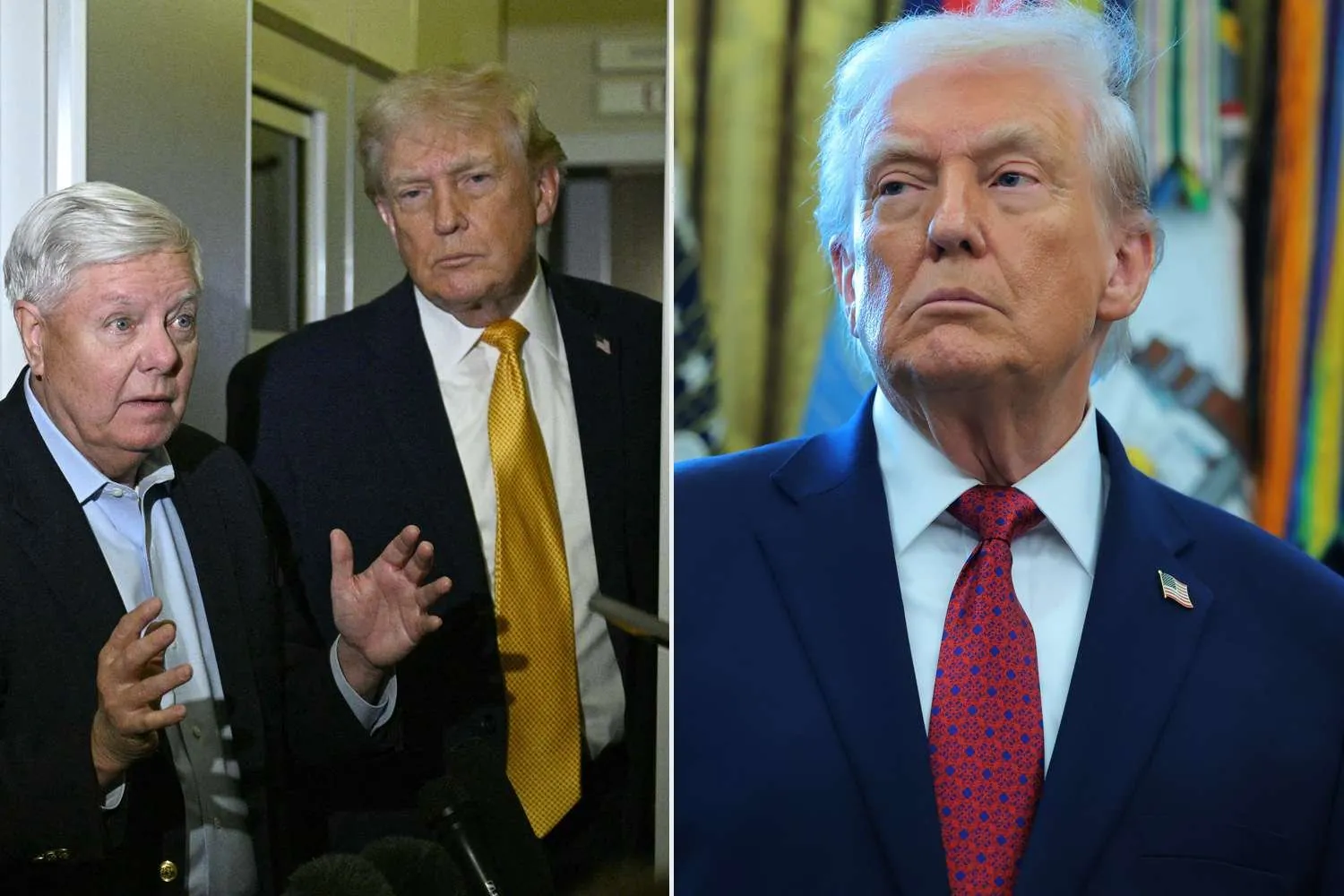
However, after Trump’s election, Graham underwent a remarkable transformation, becoming one of the president’s closest allies and advisors on foreign policy. This unlikely alliance was forged despite Graham’s initial reservations about Trump’s fitness for office, which he expressed in no uncertain terms.
As chairman of the Senate Budget Committee, Graham played a crucial role in shaping Trump’s legislative agenda, particularly on foreign policy issues.
He was a key supporter of the president’s hardline stance on Iran and Russia, and his influence helped shape the administration’s approach to these critical regions.
Graham’s hawkish views on national security also put him at odds with the growing isolationist wing of his party, which has been critical of US interventionism abroad.
Despite his later loyalty to Trump, Graham’s relationship with the president was not without its controversies.
In 2018, he appeared to break with Trump over the president’s response to the January 6, 2021, attack on the Capitol, declaring “Enough is enough” in a dramatic speech on the Senate floor.
However, the senator soon returned to Trump’s side, and the two remained close until the end.
Analysis: What This Means for Australia
Graham’s passing has significant implications for Australia’s national security and foreign policy.
As a key ally of President Trump, Graham played a crucial role in shaping US policy in the Asia-Pacific region, including the administration’s approach to China.
His influence helped to inform the US-Australia alliance, which is critical to Australia’s security and economic prosperity. The loss of Graham’s expertise and experience will likely be felt in Canberra, particularly as Australia navigates the complexities of the US-China rivalry.
Law enforcement insiders warn that Graham’s passing may also create a power vacuum in the Senate, potentially emboldening adversaries like China and Russia to test US resolve.
“Graham’s hawkish views on national security helped to keep America’s adversaries in check,” said one security analyst. “His loss may create an opportunity for these countries to push the boundaries of US influence in the region.”
Industry observers believe that Graham’s legacy will be remembered for his unwavering commitment to US national security and his role in shaping the country’s foreign policy agenda.
“Lindsey Graham was a true patriot who dedicated his life to serving his country,” said one observer. “His passing is a significant loss for the United States and its allies, including Australia.”