
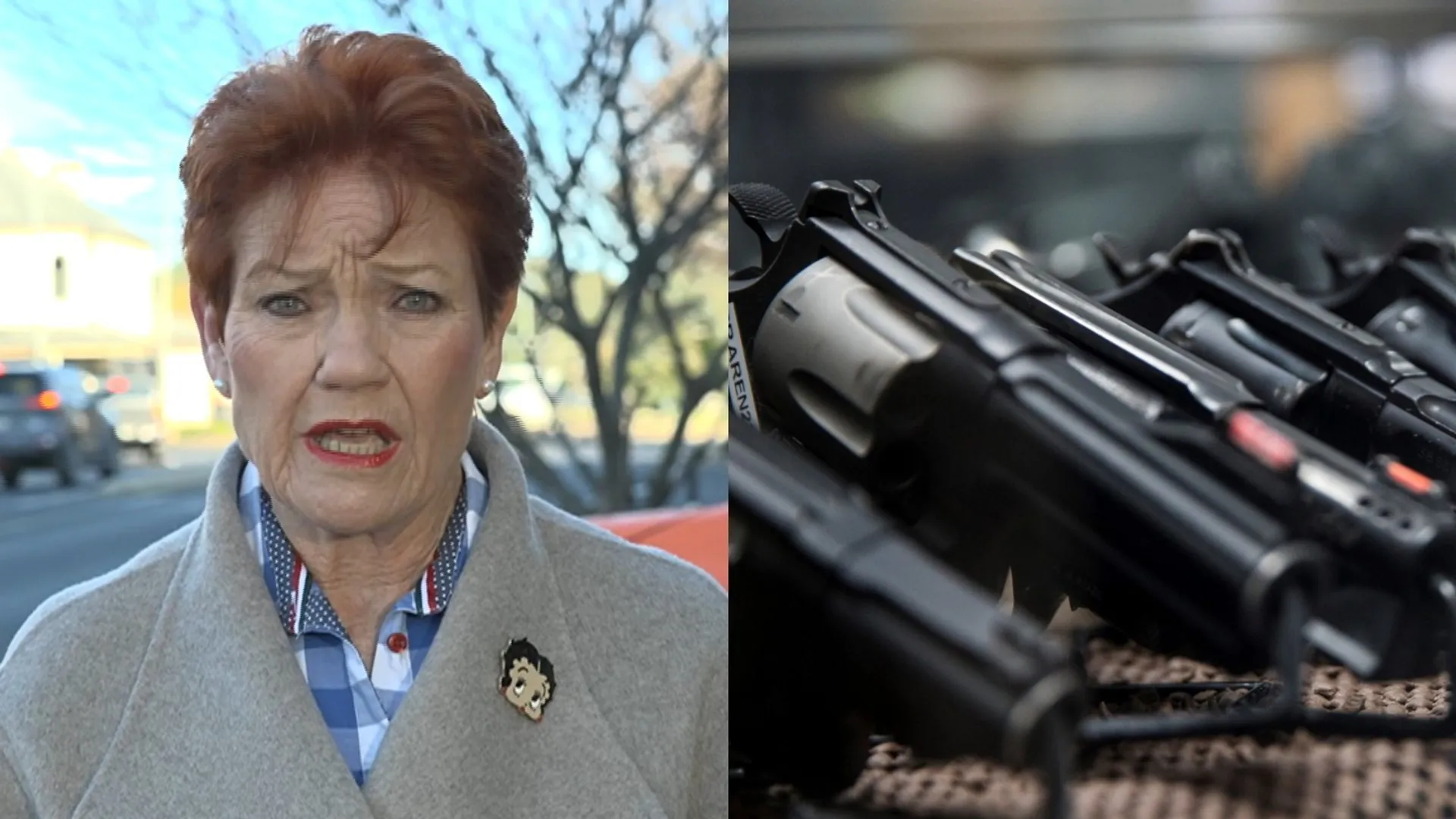
Pauline Hanson Slams NSW Gun Buyback Scheme as ‘Unfair’ and ‘Wasteful’ as Anger Grows Among Law-Abiding Firearm Owners
- One Nation leader Pauline Hanson has sparked a heated debate over the NSW gun buyback scheme, claiming it unfairly targets law-abiding firearm owners in the wake of the Bondi terror attack.
- As many as 50,000 licence holders across the state could be affected by the reforms, which Hanson argues will crucify innocent gun owners and fail to address the root cause of the problem.
- The NSW Government estimates up to 274,000 registered firearms will be affected by new ownership limits and the reclassification of some firearms, with compensation payments ranging from $450 to $10,000 per firearm.
The NSW gun buyback scheme has ignited a firestorm of controversy, with One Nation leader Pauline Hanson at the forefront of the debate.
Hanson, who met with around 500 residents on Saturday, claimed that anger is growing among law-abiding firearm owners who feel unfairly targeted by the reforms.
“The people of New South Wales… are not happy,” she told News24 on Sunday.

The NSW Gun Buyback Scheme, set to begin on November 2, is part of sweeping gun reforms introduced following the deadly antisemitic terrorist attack at Bondi Beach on December 14, 2025.
However, Hanson argues that the scheme is a knee-jerk reaction that fails to address the real issue behind the attack – radicalisation.
“Those guns that they have, it’s been handed down from dad or grandad, and it’s precious to them; there’s no amount of money that is ever going to replace that,” she said.
Hanson, a licensed gun owner herself, understands the concerns of some in the community, but believes that the government is going about it the wrong way.
“We’re crucifying those legal gun owners here. It wasn’t the guns; it was the people behind the guns who are responsible for the Bondi massacre, let’s make that quite clear.
These are law-abiding citizens that have lost their guns or are going to lose them.”
The NSW Government estimates that up to 274,000 registered firearms (about 24 per cent of all registered firearms in the state) and approximately 50,000 licence holders will be affected by new ownership limits and the reclassification of some firearms.
Under the first phase, individual licence holders above the new legal limit will be able to surrender affected firearms for fixed compensation, ranging from $450 for an air rifle to $1000 for a revolver.
However, Hanson questions why taxpayers should be footing the bill for the scheme, which is expected to cost over a billion dollars. “Why should the taxpayer be paying for this?
I think it’s wrong to be heading down this path,” she said. Instead, Hanson believes that the government should focus on addressing radicalisation and people on security watchlists.
Analysis: What This Means for Australia
The NSW gun buyback scheme has significant implications for Australia’s national security and law enforcement. While the government argues that the reforms are necessary to prevent future terrorist attacks, Hanson’s comments highlight the need for a more nuanced approach.
Security analysts say that the scheme may not address the root cause of the problem – radicalisation – and may instead drive the issue underground.
Law enforcement insiders warn that the scheme may also create a black market for firearms, making it easier for criminals to access guns.
“The government needs to take a more holistic approach to addressing the issue of gun violence, rather than just focusing on law-abiding citizens,” said one expert.
Industry observers believe that the scheme may also have unintended consequences for rural communities, where firearms are often used for legitimate purposes such as hunting and pest control.
“The government needs to consider the impact of the scheme on rural communities and ensure that they are not unfairly disadvantaged,” said another expert.
In conclusion, the NSW gun buyback scheme is a complex issue that requires careful consideration of the potential consequences.
While the government argues that the reforms are necessary to prevent future terrorist attacks, Hanson’s comments highlight the need for a more nuanced approach that addresses the root cause of the problem – radicalisation.
gun control national security Australian Government NSW Government