
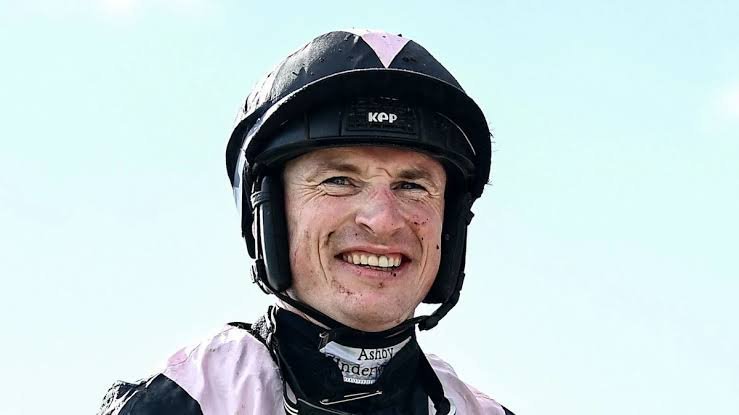
‘He Left a Positive Mark on All of Us’: Racing World Devastated as Jumps Star Tom O’Brien, Who Rode More Than 1,000 Winners, Dies Aged Just 39 After Long and Courageous Cancer Battle
- Irish-born jockey Tom O’Brien, a five-time Grade One winner and two-time Cheltenham Festival victor, has died at 39 after a long fight with cancer.
- He leaves behind his wife Hayley and two young sons. Only three weeks ago he was back at the stable where his career began.
- Champion rider Richard Johnson says nobody had a bad word to say about the man he shared a weighing room with for years.
- His death raises hard questions about the hidden toll of a punishing sport, including the jumps racing still fiercely debated in Victoria and South Australia.
He arrived in England from Ireland without a single race ride to his name.
Two decades later, Tom O’Brien had ridden more than a thousand winners over fences and hurdles, conquered the Cheltenham Festival twice and earned a reputation as one of the most decent men in a famously brutal game.
Now the racing world is in mourning.
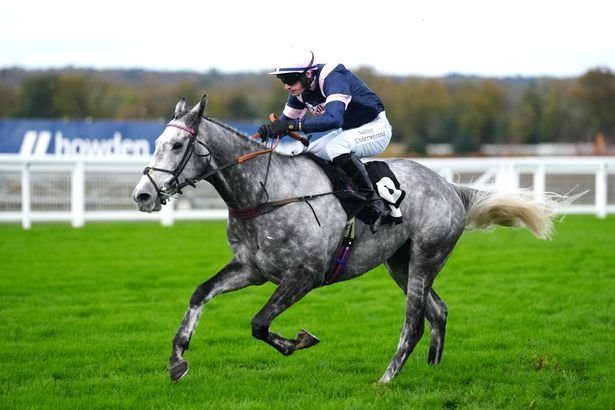
O’Brien has died at the age of just 39 following a prolonged battle with cancer, leaving a young family and a sport struggling to make sense of the loss.
The British Horseracing Authority confirmed he passed away surrounded by his loved ones. His wife, Hayley, and their two young sons were at the heart of the tributes that poured in from both sides of the Irish Sea.
O’Brien hung up his riding boots in April 2023, ending a career spent almost entirely in the colours of trainer Philip Hobbs, whose yard sits near Minehead in Somerset.
He did not walk away from the sport. Instead, he moved into a stewarding role with the BHA, helping to police the races he once rode in.
Hobbs, who gave the untested Irishman his start, revealed the pair had stayed close after retirement. O’Brien lived only half an hour from the stable and had dropped in roughly three weeks before his death.
The trainer said it quickly became clear the newcomer had genuine talent. He described O’Brien as dependable and “a very good bloke”, adding that his thoughts were above all with Hayley and the children.
O’Brien’s career was a study in patience.
For years he served as second jockey at the Hobbs yard, operating in the long shadow of Richard Johnson, one of the most decorated jumps riders of the modern era.
When Johnson retired, O’Brien stepped up to become first jockey, and the partnership flourished.
His finest hour came aboard Thyme Hill in the Grade One Stayers’ Hurdle at Aintree in April 2021, a win Hobbs singled out as the biggest of his career.
Thyme Hill delivered again in December 2022, carrying O’Brien to victory in the Kauto Star Novice Chase at Kempton.
He also struck at the top level for trainer Colin Tizzard, twice landing the Tolworth Hurdle, on Finian’s Oscar in 2017 and Elixir De Nutz in 2019.
At Cheltenham, the sport’s most demanding stage, he won the Fred Winter Handicap Hurdle on Silk Affair in 2009.
Thirteen years later he added the Pertemps Final on Third Wind, proof of a career that endured long after many peers had been broken by falls and injuries.
Johnson led the tributes, describing his former colleague as an “all-round great person”.
He said that whether at the track, on the gallops, at a party or crammed into a car on the long drive to a meeting, O’Brien was simply good company.
In all their years riding together, Johnson said, the two never exchanged a cross word.
BHA chief executive Brant Dunshea, himself a veteran of Australian racing administration, said O’Brien faced his illness with the same steely determination that defined him in the saddle.
He said the jockey was held in the highest esteem and had touched countless lives, and pledged that the authority would do everything it could to support his family.
Analysis: What This Means for Australia
O’Brien’s death may have happened on the other side of the world, but it lands squarely in an Australian conversation that has never gone away.
Jumps racing survives in this country only in Victoria and South Australia, and it remains one of the most bitterly contested issues in horse racing. Animal welfare groups have long campaigned to ban it.
Supporters insist it is a vital part of regional racing culture and a lifeline for country clubs and the communities that depend on them.
What often gets lost in that debate is the human cost to the riders themselves. Jumps jockeys live with relentless physical punishment, extreme weight management and the constant threat of catastrophic falls.
O’Brien’s illness was not a racing injury, but his story has forced the industry to confront how it cares for riders during and after their careers.
Racing is a multibillion-dollar industry in Australia, overseen by bodies including Racing Australia, and it relies on a steady flow of young riders. Many of them, like O’Brien, travel overseas in search of opportunity.
The pipeline between Ireland, Britain and Australia runs both ways, and the welfare standards set in one jurisdiction are watched closely in the others.
There is a wider public health message too. O’Brien was 39, fit and athletic.
His death is a stark reminder that cancer does not discriminate by age or physical condition, a warning echoed by Cancer Council Australia in its ongoing push for early detection among younger adults.
For the many Australians who follow the British jumps season, the loss of a familiar face cuts deep.
Industry observers believe O’Brien’s path from jockey to steward is exactly the kind of transition racing authorities should be encouraging.
Retired riders bring hard-won knowledge of race tactics and rider behaviour to integrity roles, and too many leave the sport altogether when their riding days end.
Welfare advocates say his passing should prompt fresh scrutiny of jockey welfare programs, particularly mental health and family support services for riders and their loved ones facing serious illness.
Racing insiders warn that the sport tends to celebrate its stars loudly and forget them quietly.
In O’Brien’s case, the outpouring of grief suggests something different: a man remembered as much for his kindness and loyalty as for his thousand-plus winners.
The sport has lost a fine horseman. Hayley and two young boys have lost a husband and father.
And a weighing room that rarely agrees on anything is united in a single verdict. Tom O’Brien was one of the good ones.