
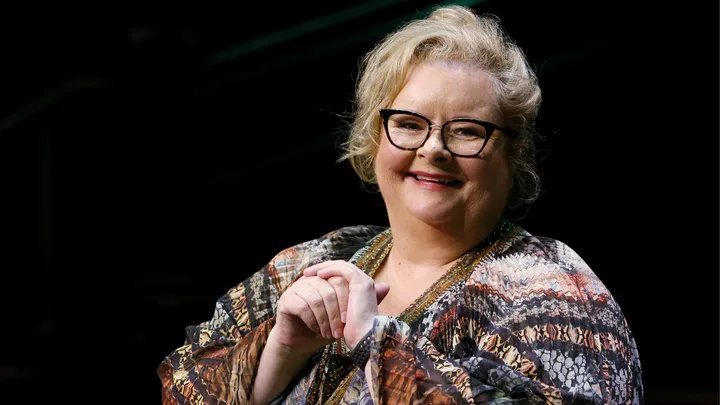
‘Thrilled and Chuffed’: Magda Szubanski Claims Booktopia’s Book of the Year Double for Raw Marriage Equality Memoir While Living With Incurable Blood Cancer
- Magda Szubanski has won Booktopia’s overall Book of the Year and its Non-Fiction Book of the Year, less than two months after her memoir hit shelves.
- I Can’t Tell You But I Will covers her years on the front line of Australia’s marriage equality fight while she nursed her dying mother.
- Terri Irwin and Tracy Grimshaw led the tributes, while one reader admitted certain passages had “broke” her.
- The 65-year-old is in deep remission from stage four mantle cell lymphoma, but she has warned the disease will almost certainly return.
Some books are written to entertain. Others are written because the author cannot carry the story any longer.
Magda Szubanski’s latest memoir belongs firmly in the second category. Now it has been crowned one of the most important books of the year by the readers who made it a success.
For a woman who has spent much of 2026 fighting a rare and relentless blood cancer, the win means far more than a trophy.
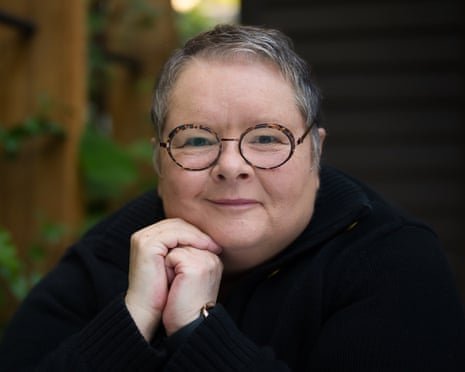
The beloved comedian, still adored by millions as the unforgettable Sharon Strzelecki from Kath and Kim, has taken out a rare double at the Booktopia awards.
She was named winner of both the Book of the Year and the Non-Fiction Book of the Year categories.
Her memoir, I Can’t Tell You But I Will, was only released in September. Its rise from new release to the top of Australia’s reading lists took less than eight weeks.
Szubanski took to social media to share her delight, saying she was excited, thrilled, chuffed and grateful all at once. She thanked everyone who had come along on what she called a journey, and sent her love to her followers.
The response was immediate.
Terri Irwin praised the recognition as well deserved and called her friend brave and wonderful for laying bare such a personal story. Former A Current Affair host Tracy Grimshaw congratulated Szubanski on extending what she described as an exceptional record as a memoirist.
One reader’s tribute cut even deeper.
She said the writing had broken her in places, and thanked Szubanski for capturing her own experience of being raised by a Scottish mother from that generation.
That comment goes to the heart of why the book has struck such a chord.
I Can’t Tell You But I Will is set during one of the most divisive periods in modern Australian history. It follows Szubanski’s role as one of the most recognisable faces of the marriage equality campaign.
At the same time, it tracks her private agony as she cared for her mother through her final illness.
Those two stories ran side by side. While she fought publicly for the right of LGBTQI+ Australians to marry, she was quietly losing the woman who raised her.
It is not the first time Szubanski has turned her family history into literature. Her 2015 memoir, Reckoning, explored her complicated relationship with her Polish father.
It was a searing, unflinching book about inherited trauma, wartime violence and the secrets families keep.
Reckoning was a critical and commercial triumph, and it cemented her reputation as a serious writer, not just a comic performer. With her new book, she has completed a picture.
Reckoning was the father’s story. I Can’t Tell You But I Will is, in many ways, the mother’s.
The timing of the award also matters. Szubanski’s 2026 has been a year of extremes.
In February, she announced that she had finished chemotherapy for stage four mantle cell lymphoma, a rare and aggressive form of blood cancer. Not long afterwards, she was inducted into the TV Week Logie Hall of Fame, one of the highest honours in Australian television.
The good news came with a brutal caveat. Speaking to 60 Minutes, Szubanski said she was in deep remission and the cancer was being held at bay.
But she was frank that she is not cured.
She described her condition as an incurable relapsing disease, and said she was almost certain it would return. In her words, it was a question of when, and how bad.
The median survival for her form of cancer is around eight and a half years. Szubanski has acknowledged that her own timeline could be shorter or longer than that.
Analysis: What This Means for Australia
On the surface, this is a celebrity winning a book prize. Underneath, it says a great deal about the country Australia has become, and the conversations it is still struggling to have.
The 2017 postal survey, run by the Australian Bureau of Statistics, forced every household in the country into a national debate about love, family and identity.
For LGBTQI+ Australians, it was a bruising experience that played out in letterboxes, on social media and around kitchen tables.
Few public figures carried more of that weight than Szubanski.
A bestselling account of what it cost her personally keeps that chapter alive at a time when many Australians would prefer to file it away as settled history.
There is also a quieter social story here. Millions of Australians are carers for an ageing parent, often while juggling work, money and their own health.
Szubanski’s book gives voice to an experience that is rarely discussed in public but is lived in homes everywhere.
Then there is the economic angle. Local publishing has faced intense pressure from rising costs and global competition.
A homegrown non-fiction title selling strongly enough to claim the top prize is a welcome sign that Australian readers will still back Australian stories.
Finally, there is her health. A household name speaking openly about living with incurable cancer can shift how ordinary people think about diagnosis, remission and survival.
Publishing industry observers believe Szubanski’s double win shows that readers are hungry for honest Australian memoirs that tackle grief and identity directly, rather than polished celebrity reputation management.
Health advocates say her refusal to describe remission as a cure is significant. They argue that public figures who explain the reality of relapsing blood cancers help patients and families understand the long road ahead.
Organisations such as the Leukaemia Foundation have long stressed the importance of that kind of awareness.
Social commentators note that her story bridges generations. Older readers recognise the stoic, hard-working mothers she describes.
Younger readers see the fight for equality that shaped their own rights.
Szubanski has never been afraid to say the hard thing out loud. Facing an uncertain future, she has done it again, and Australia is listening.