

‘What a F**kin’ Legend’: New Zealand Comedy Giant Dai Henwood Dies Aged 48 After Six-Year Battle With Bowel Cancer, as His Death Raises Fresh Alarm Over a Disease Striking Younger People on Both Sides of the Tasman
- Beloved 7 Days star Dai Henwood died at Auckland Hospital on Tuesday, holding the hands of his family, after living with bowel cancer for six years.
- His management paid tribute to a man who “truly brought people together”, signing off with a cheeky farewell he would surely have approved of.
- A founding member of one of New Zealand’s most-watched comedy shows, he appeared in more than 150 episodes across a career spanning over two decades.
- His death at just 48 renews urgent questions about bowel cancer in younger adults, a disease that kills thousands of Australians every year.
He made a nation laugh for more than 20 years. In the end, he left it in tears.
Dai Henwood, the quick-witted comedian whose cheeky grin became a fixture in living rooms across New Zealand, has died at the age of 48. Bowel cancer, a disease he lived with for six long years, finally claimed him.
He was not alone. His management confirmed he passed away at Auckland Hospital on Tuesday with his family’s hands held in his.
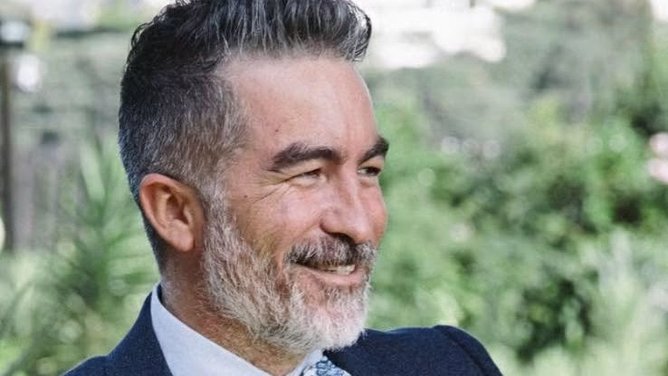
It is a heartbreaking image. And for countless fans who grew up with his voice, his jokes and his relentless energy, it is a loss that is difficult to process.
The statement released by his representatives did not dwell on illness. Instead, it celebrated the things that defined him: his generosity, his commitment to charity, and an almost magnetic ability to make strangers laugh together.
His team said he genuinely united people, and that nothing gave him greater joy than hearing an audience laugh. Then came a final line that captured the man perfectly, a farewell salute in pure Kiwi vernacular: “What a f**kin’ legend ay?”
Few tributes have ever felt more fitting.
Henwood’s rise was built from the ground up. While studying theatre, film and Eastern religions at Victoria University, he began testing material in front of live crowds.
By 1999, TV2’s Pulp Comedy had named him its Best New Face.
Three years later, in 2002, he claimed the Billy T Award, the most coveted honour for emerging comedians in New Zealand. It was the moment the industry stopped seeing him as a promising newcomer and started treating him as a headline act.
Television soon followed. He was part of the original line-up of the panel show 7 Days, eventually clocking up more than 150 episodes.
His credits stretched across Insert Video Here, his own vehicle Roll the Dai, Dancing with the Stars, LEGO Masters NZ and the fourth series of Taskmaster NZ.
Yet his story is also one of quiet defiance. Henwood was born into Wellington theatrical royalty.
His father was the late actor Ray Henwood, and his mother is former judge Dame Carolyn Henwood. Together, they were instrumental in founding the city’s Circa Theatre.
With that pedigree, an easy path was there for the taking. He refused it.
Henwood was determined that his success would be his own, earned on stage rather than inherited through his father’s name.
That stubborn independence became part of his appeal. Audiences sensed a performer who had grafted for every laugh.
But his death at 48 also casts a harsh spotlight on a disease that is increasingly cutting down people in the prime of their lives, and that threat does not stop at the Tasman.
Analysis: What This Means for Australia
For Australians, the death of a much-loved neighbour across the ditch carries an uncomfortable message. Bowel cancer is one of the deadliest cancers in this country, and the cancer crisis among younger adults is no longer a fringe concern.
Health authorities have repeatedly warned that diagnoses in people under 50 have been climbing for years. Many of those patients dismiss early symptoms, or are told they are simply too young to worry.
By the time the disease is caught, it is often advanced.
The social cost is staggering. Bowel cancer strips families of parents, workplaces of experienced staff and communities of the people who hold them together.
When it strikes someone in their 40s, the ripple effect on children, partners and finances can last decades.
There is also a clear economic dimension. Late-stage treatment is vastly more expensive than early detection, placing enormous pressure on an already stretched health system.
Every case caught late represents not only a personal tragedy but a burden on hospitals, carers and the public purse.
Australia does have a weapon. The National Bowel Cancer Screening Program posts free home test kits to eligible Australians, with the starting age lowered to 45 in recent years.
But participation has long lagged, with large numbers of kits going unused and left in drawers.
That gap between availability and action is where lives are lost.
The cultural bond between the two nations matters too. Kiwi comedians and presenters have long found fans in Australia through shared streaming platforms, touring circuits and formats such as Taskmaster.
When a figure like Henwood dies, the grief, and the warning, travels.
Health advocates say public figures who speak openly about their illness can drive more people to get tested than any government advertising campaign. A familiar face can cut through embarrassment in a way statistics rarely do.
Cancer support groups warn that the stigma surrounding bowel symptoms remains one of the biggest barriers to early diagnosis. Many people, particularly men, avoid talking to a doctor about blood in the stool, changed bowel habits or unexplained fatigue until it is too late.
Medical observers believe the rise in younger cases demands a rethink of how Australians view their own risk. Organisations such as Bowel Cancer Australia and the Cancer Council have urged anyone with persistent symptoms to seek advice immediately, regardless of age.
Entertainment industry insiders, meanwhile, say Henwood’s legacy will be measured not only by the laughs he delivered but by the conversations his illness may now spark.
That would surely please him.
By every account, he spent his final years as he spent his career: giving to others, raising money for charity and finding humour in the darkest places.
New Zealand has lost one of its brightest comic voices. His family has lost a son, a partner and a father figure whose warmth filled every room.
And somewhere, in a crowded comedy club, someone is raising a glass to the man who made it all look effortless.
What a legend, indeed.