
Victoria on a Knife’s Edge: Labor Collapse, One Nation Surge, Bikie Bombshells and a Preference War Leave Voters Fearing for Their Safety With Just 17 Days Until Polling Day
- A shock poll puts Labor’s primary vote at a dismal 23 per cent, with One Nation just one point behind and the Coalition leading on 31 per cent.
- A royal commission has heard that health and safety representatives with alleged bikie links worked on Victorian building sites, including a man on parole for manslaughter.
- The Coalition will preference One Nation above Labor in some seats, while Labor has walked away from the Greens in key inner-city battlegrounds.
- Women, renters and regional families say their safety and security have been pushed aside by backroom manoeuvring.
On a day when Victoria fell silent to honour its war dead, the battle for control of the state did not pause. It simply moved into the shadows.
The campaign buses were parked. The premier and the opposition leader stayed away from the cameras.
But the fight for the November 28 election raged on: in suburban streets, inside a royal commission hearing room, and across the how-to-vote cards that will be pushed into voters’ hands in the coming weeks.
For millions of Victorians, the stakes are no longer abstract. They are about who keeps their streets, their worksites and their homes safe.
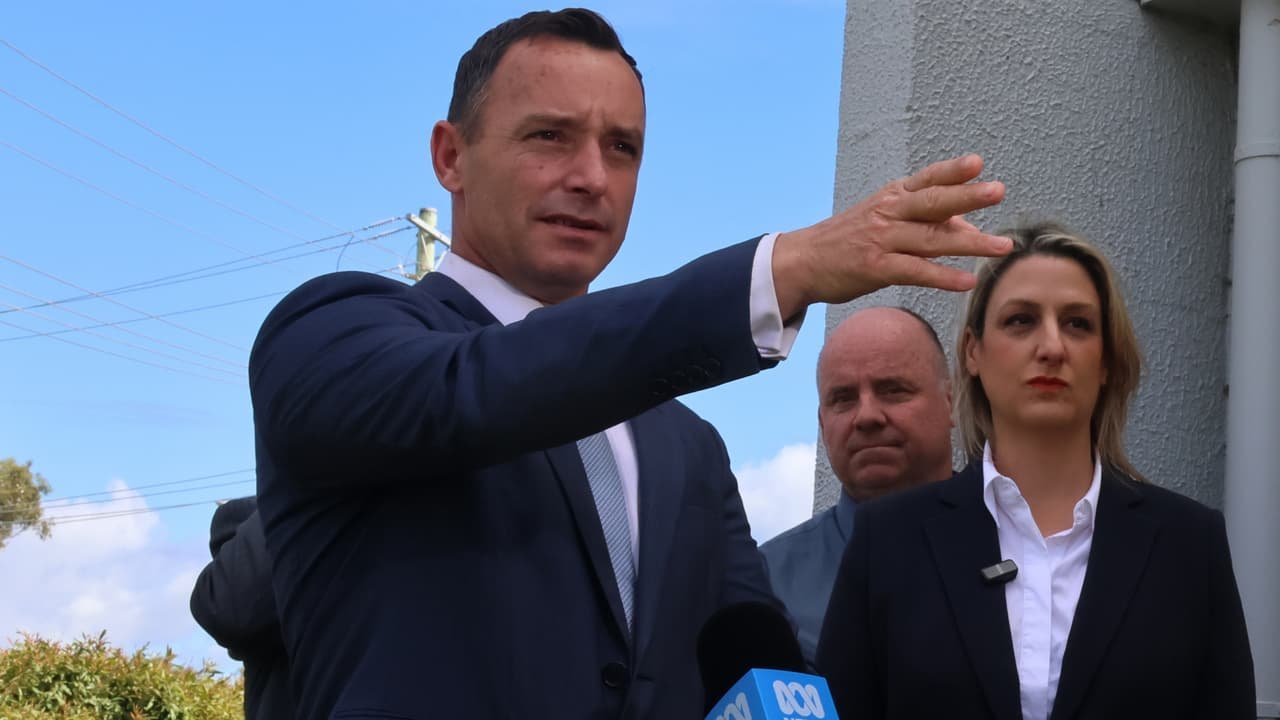
Premier Ben Carroll, who seized the top job after rolling Jacinta Allan, is fighting what looks like a losing war.
The latest Australian Financial Review/RedBridge/Accent Research survey has Labor’s primary vote at 23 per cent, the Coalition on 31 and One Nation on 22.
A separate Demos poll put Labor lower still, at 18 per cent.
If those numbers hold on polling day, Opposition Leader Jess Wilson is likely to win a majority. Early voting opens in about a week.
Inside Labor, the knives are out.
Trades Hall secretary Luke Hilakari, whose brother holds the seat of Point Cook, publicly attacked his own side’s plan to send low-level teenage offenders to a rehabilitation prison for up to a year.
He said he had assumed the policy came from the Liberals, and urged Labor to tackle disadvantage rather than deepen it.
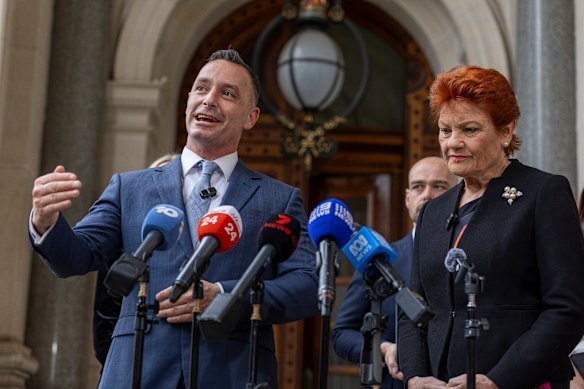
Meanwhile, the preference war has exploded. Wilson confirmed the Coalition will rank One Nation above Labor, the Greens and the Socialists in some electorates, depending on vetting of individual candidates.
Labor has hit back by running open tickets in seats such as Prahran and Caulfield, refusing to direct its voters towards the Greens.
Greens leader Ellen Sandell called it a “dodgy backroom deal” and said the move was “frankly unforgivable”, warning that Labor was effectively helping deliver the very Liberal-One Nation government it had spent months warning about.
Minister Steve Dimopoulos rejected that, saying an open ticket simply leaves voters to choose for themselves after putting Labor first.
To understand how Victoria reached this point, look at a decade of churn. The Liberals have cycled through John Pesutto, Brad Battin and now Wilson, who was installed after Battin’s October 2025 reshuffle triggered a revolt.
Labor has replaced its own premier mid-term.
At the same time, voters have splintered. In 2018, a ballot with seven candidates was unusual.
This year, the average electorate has 8.3 names, which means slower counts and a higher risk of informal votes. Labor heartland seats in Melbourne’s north and west, including Broadmeadows and Pascoe Vale, recorded their weakest Labor support in decades at the last election.
In Northcote, Labor scraped home by just 184 votes in 2022.
Into that vacuum has stepped One Nation.
Its Victorian leader, Warren Pickering, has already declared he would block free abortion care in the upper house if his party holds the balance of power, even though the pledge does not require any change to state law.
Analysis: What This Means for Australia
The most alarming evidence this week did not come from the campaign trail. It came from the Royal Commission into Victoria’s Big Build.
Former CFMEU organiser Paul Tzimas was read the names of 11 men who had worked as health and safety representatives on Victorian sites. He identified most of them as bikie-affiliated.
One of them, Johnny Walker, was on parole for manslaughter when the union helped arrange his job on the upgrade of Melbourne’s rail loop through a labour hire company.
Tzimas also told the inquiry that underworld-linked mediator Mick Gatto handed him a gold bracelet, which he says he never wore, and gave gifts to other union officials, including members of the Victorian branch executive.
Hours later, the CFMEU expelled former Victorian boss John Setka for five years after he faced 27 internal charges. The union’s administration alleges $3.3 million in merchandise and vending machine revenue was diverted to his companies.
Setka did not respond to the allegations.
These are not just industrial matters.
Billions of taxpayer dollars flow through major projects, and evidence of organised crime influence goes directly to public safety and to national confidence in how infrastructure is built.
Whoever governs after November 28 will inherit that problem.
On the ground, the risks are already plain.
An Victorian Auditor-General’s Office report found the share of state-managed roads in poor or very poor condition rose from 39 to 48 per cent between 2021 and 2024.
A 71-year-old motorcyclist died after reportedly hitting a pothole on the Western Highway near Ballarat. Thirty-six regional towns have also lost polling booths within five kilometres, nine of them by ten kilometres or more.
And the housing crisis is biting.
An RMIT survey of 650 Victorians, commissioned by Vinnies, found 89 per cent back more funding for homelessness prevention, and 65 per cent named cost of living as a leading cause.
In Coburg, a migrant woman named Sara said women’s safety, from domestic violence to danger on the streets, was the issue that mattered most to her.
Having fled a place she described as very bad for women, she warned that backing candidates hostile to women and migrants would end in failure, and said the rise of One Nation worried her.
Even small local controversies have taken on a safety edge.
Dimopoulos has called on Wilson to disendorse Williamstown Liberal candidate Paul Lindemann, who served a six-week Basketball Victoria suspension over his conduct towards an under-14 girl.
Lindemann has apologised, saying he was trying to protect one of his own players.
Political analysts say Victoria may be heading for its most fragmented parliament in modern history, with a minor party holding real leverage over health, policing and crime laws.
Law enforcement insiders warn that the royal commission evidence shows how easily criminal networks can embed themselves in publicly funded work when oversight slips, and that any new government must act quickly.
Electoral observers believe preference deals will decide seats such as Prahran, where every contest goes to preferences and a single result could determine whether Wilson governs alone.
Community advocates, meanwhile, argue that voters like Sara are being left behind while party strategists fight over how-to-vote cards.
In 17 days, Victorians will deliver their verdict. Whatever the result, the state’s safety, stability and trust in its institutions will be on the line.