
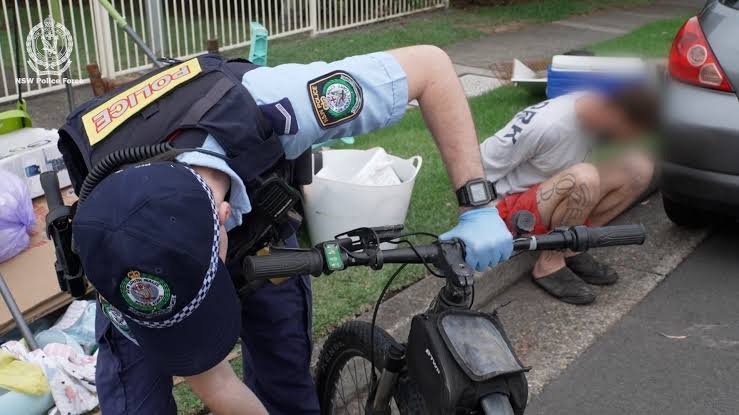
‘Enough Is Enough’: NSW Police Ordered to Stop Chasing E-Bike and Motorbike Riders After Two Young Constables Charged Over Alleged Glebe Hit-and-Leave
- The powerful Police Association of NSW has told its members to immediately abandon pursuits of riders on two wheels, warning officers are being forced to choose between public safety and their own careers.
- The order follows charges against two constables, aged 25 and 27, after a young woman on an e-bike was allegedly struck by a police car on Glebe Point Road and left on the ground.
- The union says the ban stays until the Minns Government gives frontline police stronger legal protection, setting up a fight over who controls the streets.
- The standoff comes as national figures show hospitalisations from e-bike and e-scooter falls have tripled in five years, with boys aged 12 to 15 recording the steepest rise.
Somewhere in Sydney tonight, a rider will twist the throttle, ignore the flashing lights behind them and vanish into traffic.
And for now, the police may simply let them go.
In an extraordinary escalation that could reshape how laws are enforced on New South Wales roads, the state’s police union has instructed officers to stop chasing anyone fleeing on an e-bike or motorcycle.
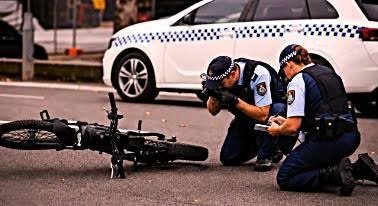
The reason, it says, is that officers keep ending up in the dock instead of the criminals.
The Police Association of NSW (PANSW) issued the directive with immediate effect. It followed criminal charges against two young constables over an alleged incident in Sydney’s inner west earlier this year.
On May 12, a 25-year-old woman was riding an e-bike along Glebe Point Road in Glebe when she was allegedly hit by a police vehicle and thrown to the road.
It is alleged the officers in the car drove off without stopping to help her.
The two constables, one aged 25 and the other 27, have each been charged with police officer neglect. The allegations have not been tested in court.
The charges proved to be the breaking point for the union.
PANSW president Kevin Morton said offenders were making a conscious choice to run from police, endangering bystanders and defying lawful orders. Yet he said it was officers, not the people who fled, who were repeatedly being hauled before magistrates.
Mr Morton pointed to a pattern of police being charged and later acquitted over decisions made in the heat of the job. He also cited serving officers caught up in drawn-out legal battles after incidents involving riders on two-wheeled vehicles.
His message was blunt. The limit, he said, had now been reached.
The union insists its members should be walking into court as prosecutors, not defendants. It argues that the legal and personal danger of these chases now far outweighs the support officers receive.
Crucially, Mr Morton acknowledged the public rightly expects action against people who put others at risk by fleeing.
But if the Government wants police to keep doing such dangerous work, he said, it must give them the legislative protection to do it with confidence.
The ban will remain until the NSW Government takes what the association calls “meaningful action”.
The collision between police powers and two-wheeled offenders did not happen overnight.
Over the past five years, cheap and powerful e-bikes have flooded Australian cities.
They carry food deliveries, commuters and teenagers, and in some cases they have become the getaway vehicle of choice for young offenders who know a bike can slip through gaps no patrol car can follow.
Motorcycle and e-bike pursuits are among the most dangerous jobs on the road. Riders have no protective shell.
A single clipped wheel can turn a routine stop into a fatality, and every serious outcome is scrutinised.
That scrutiny is exactly what officers now fear. Under existing arrangements, any police contact with a fleeing rider that ends in injury can spark an investigation, a charge and years of uncertainty.
The broader backdrop is a regulatory mess.
Governments across the country have struggled to keep pace with e-bike laws, from speed and power limits to illegally modified bikes capable of motorcycle speeds.
The human toll is climbing fast.
Data from the Australian Institute of Health and Welfare shows hospitalisations from falls involving e-bikes and e-scooters, including mobility scooters, tripled from 1,291 in 2019/20 to 4,089 in 2024/25.
The rate jumped from 3.6 to 54 per 100,000 people over that period. Males made up two-thirds of cases.
Boys aged 12 to 15 recorded the sharpest rise and were four times as likely as girls their age to be hospitalised. Around three in five of those injured suffered fractures, a proportion that has grown by about 12 per cent over a decade.
Meanwhile, injuries from non-powered scooters have fallen.
Analysis: What This Means for Australia
The immediate risk is clear. If riders learn that flight now guarantees freedom, the incentive to stop for police shrinks dramatically.
That matters for public safety on footpaths, cycleways and suburban streets already crowded with fast-moving bikes. Pedestrians, elderly residents and children are the ones who share that space.
For law enforcement, the directive exposes a deep fracture between the rank and file and the Government that sets their legal boundaries. A union effectively rewriting operational practice on the street is a remarkable development, and it puts the NSW Police Force leadership in an awkward position.
There is also a policing capacity question. If officers cannot pursue, enforcement will lean more heavily on cameras, intelligence and arrests after the fact, all of which demand time and resources.
The social cost is just as heavy. Rising injury numbers place extra strain on emergency departments and the health system, while families of injured teenagers face long recoveries.
Other states will be watching closely. Every Australian jurisdiction faces the same e-bike boom, and a NSW precedent could spread.
Law enforcement insiders warn the ban may embolden a small but reckless group of riders who already treat police with contempt. They say opportunistic offending, from phone snatches to drug runs, could find a convenient escape route.
Civil liberties observers counter that accountability for police conduct must not be traded away, particularly where a member of the public is allegedly injured and left without help.
Road safety analysts believe the real solution lies upstream, through tougher controls on illegal high-powered bikes, clearer rules for riders and better education for young users.
Legal observers say any new protections for police would need careful drafting to shield officers acting in good faith without creating blanket immunity.
For now, the standoff leaves Sydney’s streets in limbo. Riders may run.
Police may watch. And the Government is under mounting pressure to decide who it will back.