Australia’s Racing Industry Under Fire After Tragic Caulfield Cup Incident Claims Life of Beloved Horse Ohope Wins
- A devastating fall at the Caulfield Cup has resulted in the euthanasia of Ohope Wins, sparking widespread outrage and calls for greater accountability in the racing industry
- Five jockeys, including Jye McNeil and Mark Zahra, have been cleared of any wrongdoing after a thorough investigation by Racing Victoria stewards
- The incident has raised serious concerns about the safety and welfare of horses in Australian racing, with many demanding urgent reforms to prevent similar tragedies in the future
- The fallout from the incident is set to continue, with the racing industry facing intense scrutiny and pressure to improve its safety record and protect the lives of its equine athletes
The Australian racing industry is reeling after a horrific incident at the Caulfield Cup claimed the life of Ohope Wins, a talented and beloved horse that was ridden by jockey Jye McNeil.
The tragedy has sparked a national outcry, with many calling for greater accountability and urgent reforms to prevent similar incidents in the future.
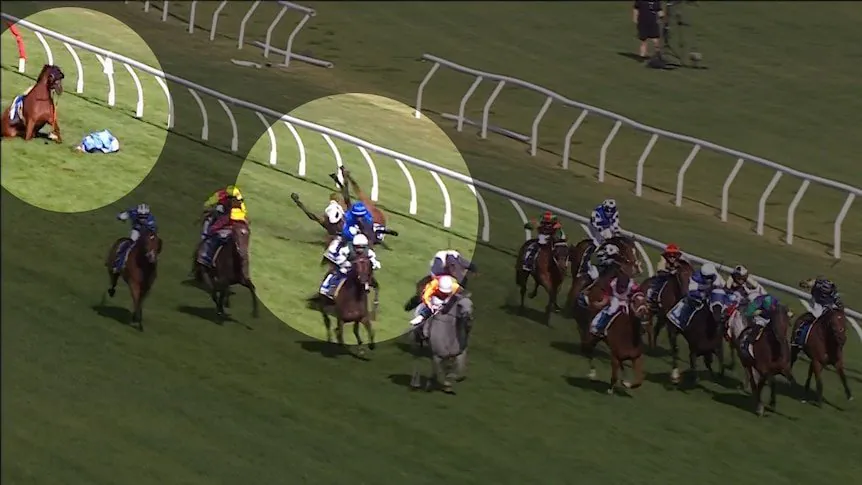
The incident occurred when Ohope Wins and another horse, Half Yours, fell in the final straight of the 2,400-metre race, resulting in Ohope Wins suffering a serious racing injury that ultimately led to its euthanasia.

The investigation into the incident, conducted by Racing Victoria stewards, has cleared all five jockeys involved of any wrongdoing, including McNeil and Mark Zahra, who rode Half Yours.
The stewards’ report found that contact between several horses in the pack had caused the incident, with Green Spaces, ridden by Rachel King, becoming unbalanced and turning inward, resulting in Half Yours being squeezed for room and ultimately falling.


Ohope Wins, which was trailing behind, was unable to avoid the fallen Half Yours and was brought down, suffering a fatal injury.
The incident has raised serious concerns about the safety and welfare of horses in Australian racing, with many demanding urgent reforms to prevent similar tragedies in the future.
The racing industry has faced intense scrutiny in recent years, with a series of high-profile incidents and scandals highlighting the need for greater accountability and transparency.
The death of Ohope Wins has sparked a national debate about the ethics and sustainability of horse racing, with many calling for a complete overhaul of the industry’s safety protocols and regulations.
Security analysts say that the incident highlights the need for a more proactive and preventative approach to safety in the racing industry. “The death of Ohope Wins is a tragic reminder of the risks and dangers involved in horse racing,” said one expert.
“The industry needs to take a more proactive approach to safety, investing in better training and equipment, and prioritizing the welfare and well-being of its equine athletes.” Law enforcement insiders warn that the incident may have broader implications for the industry, with potential consequences for racing authorities and regulators.
“The incident raises serious questions about the accountability and transparency of the racing industry,” said one insider. “There needs to be a thorough investigation into the circumstances surrounding the incident, and those responsible must be held to account.”
Analysis: What This Means for Australia
The incident has significant implications for Australia, highlighting the need for greater accountability and transparency in the racing industry.
The death of Ohope Wins has sparked a national debate about the ethics and sustainability of horse racing, with many calling for a complete overhaul of the industry’s safety protocols and regulations.
The incident also raises concerns about the economic and social consequences of the racing industry, with many communities relying on the industry for employment and economic growth.
Industry observers believe that the incident may have a significant impact on the industry’s reputation and viability, with potential consequences for racing authorities and regulators. “The incident is a wake-up call for the racing industry,” said one observer.
“The industry needs to take a more proactive approach to safety, investing in better training and equipment, and prioritizing the welfare and well-being of its equine athletes.”
Expert commentary from horse racing industry insiders suggests that the incident may have broader implications for the industry, with potential consequences for racing authorities and regulators.
“The incident highlights the need for a more proactive and preventative approach to safety in the racing industry,” said one expert.
“The industry needs to invest in better training and equipment, and prioritize the welfare and well-being of its equine athletes.” Security analysts say that the incident may have significant implications for the industry’s reputation and viability, with potential consequences for racing authorities and regulators.
“The incident is a reminder of the risks and dangers involved in horse racing,” said one analyst. “The industry needs to take a more proactive approach to safety, and prioritize the welfare and well-being of its equine athletes.”
The incident has also sparked a debate about the role of Australian Broadcasting Corporation in covering the racing industry, with some critics arguing that the media has a responsibility to hold the industry to account for its actions.
“The media has a critical role to play in holding the racing industry to account for its actions,” said one critic.
“The industry needs to be transparent and accountable, and the media needs to hold them to account for their actions.” Law enforcement insiders warn that the incident may have broader implications for the industry, with potential consequences for racing authorities and regulators.
“The incident raises serious questions about the accountability and transparency of the racing industry,” said one insider. “There needs to be a thorough investigation into the circumstances surrounding the incident, and those responsible must be held to account.”