
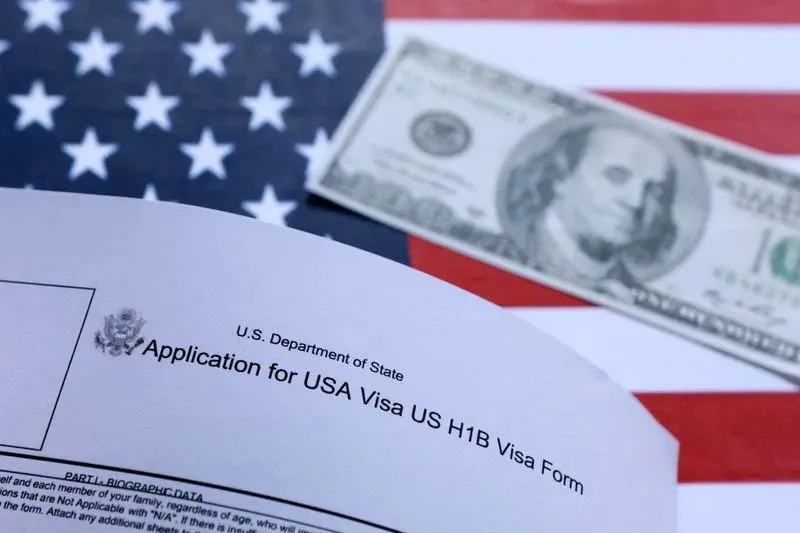
Trump Administration Revives Controversial Plan to Charge Employers $103,265 for Skilled Foreign Worker Visas
- A new proposal would see employers pay a staggering $103,265 for H-1B visas, sparking concerns over the impact on the US tech industry and the economy.
- The move is the latest in the Trump administration’s crackdown on immigration, with critics arguing it will curb the ability of US employers to hire global talent.
- The proposed fee is a significant increase from the standard $2,000 to $5,000 range and has been met with resistance from labour unions, research universities, and dozens of states.
- The plan has been revived despite a federal judge blocking a similar proposal last year, with the administration maintaining that the fee is not a traditional tax and is necessary to restrict entry into the country.
The Trump administration has revived a proposal to charge employers seeking skilled foreign workers through the H-1B visa program a whopping $103,265, sparking concerns over the impact on the US tech industry and the economy.
The move is the latest in the administration’s sweeping immigration crackdown, with critics arguing it will curb the ability of US employers to hire global talent.
The H-1B program allows domestic employers to recruit foreign talent for high-skilled jobs that are difficult to find American workers to fill. The program offers 65,000 general visas annually, plus 20,000 for workers holding advanced degrees, for terms of three to six years.
Deep-pocketed technology companies such as Amazon and Microsoft are the biggest users of the program, with nearly three-quarters of approvals going to workers from India.
The proposed fee is a significant increase from the standard $2,000 to $5,000 range and has been met with resistance from labour unions, research universities, and dozens of states.
The plan has been revived despite a federal judge blocking a similar proposal last year, with the administration maintaining that the fee is not a traditional tax and is necessary to restrict entry into the country.
The Trump administration has maintained that the H-1B program is exploited by companies replacing American workers with cheaper foreign labour. However, critics argue that the fee will have a devastating impact on the tech industry, which relies heavily on skilled foreign workers.
The administration has faced multiple lawsuits over the proposal, with opponents arguing that it will decimate hospitals with an already fragile workforce and up-end the tech industry.
Analysis: What This Means for Australia
While the proposed fee may not have a significant impact on Australians entering the US for work, it highlights the Trump administration’s aggressive approach to immigration.
The move is likely to have far-reaching consequences for the US economy and its ability to attract top talent from around the world. As the US becomes increasingly isolationist, Australia may see an opportunity to attract skilled workers who are no longer able to enter the US.
Security analysts say that the move is a clear indication of the Trump administration’s priorities, with a focus on restricting entry into the country and prioritising American workers.
However, this approach may ultimately harm the US economy and its global competitiveness. Law enforcement insiders warn that the move may also lead to an increase in illegal immigration, as desperate workers seek alternative routes into the country.
Industry observers believe that the proposed fee will have a devastating impact on the tech industry, which relies heavily on skilled foreign workers. The move may lead to a brain drain, as top talent seeks alternative destinations.
The US may ultimately lose its competitive edge, as other countries become more attractive to skilled workers.
The Trump administration’s aggressive approach to immigration has sparked concerns over racial profiling and the treatment of ethnic minorities.
Rights groups argue that the proposed changes have violated free speech and due process rights, creating an unsafe environment for those seeking to enter the country.
As the US becomes increasingly isolationist, Australia may see an opportunity to attract skilled workers who are no longer able to enter the US. However, this will depend on the Australian government’s ability to create a welcoming environment for skilled migrants.
The proposed fee is a clear indication of the Trump administration’s priorities, and Australia must be prepared to adapt to the changing landscape.
With the proposal set to be finalised by the end of the year, the US tech industry is bracing for the impact. The move may lead to a significant shift in the global economy, as countries compete for top talent.
One thing is clear: the Trump administration’s aggressive approach to immigration will have far-reaching consequences for the US and the world.