
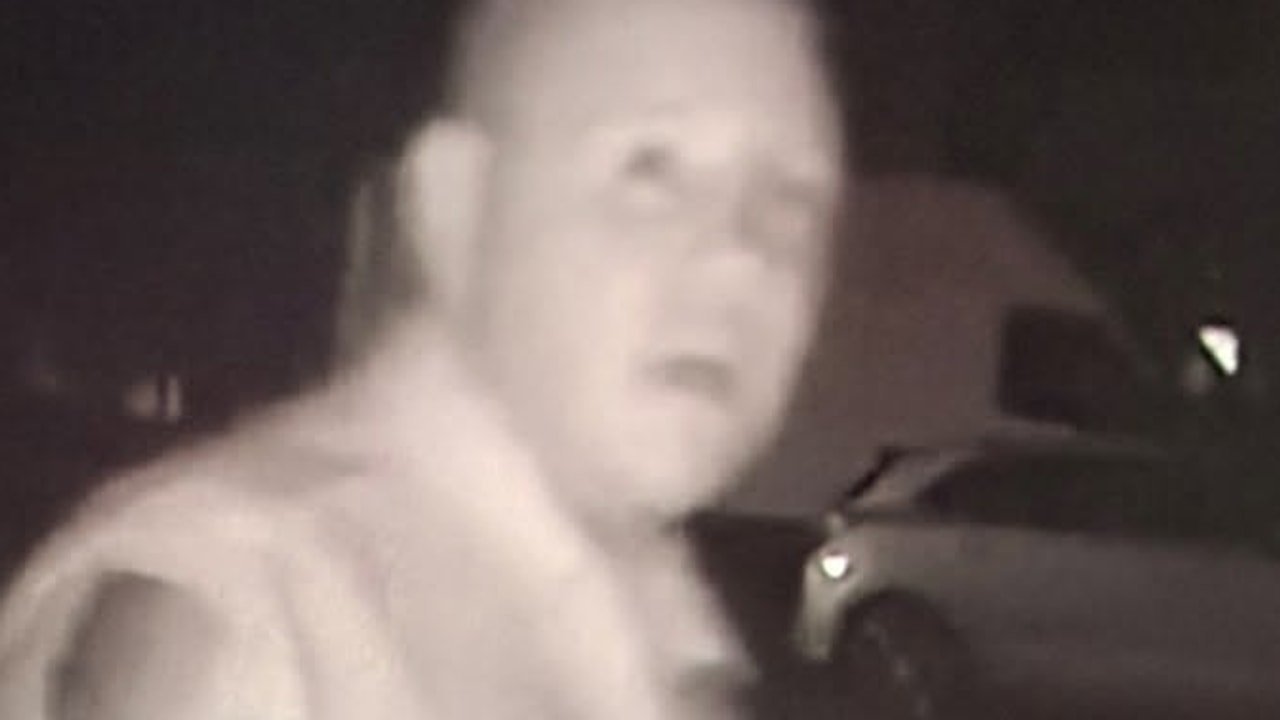
‘Never Assume They’re Real’: Former Cop Sounds Alarm After Fake Police Officers Talk Their Way Past a Young Boy and Escape a Queensland Home With a Safe
- Two men, one apparently wearing a counterfeit police uniform, were caught on CCTV demanding entry to a Queensland home, and it was a young boy who opened the door.
- The pair escaped with a safe and a hard drive and remain at large, leaving the family exposed and investigators racing to identify them.
- A former Queensland police officer says Australians have every right to demand identification before letting anyone claiming to be police inside.
- Experts warn the tactic exploits the public’s deepest instinct, trust in the badge, and leaves victims feeling vulnerable and humiliated.
It is the knock every parent fears, except this time it arrived dressed as the people we are taught to trust most.
A young boy went to the front door. Waiting on the other side were two men, one of them wearing what looked like a police uniform.
They wanted to come in. They were not asking.
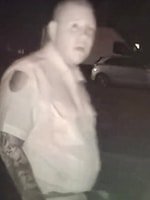
Within minutes they were gone, carrying a safe and a hard drive. They have not been caught.
Now a former Queensland police officer is urging Australians to rethink one of their most automatic responses: opening the door to anyone who says they are police.
The brazen raid was recorded by a home security camera at the Queensland property.
The footage shows the two men approaching the house together, with one apparently kitted out in fake police attire designed to look convincing at a glance.
When the child answered, the men insisted they be allowed inside. Once through the door, they took a safe and a hard drive before fleeing.
Police have not announced any arrests, and the men remain on the run.
Speaking to Sunrise on Friday, former Queensland officer Jules Munro said cases of police impersonation remain rare in Australia, but argued that rarity is exactly why the public needs to hear about them.
She noted that criminals posing as officers is hardly new, the ruse has existed for generations, but because Australians so seldom encounter it, many would have no idea how to respond if it happened to them.
That gap in awareness, she suggested, is precisely what offenders count on.
Impersonating authority is one of the oldest tricks in the criminal playbook. It works because it short-circuits suspicion.
Most people are raised to comply with police, to cooperate quickly and to avoid appearing obstructive.
A uniform, a confident tone and an air of urgency can be enough to override every instinct that would normally make someone hesitate before letting a stranger inside.
The choice of target in this case makes it especially disturbing.
A child is far less likely to question an adult who appears to be an officer, and far less equipped to push back against demands delivered with authority.
The theft of a hard drive alongside the safe also raises uncomfortable questions. Hard drives can hold personal records, financial information, photographs and private documents, material that may carry consequences long after the physical break-in is over.
The incident comes as Australians grow increasingly wary of impersonation in all its forms. Scammers routinely pose as banks, government departments and delivery companies online and over the phone.
This case shows that the same psychology is being taken to the front doorstep.
Analysis: What This Means for Australia
The most damaging consequence of a crime like this may not be what was stolen, but what was eroded: trust.
Public cooperation is the foundation of effective policing. Officers rely on people answering doors, providing information and complying with lawful directions.
Every successful impersonation chips away at that relationship, making genuine police work harder and making ordinary citizens second-guess legitimate officers in genuinely urgent situations.
For law enforcement, it creates a delicate balancing act. Agencies must encourage people to verify identities without discouraging cooperation.
They must also ensure officers are clearly and consistently identifiable so the public has a reliable standard to measure against.
For communities, the fear is personal and immediate.
Families with children who may be home alone after school, elderly residents living by themselves and people with limited English are all potentially more exposed to this kind of deception.
Concerns about home invasions and broader crime in Queensland are likely to intensify as footage of the incident circulates.
There are social costs, too.
Households may invest more heavily in security cameras, video doorbells and safes, and the episode is a reminder that even those measures cannot stop someone who is simply let through the front door.
And there is the emotional toll. Munro said victims of impersonation crimes are often left feeling not only vulnerable but foolish, as though they should have seen through the act.
She expressed sympathy for the boy, saying many viewers would want to wrap their arms around him, and stressed that the blame lies entirely with the offenders.
Her central message was simple: Australians should feel entirely comfortable asking for identification or confirmation before letting someone claiming to be police inside, particularly when the visit is unexpected and there is no obvious emergency.
She explained that genuine officers turning up unannounced, especially late at night, would be unmistakable. They would typically be in high-visibility reflective vests and carrying their full equipment belts, not relying on a uniform that merely looks the part.
Law enforcement insiders warn that the safest approach is to keep the door closed or secured while confirming who is outside.
Residents can contact Queensland Police Service directly via Policelink on 131 444, or call Triple Zero in an emergency, to verify whether officers have actually been sent to their address.
Security analysts say the most effective defence is preparation.
Parents are being urged to speak with children about what to do if someone in uniform knocks while adults are not home, including not opening the door and calling a parent or trusted adult immediately.
Community safety observers believe that a genuine officer will not be offended by a request for identification. Real police understand why people ask, and verification takes moments.
Crime prevention specialists also point to the value of the very camera that captured this incident. Clear footage can be vital for investigators, and residents are encouraged to share relevant vision with authorities through Crime Stoppers Australia.
Anyone with information about the men involved, or who has noticed suspicious activity in their neighbourhood, is urged to contact police or Crime Stoppers anonymously on 1800 333 000.
Until the pair are caught, one Queensland family is left without their belongings, without their private data, and without the sense of safety that every home should provide.
For the rest of the country, the lesson is stark: a uniform alone proves nothing.