US Announces ‘Phase Two’ of Gaza Ceasefire, But Peace Remains Elusive as Israel and Hamas Disagree on Key Issues
- Palestinian health authorities say 449 people have been killed and 1,246 injured since the truce came into force, with the majority being civilians, including women and children.
- Israel insists it has launched strikes to enforce the ceasefire, accusing Hamas of violating the deal and re-establishing itself in areas the IDF has withdrawn from.
- Hamas argues the high civilian toll suggests otherwise, and has accused Israel of breaching the ceasefire by refusing to reopen the Rafah crossing between Gaza and Egypt to two-way traffic for people and aid.
- The US has announced “phase two” of the Gaza ceasefire, which includes a transitional authority being brought in to govern the strip in place of Hamas, an “international stabilisation force” deployed, and Hamas to disarm.
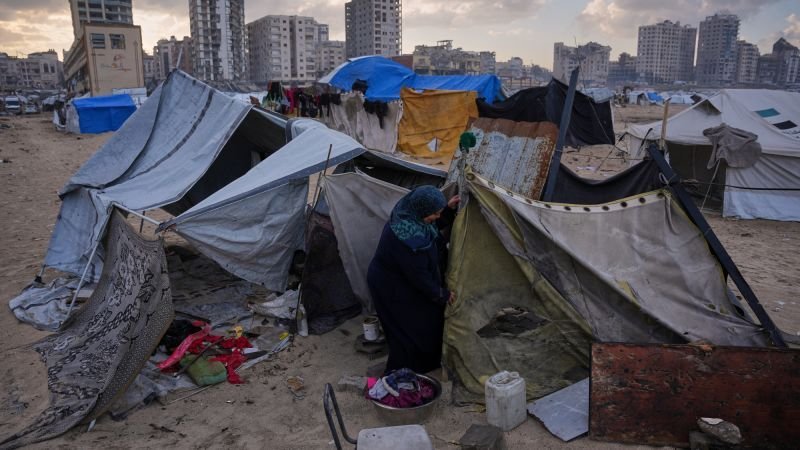
The US has announced the start of “phase two” of the Gaza ceasefire, but the road to peace remains uncertain as Israel and Hamas continue to disagree on key issues. The first phase of the ceasefire, which began almost 14 weeks ago, led to the release of all living Israeli hostages and most of the dead, as well as a significant reduction in the intensity of attacks in Gaza. However, the scale of air strikes on Gaza has not stopped altogether, with Palestinian health authorities reporting 449 people killed and 1,246 injured since the truce came into force.
Israel insists it has launched strikes to enforce the ceasefire, accusing Hamas of violating the deal and re-establishing itself in areas the IDF has withdrawn from. However, Hamas argues the high civilian toll suggests otherwise, and has accused Israel of breaching the ceasefire by refusing to reopen the Rafah crossing between Gaza and Egypt to two-way traffic for people and aid. The militant group has also accused Israel of delaying the return of the remains of hostages, with the US peace envoy Steve Witkoff warning that failure to comply with its obligations will bring “serious consequences”.
The second phase of the US peace plan includes a transitional authority being brought in to govern the strip in place of Hamas, an “international stabilisation force” deployed, and Hamas to disarm. However, the details of how these issues will be resolved remain unclear, with Hamas officials saying they are willing to discuss options for freezing or storing their weapons, but only with Palestinian guarantees. Israel has always insisted it would maintain a so-called “buffer zone” along the Israel-Gaza border, once the peace plan had progressed, but Hamas has previously said it was not prepared to lay down its weapons while Israeli forces continued operating in the strip.
Analysis: What This Means for Australia
The ongoing conflict in Gaza has significant implications for Australia’s national security and foreign policy. As a key player in the region, Australia has a vested interest in promoting peace and stability in the Middle East. The Australian government has consistently called for a two-state solution to the Israeli-Palestinian conflict, but the ongoing violence and instability in Gaza make it increasingly difficult to achieve this goal.


Security analysts say that the situation in Gaza is a major concern for Australia, as it has the potential to destabilize the entire region and create a power vacuum that could be exploited by extremist groups. The Australian government has provided significant aid to the Palestinian people, but the ongoing conflict makes it challenging to deliver this aid effectively. Law enforcement insiders warn that the situation in Gaza also has implications for Australia’s domestic security, as it can be used as a recruitment tool by extremist groups.
Industry observers believe that the situation in Gaza is also having a significant impact on the global economy, as it disrupts trade and investment in the region. The ongoing conflict also has significant humanitarian implications, with thousands of people displaced and in need of aid. The Australian government has a responsibility to promote peace and stability in the region, and to work towards a two-state solution that recognizes the rights of both Israelis and Palestinians.
Expert commentary suggests that the situation in Gaza is complex and multifaceted, and that there is no easy solution. However, it is clear that the ongoing conflict has significant implications for Australia’s national security, foreign policy, and humanitarian efforts. The Australian government must continue to work towards a peaceful resolution to the conflict, and to promote stability and security in the region.