Australia’s Population Hits 28 Million: Experts Warn of Housing Crisis as Migration Fuels Growth
- Australia’s population has officially reached 28 million, reigniting debate over migration levels and housing affordability.
- Foreign Affairs Minister Penny Wong refuses to back calls to tie migration levels to housing supply, instead defending the government’s efforts to boost housing construction.
- Net overseas migration sits at over 300,000, with the government maintaining it wants migration at sustainable levels to address skill shortages and labour demand.
- Housing remains a major concern for voters, with the Coalition calling for net overseas migration to be reduced to below 200,000.
As Australia’s population surges to 28 million, the country is facing a critical moment in its history. The latest milestone has reignited a heated debate over migration levels and their impact on housing affordability.
At the centre of the storm is Foreign Affairs Minister Penny Wong, who has refused to back calls to tie migration levels to housing supply.
Wong’s stance has sparked controversy, with critics arguing that the government’s approach is failing to address the root causes of the housing crisis. The Coalition has been vocal in its criticism, with Shadow Treasurer Angus Taylor proposing a plan to link migration levels to housing supply.
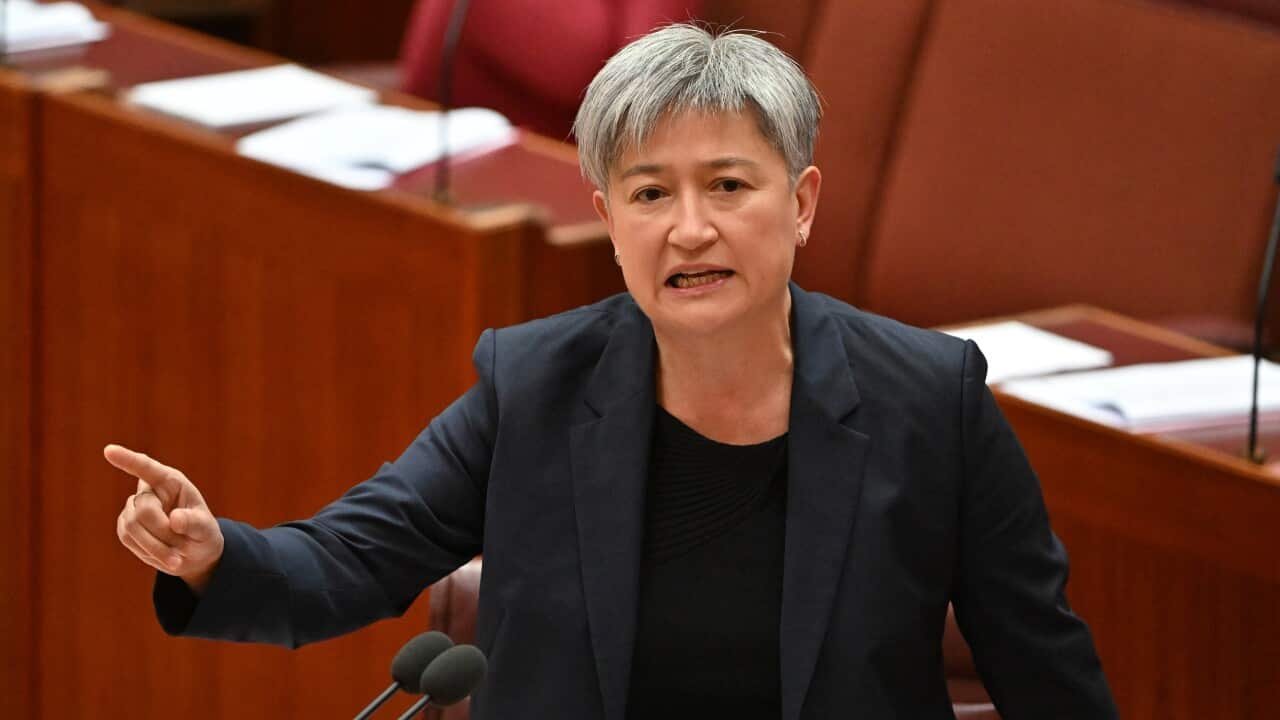
However, Wong has dismissed the idea, instead pointing to the government’s efforts to boost housing construction and increase supply.
According to Wong, the government is committed to reducing migration levels from the highs seen when Labor first came to office. “We are actually working to lower migration from the growth that we saw when we first came to government,” she said.


“You see that in the Budget papers that there has been less migration than was occurring when we first came to government.”
However, critics argue that the government’s approach is too little, too late. With net overseas migration sitting at over 300,000, many Australians are struggling to afford housing.
The Coalition has called for net overseas migration to be reduced to below 200,000, citing concerns over the impact on housing affordability and community infrastructure.
So, why is migration such a contentious issue in Australia? The answer lies in the country’s history of relying on immigration to drive growth and fill skill shortages.
However, in recent years, this approach has put pressure on housing markets, particularly in cities like Sydney and Melbourne.
Analysis: What This Means for Australia
The debate over migration levels and housing affordability has significant implications for Australia’s future. As the population continues to grow, the government must balance the need for skilled workers with the need for affordable housing.
Failure to do so risks exacerbating the housing crisis and putting pressure on community infrastructure.
Security analysts say that the government’s approach to migration must be carefully managed to avoid exacerbating social and economic tensions.
“The government needs to take a more nuanced approach to migration, one that takes into account the needs of the economy, but also the needs of the community,” said one expert.
Law enforcement insiders warn that the housing crisis has already led to increased crime and social unrest in some areas. “The government needs to take action to address the root causes of the housing crisis, rather than just treating the symptoms,” said another expert.
Industry observers believe that the government’s proposed negative gearing changes are a step in the right direction, but more needs to be done to address the shortage of affordable housing.
“The government needs to work with industry to increase the supply of affordable housing, rather than just relying on negative gearing changes,” said one observer.
As the debate over migration levels and housing affordability continues, one thing is clear: the government must take decisive action to address the crisis. Failure to do so risks undermining the very fabric of Australian society.