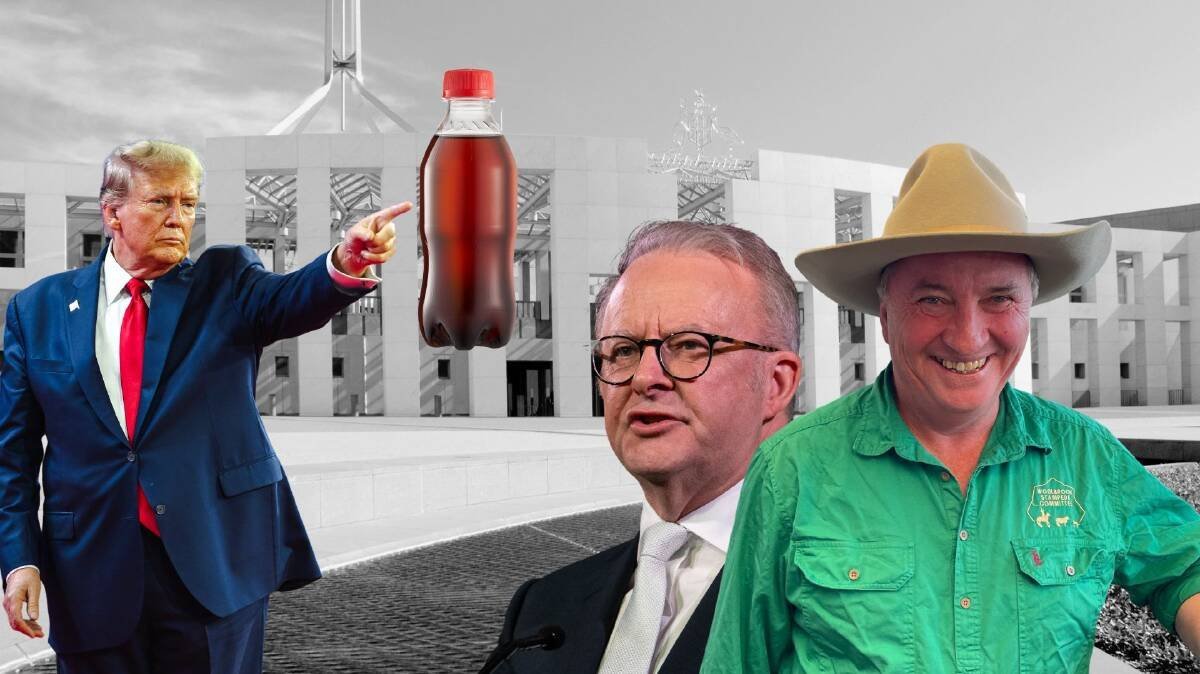
Australia’s Fuel Supply on the Brink: One Nation MP Barnaby Joyce Refuses to Condemn Trump’s Iran Threats as Global Tensions Escalate
- Donald Trump’s expletive-laden threat to Iran has sparked global alarm, with Australia’s fuel supply hanging in the balance.
- One Nation MP Barnaby Joyce has sidestepped questions about the US President’s comments, instead warning that Australia will need to rely heavily on the US if the crisis deepens.
- Australia’s vulnerability to disruptions in the Strait of Hormuz has been exposed, with around 80 to 90 per cent of the nation’s fuel passing through the critical global shipping route.
- Joyce has renewed his attack on climate policy, calling for the removal of the safeguard mechanism and arguing that it has contributed to the closure of domestic refineries.
The world teeters on the brink of chaos as Donald Trump’s explosive threat to Iran has sent shockwaves across the globe. In a dramatic ultimatum, the US President ordered Iran to reopen the Strait of Hormuz within 24 hours or face military strikes targeting key infrastructure.
The declaration, posted on Truth Social, included a blunt warning: “Open the F*****’ Strait, you crazy bastards, or you’ll be living in Hell – JUST WATCH!” Trump’s rhetoric has sparked widespread concern, with Iran’s parliamentary speaker Mohammad-Bagher Ghalibaf warning that the region would “burn” if conflict escalates further.
As the situation continues to deteriorate, One Nation MP Barnaby Joyce has found himself in the spotlight, refusing to condemn Trump’s comments in an appearance on Sunrise.

“He’s the president of the United States, so I’ll leave it up to the people of the United States to comment on the president of the United States,” Joyce said.
However, his reluctance to criticise Trump has raised eyebrows, with many questioning whether Australia’s reliance on the US will compromise its ability to speak out against the President’s aggressive rhetoric.


The Strait of Hormuz, a critical global shipping route, has become a focal point in the escalating crisis. Around 80 to 90 per cent of Australia’s fuel passes through the strait, making the nation heavily exposed to disruptions.
Joyce has warned that Australia will need to rely heavily on the US if the crisis deepens, sparking concerns about the country’s vulnerability to external threats.
“We must have a serious plan as to how to deal with this crisis and also the future one, and it’s obviously going to rely on us finding alternate sources of oil,” he said.
As the situation continues to unfold, Joyce has seized the opportunity to renew his attack on climate policy, calling for the removal of the safeguard mechanism.
He argued that the mechanism has contributed to the closure of domestic refineries, a move he described as “our stupidity to chase climate change”.
Joyce believes that parliament should revisit legislation to remove any “impediments” to oil security and reopen refinery capacity, saying the crisis has exposed how vulnerable Australia remains to disruptions beyond its control.
Analysis: What This Means for Australia
The escalating crisis in the Middle East has significant implications for Australia’s national security and economic stability. The country’s reliance on the US for military protection and fuel supplies makes it vulnerable to external threats and disruptions.
The situation highlights the need for Australia to develop a comprehensive plan to address its energy security and reduce its reliance on imported fuel. Furthermore, the crisis underscores the importance of maintaining a robust and independent foreign policy, one that is not beholden to the interests of other nations.
Security analysts say that Australia’s vulnerability to disruptions in the Strait of Hormuz is a wake-up call for the government to reassess its energy security strategy.
“The crisis has exposed the risks associated with relying on imported fuel and the need for Australia to develop a more diversified energy mix,” said one analyst.
Law enforcement insiders warn that the situation also has implications for Australia’s border security, with the potential for increased migration and asylum seeker flows if the crisis escalates further.
Industry observers believe that the crisis has significant economic implications for Australia, particularly in the event of a prolonged disruption to fuel supplies. “The situation has the potential to impact Australia’s economic growth, particularly in industries that rely heavily on fuel imports,” said one observer.
As the situation continues to unfold, it is clear that Australia must take a proactive approach to addressing its energy security and reducing its reliance on imported fuel.