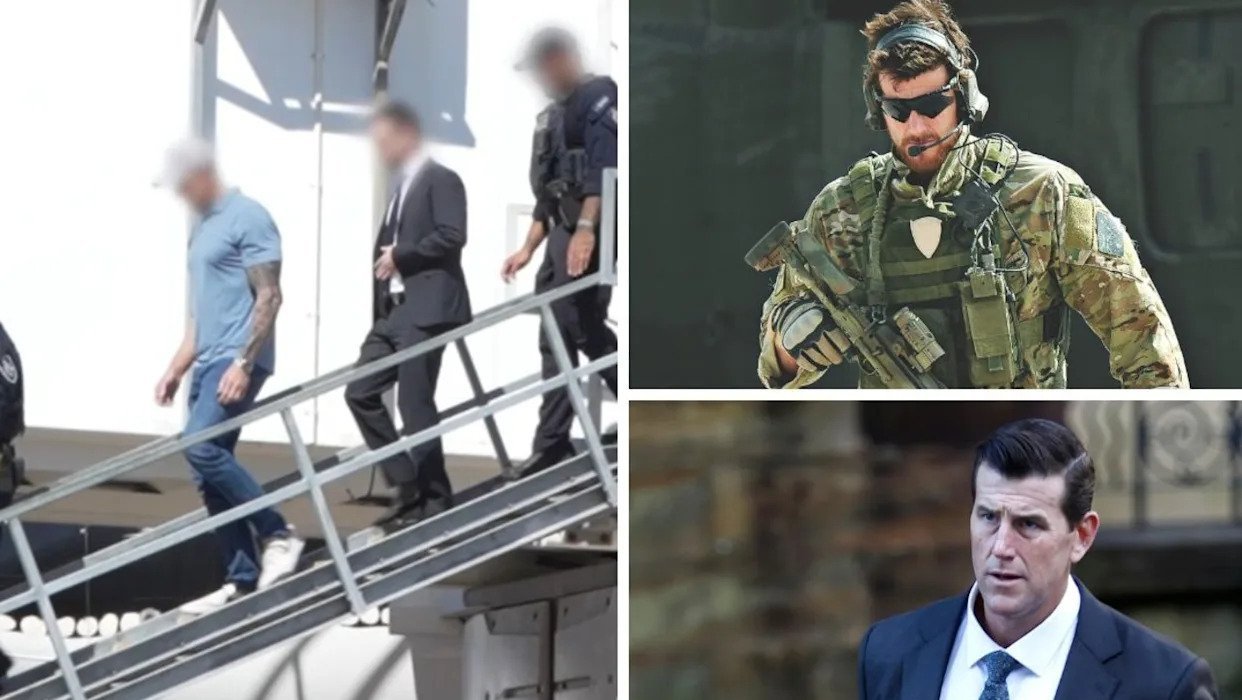
‘Free Ben Roberts-Smith!’ US Navy SEAL’s Shocking Live TV Outburst as Decorated Australian Soldier Faces War Crimes Charges
- A retired US Navy SEAL has sparked outrage with a live TV call to release Ben Roberts-Smith, the Australian soldier facing war crimes charges
- Mike Sarraille’s comments came during a breakfast TV interview on Seven’s Sunrise, where he was discussing US President Donald Trump’s looming Iran deadline
- Roberts-Smith, 47, was arrested by AFP officers at Sydney Airport on Tuesday and charged with five counts of the war crime of murder
- The Victoria Cross recipient spent the night at Sydney’s Silverwater prison on remand, with no application made for bail
In a stunning display of defiance, a retired US Navy SEAL has gone off-script during a live TV interview to call for the release of Ben Roberts-Smith, the decorated Australian soldier facing war crimes charges.
Mike Sarraille, a Texas-based veteran turned author and entrepreneur, appeared on Seven’s Sunrise on Wednesday morning to discuss US President Donald Trump’s looming Iran deadline and threat that “a whole civilisation will die”.
But as host Nat Barr was wrapping up the interview, Sarraille interjected, “Free Ben Roberts-Smith! Thank you.” The unexpected outburst left the hosts stunned, with co-host Matt Shirvington quickly moving on to the next segment.
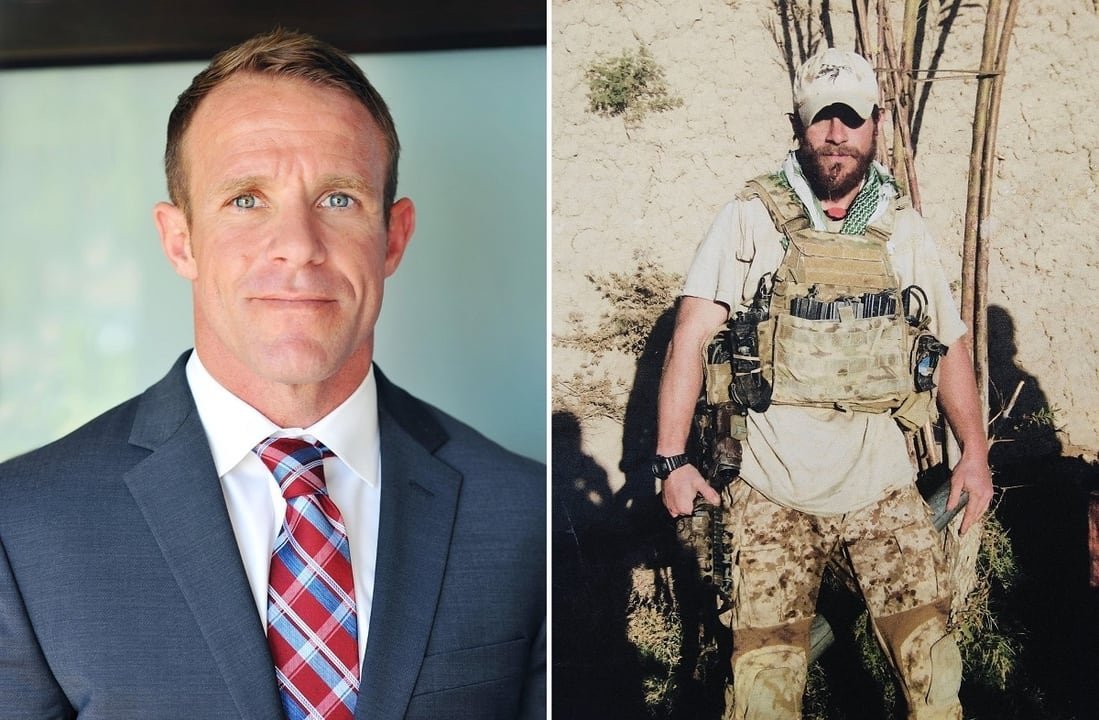
Sarraille’s comments have sparked outrage and debate, with many questioning the motivations behind his sudden call to action.
Roberts-Smith, 47, was arrested by AFP officers at Sydney Airport on Tuesday and charged with five counts of the war crime of murder, related to the deaths of Afghan nationals between 2009 and 2012.


The arrest came after the Victoria Cross recipient lost a landmark defamation battle, which found, on the balance of probability, a series of stories alleging war crimes relating to his deployment in Afghanistan to be factual.
Police allege he intentionally caused the death of two people, and aided and abetted others to intentionally cause the death of a person in three other instances.
Roberts-Smith spent the night at Sydney’s Silverwater prison on remand, with no application made for bail.
The case was mentioned in court for the first time on Wednesday, with his solicitor Jordan Portokalli telling the court, “In short, we’re not making an application for release today.”
As the case continues to unfold, many are left wondering what this means for Australia’s national security and the reputation of its military.
The country has a long history of involvement in international conflicts, and the allegations against Roberts-Smith have sparked concerns about the conduct of Australian soldiers overseas.
Analysis: What This Means for Australia
The arrest of Ben Roberts-Smith has sent shockwaves through the Australian community, with many questioning the implications for the country’s national security and military reputation.
Security analysts say that the allegations against Roberts-Smith, if proven, could have serious consequences for Australia’s international relationships and its ability to participate in future conflicts.
Law enforcement insiders warn that the case highlights the need for greater accountability and transparency within the military, particularly when it comes to the conduct of soldiers in combat zones.
Industry observers believe that the case could also have significant economic and social consequences, particularly if it leads to a decline in public trust in the military and its institutions.
As the case continues to unfold, it is clear that the allegations against Ben Roberts-Smith will have far-reaching implications for Australia and its military.
The country must now navigate the complex and sensitive issues surrounding war crimes, national security, and the conduct of its soldiers overseas.
Experts say that the case highlights the need for greater scrutiny and oversight of military operations, particularly in conflict zones.
“Professional militaries like the Australian military, the US military, we do everything in our power to maintain their safety or to mitigate risk to the civilians in areas where fighting’s going on,” Sarraille said during his TV interview.
But as the case against Roberts-Smith continues to unfold, it remains to be seen whether the Australian military and its institutions will be able to withstand the scrutiny and maintain the trust of the public.