‘Chaos Unleashed’: Wellington Residents Flee for Their Lives as Record-Breaking Rain Brings Flash Floods, Landslides and Chaos to New Zealand’s Capital
- Residents in low-lying areas of Wellington, New Zealand, were forced to evacuate as record-breaking rain brought flash floods, road closures, and landslides to the city overnight.
- Emergency services received over 150 calls for assistance as the city’s central business district and southern suburbs were inundated with water, causing widespread destruction and chaos.
- A search is underway for a man who was reported missing in the suburb of Karori, where a landslide hit a home, leaving a trail of devastation in its wake.
- Residents have been advised to move to higher ground for at least the next 24 hours as the region struggles to come to terms with the full extent of the damage.
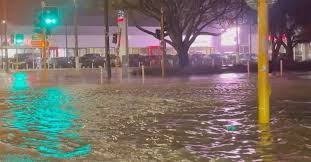
The usually tranquil streets of Wellington, New Zealand’s capital city, were transformed into raging rivers and torrents of water overnight, leaving residents running for their lives as record-breaking rain brought flash floods, landslides, and chaos to the city.
According to Mayor Andrew Little, Wellington received a staggering 77 millimeters of rain in less than an hour, its heaviest rainfall on record. The deluge caused widespread destruction, with flash flooding, road closures, and landslides reported in the city’s central business district and southern suburbs.
Emergency services were stretched to the limit as they responded to over 150 calls for assistance overnight.
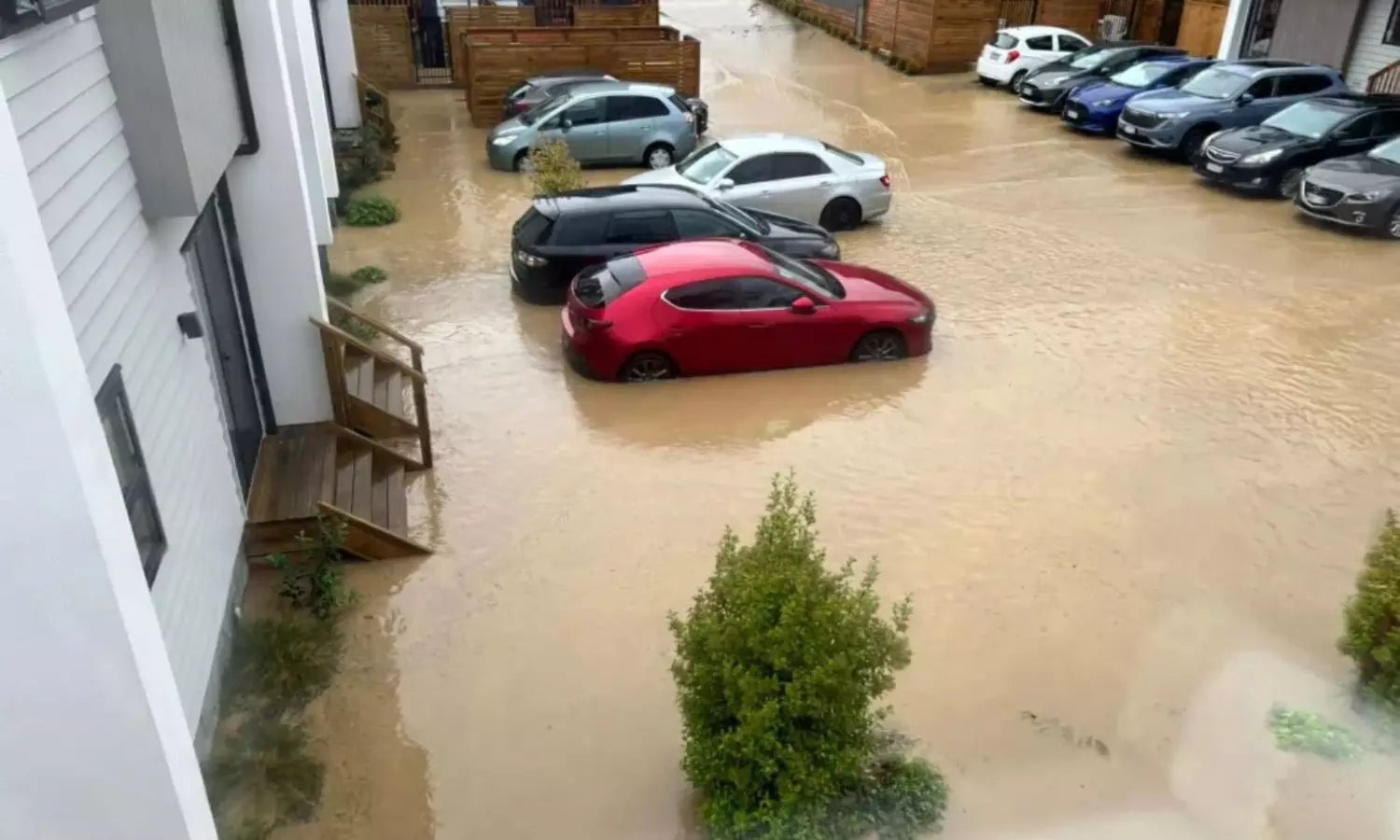
Fire and Emergency New Zealand worked tirelessly to rescue those trapped in flooded homes, while police launched a search for a man who was reported missing in the suburb of Karori.
Residents who managed to escape the worst of the flooding described the terrifying scenes they witnessed. Antoinette Spicer, a law student, told the ABC that it was the heaviest downpour she had ever experienced.



“Around 4 am yesterday was the worst. It was pitch black and [there was] a loud battering of rain, and all I could hear was sirens,” she said.
Spicer, who lives on a hill, was lucky to have escaped the worst of the flooding, but her neighbors were not so fortunate. “Neighbors down the road from us woke to water around their waist at 4 am and had to be evacuated,” she added.
The worst-affected areas, including Adelaide Road in Berhampore, were left resembling war zones, with cars submerged in the floodwater and debris scattered everywhere.
The weather had cleared for a few hours earlier in the day, allowing some of the floodwater to dissipate, but heavy rain was again hitting the city, leaving residents on edge.
As the city begins the long and arduous process of recovery, questions are being asked about the warning systems in place.
Residents have expressed concerns that they did not receive any phone messages alerting them to evacuation orders, relying instead on local news to hear about the evacuation alerts.
Wellington Region Emergency Management Office regional controller Carrie Mckenzie explained that a mobile alert was not issued for the onset of the event due to the fast-moving and unpredictable nature of thunderstorms.
However, MetService, the government’s official provider of weather warnings, did issue a severe thunderstorm warning prior to the event.
As the city struggles to come to terms with the full extent of the damage, an assistance centre has been set up for evacuees. The region, with a population of about 521,000, is bracing itself for the possibility of further severe weather events in the coming days.
This latest disaster comes on the back of severe weather that pounded the region overnight on Friday, causing flood damage, while much of the northern part of the North Island was impacted by Cyclone Vaianu just a week ago.
As the people of Wellington begin the long process of rebuilding and recovery, one thing is certain – the city will never forget the night that chaos was unleashed upon it.
Analysis: What This Means for Australia
The devastating flash floods in Wellington serve as a stark reminder of the importance of having robust emergency warning systems in place. As Australia’s own weather patterns become increasingly unpredictable, it is crucial that our emergency services are equipped to respond to severe weather events.
Security analysts say that the use of mobile alerts and social media can play a critical role in alerting people to potential dangers, but it is also important to recognize the limitations of these systems.
In situations where the weather is moving quickly, it may not always be possible to issue warnings in advance.
Law enforcement insiders warn that the aftermath of severe weather events can also bring a range of challenges, including looting and civil unrest.
As the people of Wellington begin the process of rebuilding and recovery, it is essential that authorities remain vigilant and take steps to maintain public safety.
Industry observers believe that the use of technology, such as drones and satellite imaging, can play a critical role in responding to severe weather events. By using these tools, emergency services can quickly assess damage and identify areas of need, allowing for a more effective response.
As the people of Wellington pick up the pieces and begin the long process of rebuilding, it is clear that this disaster will have far-reaching consequences for the city and its residents.
But it is also an opportunity for Australia to reflect on its own preparedness for severe weather events and to take steps to ensure that we are equipped to respond to the challenges that lie ahead.