Woolworths Under Fire: Australia’s Biggest Supermarket Chain Accused of Duping Customers with Fake Discounts in Federal Court Hearing
- Woolworths is battling claims it breached Australian Consumer Law with misleading promotions on 266 products, including Oreo cookies and Arnott’s Tim Tam biscuits.
- The supermarket giant allegedly used short-term price hikes and fake discounts to create the illusion of savings, leaving customers out of pocket.
- Woolworths’ chief commercial officer, Paul Harker, testified that the company’s pricing policies were designed to “disincentivise” suppliers and team members from “gaming” the system.
- The Federal Court case, which is set to run for two weeks, could have significant implications for consumer rights and the supermarket industry as a whole.
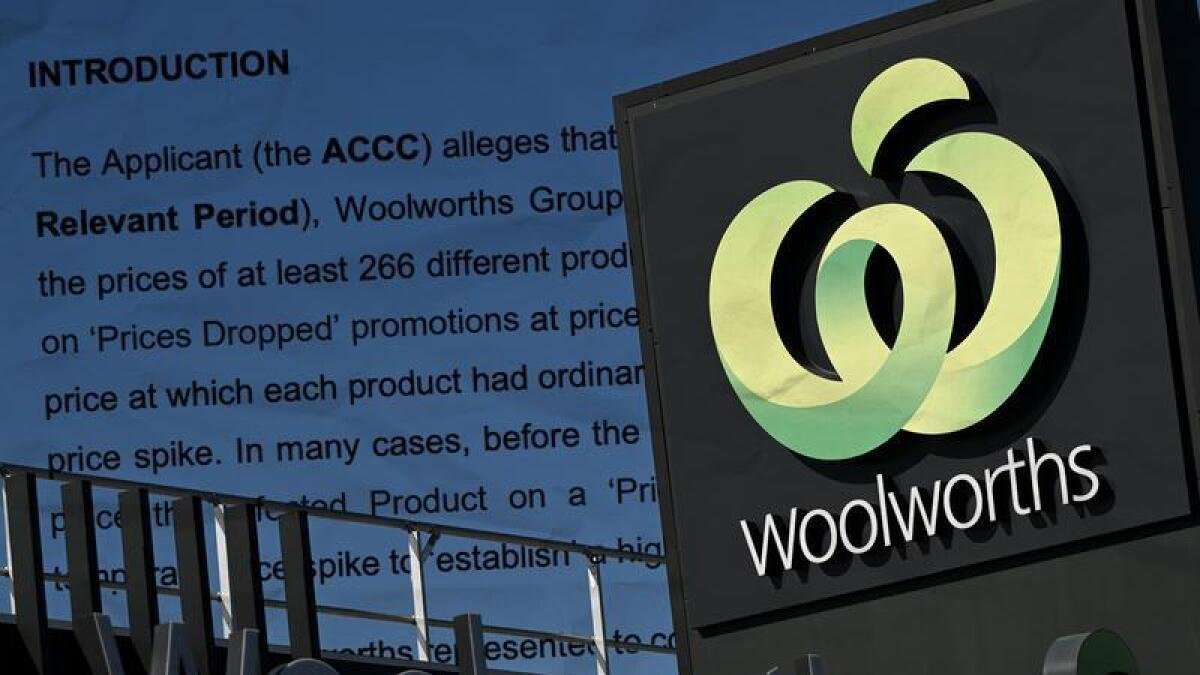
The Australian Competition and Consumer Commission (ACCC) has taken Woolworths to the Federal Court, alleging the supermarket chain engaged in deceptive conduct by promoting fake discounts on hundreds of products.
The ACCC claims Woolworths breached Australian Consumer Law by falsely representing prices on 266 products, including popular brands like Oreo cookies, Arnott’s Tim Tam biscuits, and Dolmio sauces.
According to the ACCC, Woolworths implemented short-term price hikes of at least 15% on products that had been on shelves at stable prices for at least six months.

The supermarket then placed these products on a Prices Dropped promotion at a lower price, but the lowered prices remained higher than, or the same as, the original stable price.
This created the illusion of savings, leaving customers out of pocket.




Woolworths’ chief commercial officer, Paul Harker, testified in court that the company’s pricing policies were designed to “disincentivise” suppliers and team members from “gaming” the system.
Harker claimed that the policies were put in place to ensure that suppliers and team members worked hard to keep prices low, and that there were negative consequences for those who tried to manipulate the system.
However, the ACCC alleges that Woolworths’ policies were actually designed to mislead consumers and create the illusion of savings. The court heard that Woolworths changed its pricing policies in January 2022, reducing the price establishment period from six months to three to six weeks.
This change allowed products to be taken off the Prices Dropped promotion, placed on a negotiated cost that prioritized Woolworths’ gross profit margins, and then put back on the program after a short period.
Harker claimed that the changes were made to allow products to remain on the Prices Dropped program for longer, despite necessary price increases. However, the ACCC alleges that this change was actually designed to deceive consumers and create the illusion of savings.
Analysis: What This Means for Australia
The Woolworths case has significant implications for consumer rights and the supermarket industry as a whole. If the ACCC is successful in its claims, it could set a precedent for other supermarkets to prioritize transparency and honesty in their pricing practices.
The case also highlights the need for greater regulation and oversight of the supermarket industry to protect consumers from deceptive conduct.
Security analysts say that the case is a wake-up call for Australian consumers, who need to be more vigilant when it comes to supermarket pricing practices.
“Consumers need to be aware of the tactics used by supermarkets to create the illusion of savings,” said one analyst. “They need to read the fine print and do their research before making a purchase.”
Law enforcement insiders warn that the case could have far-reaching consequences for the supermarket industry, with potential fines and penalties for companies found to be engaging in deceptive conduct.
“The ACCC is taking a strong stance on consumer protection, and supermarkets need to take notice,” said one insider.
Industry observers believe that the case could lead to changes in the way supermarkets approach pricing and promotions. “Supermarkets will need to be more transparent and honest in their pricing practices,” said one observer.
“This could lead to a more level playing field for consumers and a more competitive market.”