AUKUS in Jeopardy: Expert Warns of ‘Severe Consequences’ as Britain’s Commitment Falters and Australia’s Security Hangs in the Balance
- Australia’s national security is under threat as Britain’s commitment to the AUKUS defence pact falters, sparking fears of “severe consequences” for the country and its allies.
- A damning UK parliamentary report has revealed that Britain’s financial commitment to the pact has “already faltered”, with spiralling costs and delays putting the delivery of eight state-of-the-art nuclear-powered submarines at risk.
- Security expert Dr Alan Mendoza warns that Russia and China will be “relishing” the news, and that Britain’s lack of commitment will embolden them to continue with aggressive manoeuvrings.
- The future of the pact, which promises Canberra eight nuclear-powered submarines by the late 2030s, hangs in the balance as Australia’s submarine agency vows to work with the UK government to address the concerns.
The AUKUS defence pact, struck between the US, UK, and Australia in 2021, was hailed as a major coup for the country’s national security.
But just two years on, the agreement is facing its biggest challenge yet, with Britain’s commitment to the pact faltering and Australia’s security hanging in the balance.
According to a damning report by the UK’s House of Commons Defence Committee, Britain’s financial commitment to the pact has “already faltered”, with spiralling costs and delays putting the delivery of eight state-of-the-art nuclear-powered submarines at risk.
The report warns that delays will have “potentially severe consequences” for the UK, Europe, and allies like Australia.
Security expert Dr Alan Mendoza, co-founder and executive director of the Henry Jackson Society, has issued a stark warning to Australians, saying that Russia and China will be “relishing” the news.



“They will conclude that we’re not a serious power, we are not a serious power who are committed to working with our allies in the way that we said we were,” he told news.com.au.
Dr Mendoza said that Britain’s lack of commitment to the pact will embolden Russia and China to continue with aggressive manoeuvrings, confident in the knowledge that the UK will be unable to deter them or prevent them from doing so.
“We’re not a serious power who are committed to working with our allies in the way that we said we were,” he said.
The AUKUS defence pact was struck in 2021, with the US, UK, and Australia agreeing to work together to deliver eight state-of-the-art nuclear-powered submarines to Canberra by the late 2030s.
But spiralling costs, lethargic investment, and a lack of political will have cast serious doubt on the pact’s longevity.
Dr Mendoza said that Britain must get its act together on defence spending, saying that the country is suffering from a “slowdown across the board” which reflects not a lack of commitment but “a lack of money and a lack of prioritisation within the UK budgeting process” for deals struck with allies.
The British report also gave a stern assessment of Washington D.C.’s commitment to the pact, saying that the Trump administration’s “America First” approach to foreign policy, the war in Ukraine, and other geopolitical factors had “undermined the case for AUKUS and its chances of successful delivery.”
Despite the agreement having widespread political support in all three countries, the report said that America’s submarine building capacity had waned and risked causing further delays.
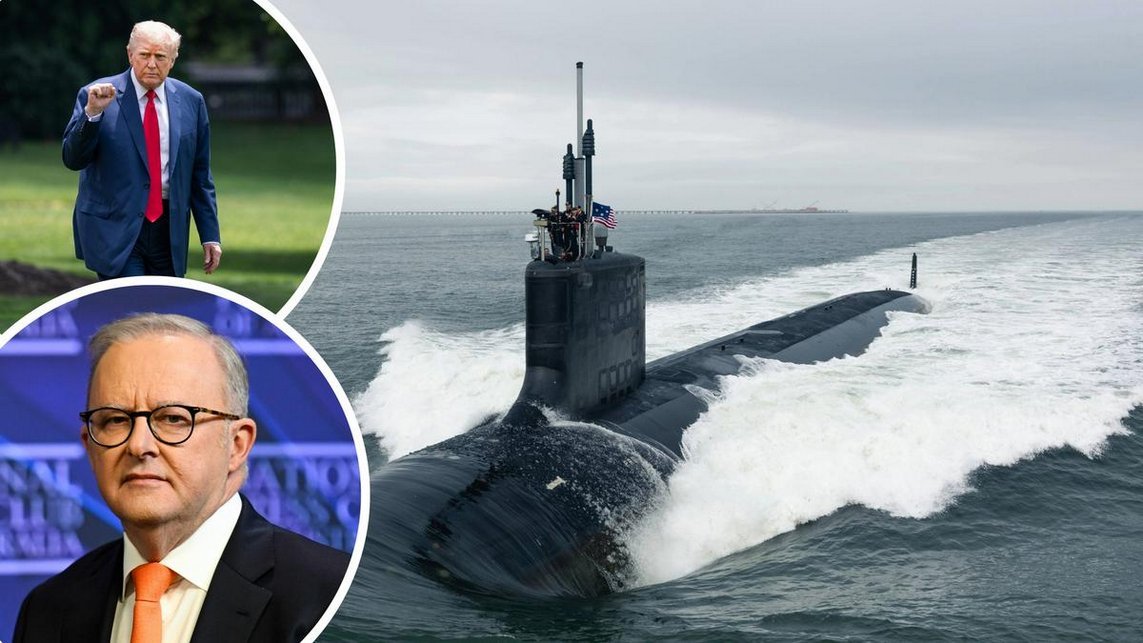
Even more concerning to Australia is the fate of the US Virginia-class nuclear subs, which Canberra would get three to five of while the SSN-AUKUS class is being built.
Dr Mendoza said that there was still “a lot of life in AUKUS” and it was clearly in America’s interest to use the pact as a tool against an increasingly expansionist China.
“The America First policy has been quite clear that China is, if you like, the power to be deterred and prevented. AUKUS helps with that,” he said.
Analysis: What This Means for Australia
The potential collapse of the AUKUS defence pact has serious implications for Australia’s national security. The country’s submarine agency has vowed to work with the UK government to address the concerns, but the future of the pact remains uncertain.
Security analysts say that the failure of the AUKUS pact would be a major blow to Australia’s national security, leaving the country vulnerable to threats from China and other adversaries.
“Australia needs to be prepared for all manner of threats, and the AUKUS pact is a key part of that,” said one analyst.
Law enforcement insiders warn that the collapse of the pact would also have serious implications for Australia’s ability to deter and prevent threats from China and other adversaries.
“Australia needs to be able to project power and deter threats, and the AUKUS pact is a key part of that,” said one insider.
Industry observers believe that the collapse of the pact would also have serious economic implications for Australia, with the country’s defence industry likely to be severely impacted.
“The AUKUS pact is a major opportunity for Australia’s defence industry, and the collapse of the pact would be a major blow,” said one observer.
In conclusion, the potential collapse of the AUKUS defence pact is a major concern for Australia’s national security, and the country needs to be prepared for all manner of threats.
The government must take immediate action to address the concerns and ensure the pact’s survival.
A spokesperson for Australia’s submarine agency said that the agency was aware of the UK report and its findings, and would work with the UK government to address the concerns.
“Australia, the UK, and the US share an enduring commitment to delivering AUKUS and a strong appreciation of its strategic importance to each partner,” the spokesperson said.
The UK’s Ministry of Defence said that it remained fully committed to delivering next-generation capabilities through AUKUS, and would report on the committee’s report in due course.