
One Nation’s Rise to Power: The Looming Threat to Australia’s Political Landscape
- A new ANU study reveals One Nation’s surge in popularity is not a temporary protest, but a lasting phenomenon driven by deep-seated concerns about government capacity and financial stress.
- The minor party’s support base is characterised by low hope, high financial stress, scepticism about government, and a populist orientation towards politics.
- One Nation’s rise has significant implications for Australia’s national security, law enforcement, and economic stability, as the party’s policies on border control and environmental laws diverge sharply from the mainstream.
- The ANU report shows that Australians are increasingly polarised, with One Nation eliciting strong emotions, and its support base reflecting a distinctive and internally coherent set of attitudes and values.
The Coalition’s One Nation problem has just got a whole lot worse.
A massive new ANU study has found that the minor party’s surge in popularity is not a flash in the pan, but a lasting phenomenon that threatens to upend Australia’s political landscape.
The report, based on a survey of 3,662 adult Australians, reveals that One Nation’s support base is driven by deep-seated concerns about government capacity, financial stress, and a populist orientation towards politics.
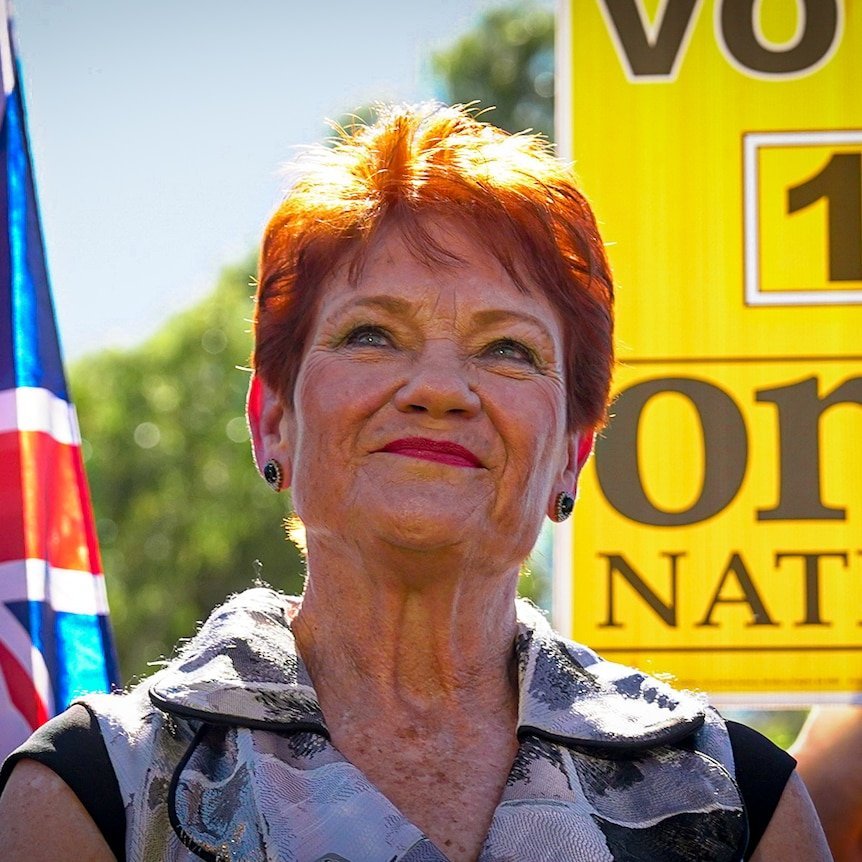
Pauline Hanson’s One Nation has always been a polarising force in Australian politics, but the ANU study shows that the party’s support is not just a protest vote.
Australians are actually barracking for One Nation, with 11.7 per cent of respondents expressing strong approval for the party.




This is in stark contrast to the Greens, which top the poll as the most hated party, with 25.6 per cent of respondents reporting a strong dislike.
So, what’s driving One Nation’s rise to power? The ANU report identifies a number of key factors, including financial stress, scepticism about government capacity, and a populist orientation towards politics.
One Nation’s support base is characterised by low hope, high financial stress, and a strong desire for change. The party’s policies on border control and environmental laws are also highly distinctive, with supporters favouring stricter controls and opposing strict environmental laws.
The implications of One Nation’s rise are significant, particularly for Australia’s national security, law enforcement, and economic stability. The party’s policies on border control, for example, diverge sharply from the mainstream, and could have major consequences for Australia’s relationships with its regional neighbours.
Similarly, One Nation’s opposition to strict environmental laws could have significant economic and social consequences, particularly for rural and regional communities.
As the federal budget looms, the ANU report shows that Australians broadly support the role of government, with a majority supporting government responsibility across 13 domains, including health and border control.
However, the report also reveals a worrying decline in institutional confidence, with more Australians than ever expressing concern about public debt and the government’s ability to deliver.
Analysis: What This Means for Australia
The rise of One Nation poses significant challenges for Australia’s national security, law enforcement, and economic stability.
The party’s policies on border control and environmental laws are highly distinctive and could have major consequences for Australia’s relationships with its regional neighbours and the environment.
Furthermore, One Nation’s support base reflects a deep-seated desire for change and a strong sense of disillusionment with the mainstream parties.
Security analysts say that One Nation’s rise could have significant implications for Australia’s national security, particularly in terms of border control and counter-terrorism.
The party’s policies on these issues could lead to a more isolationist and protectionist approach, which could have major consequences for Australia’s relationships with its regional neighbours.
Law enforcement insiders warn that One Nation’s rise could also have significant implications for community safety, particularly in rural and regional areas. The party’s policies on law and order could lead to a more punitive approach, which could have major consequences for community cohesion and social stability.
Industry observers believe that One Nation’s rise could also have significant implications for Australia’s economy, particularly in terms of trade and investment. The party’s policies on trade and investment could lead to a more protectionist approach, which could have major consequences for Australia’s economic stability and growth.