Albanese’s Budget Bombshell: $300 Tax Cut Looms as Election Sweetener, But Will It Fuel Inflation?
- A one-off tax break of up to $300 for Australian workers is on the table for the May 12 federal budget, despite concerns it could fuel inflation.
- Prime Minister Anthony Albanese refuses to rule out the plan, saying voters will have to wait until budget day to find out.
- Treasurer Jim Chalmers’ earlier hints of limited cost-of-living measures have been contradicted by reports of a possible income tax offset.
- Economists are divided on the proposal, with some warning it could exacerbate inflation, while others see it as a more targeted way to provide relief.
The federal budget is just around the corner, and speculation is rife about what sweeteners the government might have in store for voters. One proposal that’s gained significant attention is a one-off tax break of up to $300 for Australian workers.
The plan, reported by The Australian, would see an earned income offset of between $200 and $300 for every Australian worker who pays tax, but only for the current financial year and only applicable to earned income from work.
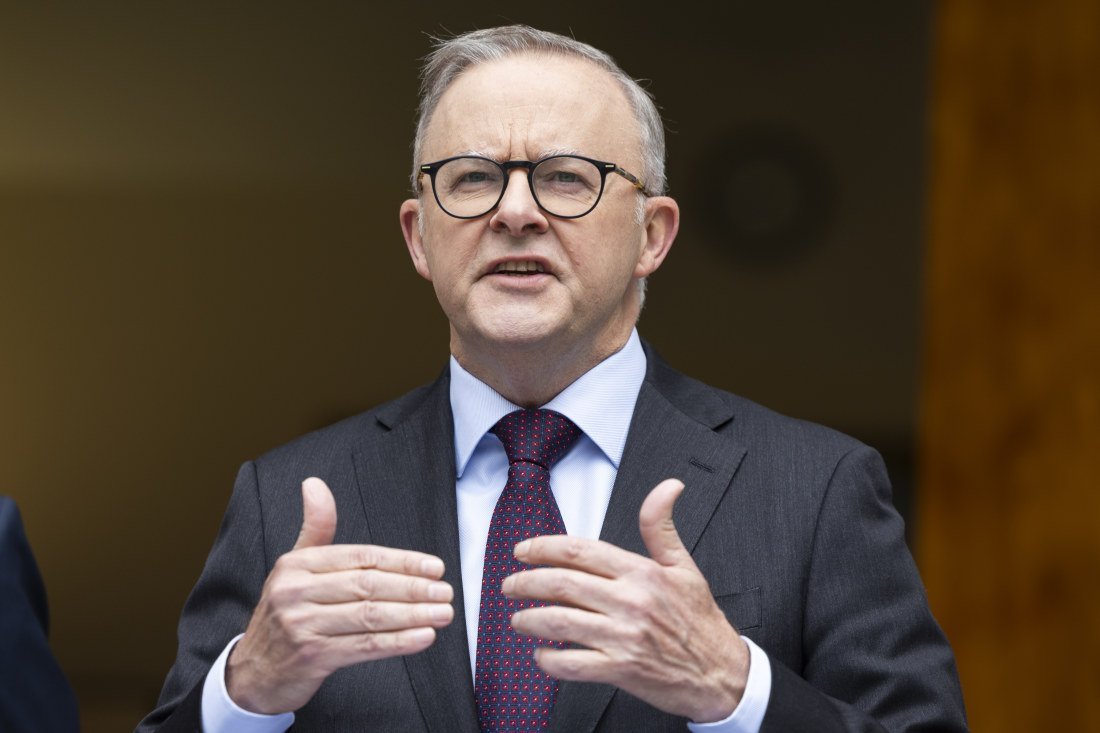
Prime Minister Anthony Albanese has refused to confirm or deny the plan, saying that voters will have to wait until budget day to find out what’s in store.

“It’s a whole lot of speculation out there in budgets, and that’s what happens,” Mr Albanese said.
“Some of it’s right, some of it’s wrong.” The Coalition has expressed concerns about the potential for the tax cut to fuel inflation, but is waiting for more details before announcing a position.




Meanwhile, Treasurer Jim Chalmers had earlier hinted that cost-of-living measures would be limited to existing announcements, including the temporary reduction of the fuel excise and modest top-up tax cuts legislated last term.
However, reports of the income tax offset have thrown a spanner in the works, leaving many wondering what other surprises the budget might hold.
Analysis: What This Means for Australia
The proposed tax cut has significant implications for the economy and Australian workers.
On one hand, it could provide much-needed relief for households struggling with the cost of living. On the other hand, it could exacerbate inflation, which is already a major concern for the Reserve Bank.
AMP chief economist Shane Oliver believes that an income tax offset is a better way to provide cost-of-living relief than the fuel excise cut, but notes that it’s not without its risks.
“The fuel tax reduction just removed the price signal to use less fuel,” he said. “There might be concern about inflation, but by the same token, it’s not big, and it will provide some help.”
However, not everyone is convinced.
Tim Wilson, the Shadow Treasurer, has warned that the measure could fuel inflation, citing the International Monetary Fund’s concerns about the impact of such policies. “We can’t until I see the detail, but we know the consequences,” he said.
“The [International Monetary Fund] has said if you go down this path, it will fuel inflation. It will give with one hand and then take even worse and harder with another.”
Security analysts say that the government’s decision to consider a tax cut in the midst of rising inflation is a gamble that could have unintended consequences.
“It’s a high-risk strategy that could backfire and make things worse,” one analyst noted. “The government needs to be careful not to fuel inflation further and make life even harder for Australian families.”
The debate highlights the complex trade-offs involved in economic policy-making and the need for careful consideration of the potential consequences.
As the budget approaches, Australians will be watching closely to see how the government chooses to balance competing priorities and address the pressing issues facing the country.
Industry observers believe that the government’s decision will have significant implications for the upcoming election. “This is a clear attempt to buy votes, but it’s a short-sighted strategy that could ultimately backfire,” one observer noted.
“The government needs to focus on long-term solutions rather than quick fixes.”
In conclusion, the proposed tax cut is a complex issue with significant implications for the economy and Australian workers.
While it could provide much-needed relief for households struggling with the cost of living, it also risks exacerbating inflation and undermining the government’s economic credibility.
As the budget approaches, Australians will be watching closely to see how the government chooses to balance competing priorities and address the pressing issues facing the country.
Australian economy cost of living Reserve Bank of Australia International Monetary Fund
The federal budget is just around the corner, and speculation is rife about what sweeteners the government might have in store for voters. One proposal that’s gained significant attention is a one-off tax break of up to $300 for Australian workers. The plan, reported by The Australian, would see an earned income offset of between $200 and $300 for every Australian worker who pays tax, but only for the current financial year and only applicable to earned income from work.
Prime Minister Anthony Albanese has refused to confirm or deny the plan, saying that voters will have to wait until budget day to find out what’s in store. “It’s a whole lot of speculation out there in budgets, and that’s what happens,” Mr Albanese said. “Some of it’s right, some of it’s wrong.” The Coalition has expressed concerns about the potential for the tax cut to fuel inflation, but is waiting for more details before announcing a position.
Analysis: What This Means for Australia
The proposed tax cut has significant implications for the economy and Australian workers. On one hand, it could provide much-needed relief for households struggling with the cost of living. On the other hand, it could exacerbate inflation, which is already a major concern for the Reserve Bank. AMP chief economist Shane Oliver believes that an income tax offset is a better way to provide cost-of-living relief than the fuel excise cut, but notes that it’s not without its risks. “The fuel tax reduction just removed the price signal to use less fuel,” he said. “There might be concern about inflation, but by the same token, it’s not big, and it will provide some help.”
However, not everyone is convinced. Tim Wilson, the Shadow Treasurer, has warned that the measure could fuel inflation, citing the International Monetary Fund’s concerns about the impact of such policies. “We can’t until I see the detail, but we know the consequences,” he said. “The [International Monetary Fund] has said if you go down this path, it will fuel inflation. It will give with one hand and then take even worse and harder with another.”
The debate highlights the complex trade-offs involved in economic policy-making and the need for careful consideration of the potential consequences. As the budget approaches, Australians will be watching closely to see how the government chooses to balance competing priorities and address the pressing issues facing the country.
In conclusion, the proposed tax cut is a complex issue with significant implications for the economy and Australian workers. While it could provide much-needed relief for households struggling with the cost of living, it also risks exacerbating inflation and undermining the government’s economic credibility. As the budget approaches, Australians will be watching closely to see how the government chooses to balance competing priorities and address the pressing issues facing the country.