Australia’s Most Wanted Man: The 216-Day Manhunt that Changed Everything
- A journalist’s harrowing encounter with a gun-wielding farmer while investigating the country’s longest and most expensive manhunt
- The shocking discovery of hundreds of files containing child exploitation material on Dezi Freeman’s computer
- The unsung heroes of the investigation: the officers who risked their lives to bring Freeman to justice
- A gripping account of the seven-month operation that left two police officers dead and a nation in shock
As a journalist, I’ve had my fair share of close calls, but nothing could have prepared me for the day I came face-to-face with a gun-wielding farmer in the midst of Australia’s most extensive manhunt.
It was day two of the 216-day operation to capture Dezi Freeman, a double cop killer who had gone rogue in the Victorian town of Porepunkah.
My cameraman and I were doorknocking for answers, trying to piece together the chaos and confusion that had unfolded in the hours following the shooting.
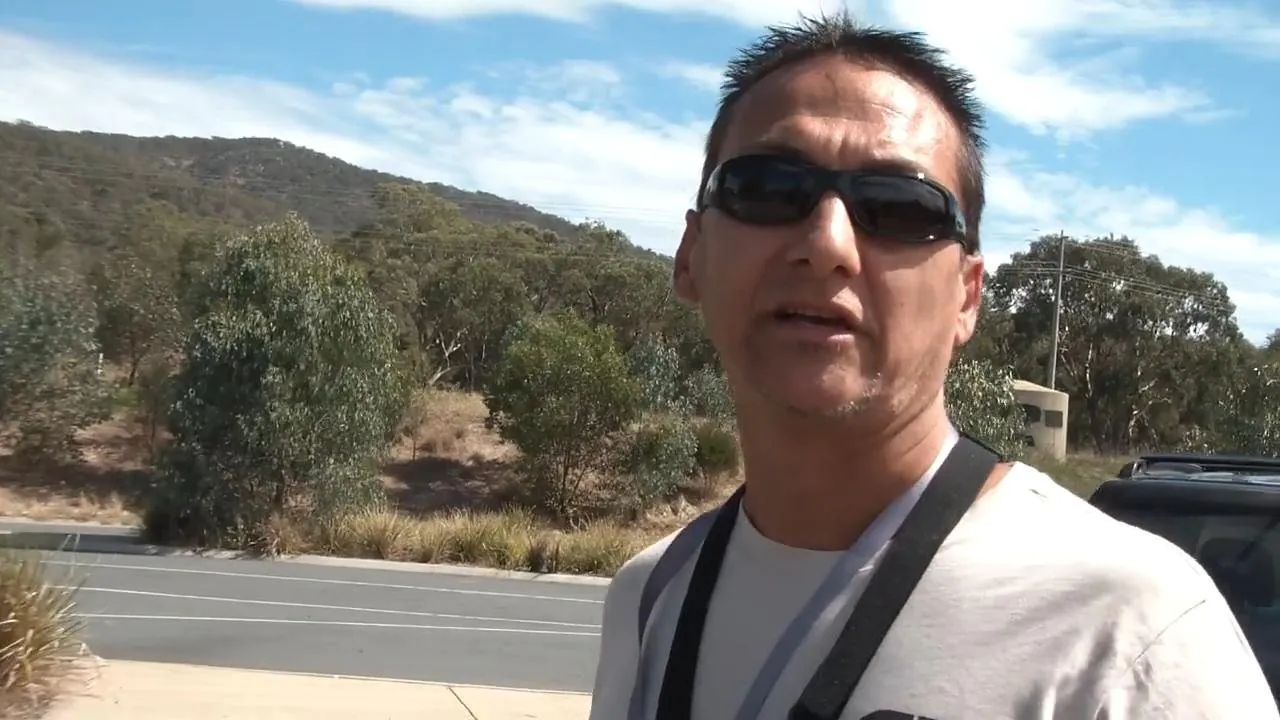
But as I stood at the doorstep, microphone in hand and notebook at the ready, I was confronted by a farmer in a beanie, holding a gun.
He wasn’t pointing it at me, but the message was clear: this was a man on high alert, ready to defend himself at all costs. I quickly retreated, my cameraman and I hot-tailing it out of there as fast as we could.

It was a sobering reminder of the risks we take as journalists, and the unpredictable nature of the job.
Later that day, a special operations group member pulled us aside, his words sending chills down my neck. “I’ve got protection.
You’ve got nothing. And this man is unhinged.
He could be out there in the bush right now. He could be watching us right now.” It was a stark warning, one that made me realize just how vulnerable we were in that moment.
The confidence that comes with being a crime reporter, used to asking tough questions and pushing for answers, drained from my face. I knew I had to prioritize my safety, and that of my unborn child.
As the investigation unfolded, I was struck by the complexities of the case.
The police had been called to Freeman’s home not because of his anti-authoritarian views, but because of allegations of historical sexual offences involving a minor.
The warrant was legitimate, and the officers who arrived at his doorstep were there to protect a vulnerable child. But it was this very act of protection that led to their deaths.
Despite the overwhelming evidence against him, many in the sovereign citizen community that supported Freeman continue to defend him.
Some even went so far as to label the police “terrorist thugs” and claim that “any good cop is a dead cop.” It was a chilling reminder of the divisions that exist within our society, and the dangers that law enforcement officers face every day.
Behind the scenes, the mental load on the officers pursuing justice was immense. They were dealing with grief, hostility, and the weight of responsibility for bringing Freeman to justice.
It was a burden that few of us can truly understand, and one that would have a lasting impact on those involved.
Analysis: What This Means for Australia
The Dezi Freeman case raises serious questions about national security, law enforcement, and the impact on Australian communities.
The fact that Freeman was able to evade capture for so long, despite the efforts of the police and intelligence agencies, is a worrying sign of the challenges we face in keeping our citizens safe.
Furthermore, the support Freeman received from some quarters highlights the need for greater awareness and education about the dangers of extremist ideologies and the importance of community cohesion.
Law enforcement insiders warn that the Freeman case is a wake-up call for Australian authorities, highlighting the need for greater resources and support for those on the frontlines.
“This case shows us that we need to be prepared for anything,” one source said.
“We need to be equipped with the right tools and training to deal with individuals like Freeman, who are willing to use violence to further their agendas.”
Industry observers believe that the Freeman case will have a lasting impact on the way we approach law enforcement and national security in Australia. “This case will be studied for years to come,” one expert said.
“It will inform our strategies for dealing with extremist groups and individuals, and will help us to better understand the complexities of these types of investigations.”
As I reflect on my experience covering the Dezi Freeman case, I am reminded of the complexities and challenges of our job as journalists.
We are often the first on the scene, the first to bear witness to the chaos and confusion that unfolds in the aftermath of a tragedy.
But we are also human beings, with families and loved ones who depend on us to come home safely at the end of each day.
The Freeman case was a sobering reminder of the risks we take, and the importance of prioritizing our safety and well-being in the pursuit of a story.
In the end, it was a small team of dedicated officers who brought Freeman to justice, their tireless efforts and determination ultimately leading to his capture and death.
It was a fitting end to a case that had captivated and horrified the nation, a reminder of the bravery and sacrifice that our law enforcement officers make every day.