
Australia-US Trade War Looms: ‘Rotten’ Tariffs Spark Fierce Row Over Slavery and Free Trade
- The US plans to slap a 12.5 per cent tariff on dozens of countries, including Australia, over alleged failures to prevent slavery and forced labour.
- Prime Minister Anthony Albanese slams the move as “unjustified and inconsistent” with free trade agreements, sparking a fierce row with the Trump administration.
- The tariffs could have far-reaching consequences for Australian businesses and consumers, with Opposition Leader Angus Taylor labelling them “rotten” and vowing to fight against them.
- Experts warn the move could escalate the trade war between the two nations, with former Australian ambassador to the US Joe Hockey saying Donald Trump is “convinced” tariffs are beneficial to the US.
The United States has sparked a fierce trade row with Australia by announcing plans to impose a 12.5 per cent tariff on dozens of countries, including its junior ally, over alleged failures to prevent slavery and forced labour.
The move has been slammed by Prime Minister Anthony Albanese as “unjustified and inconsistent” with free trade agreements between the two nations.
The US claims that Australia has failed to take action to prevent the importation of goods made with forced labour, creating an “unlevel playing field” for American workers.
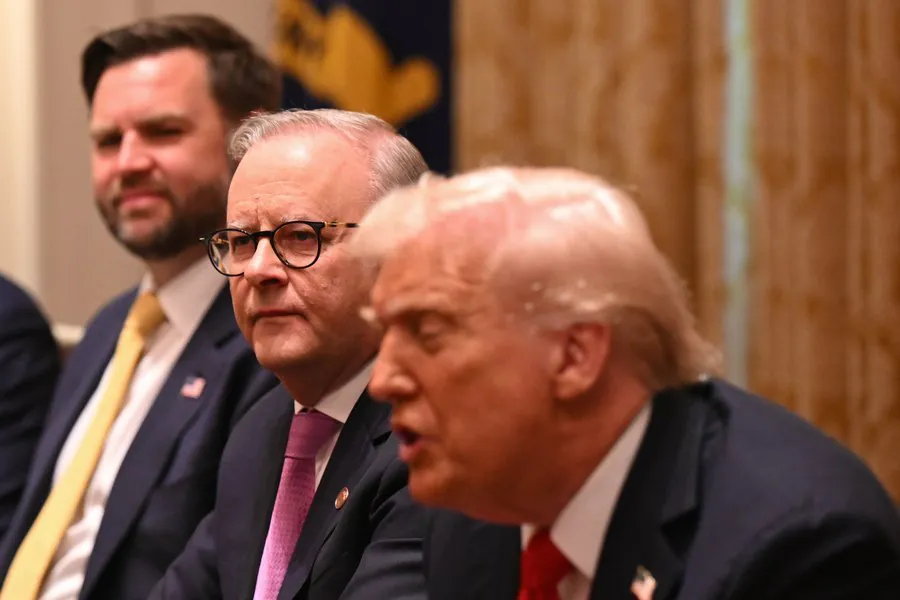
However, Mr Albanese argues that Australia has world-leading legislation addressing forced labour and modern slavery, which passed through parliament with unanimous support.
The tariffs, which will replace the US global 10 per cent temporary import surcharge, are set to come into effect in July and will apply to more than 50 countries.
Australian Trade Minister Don Farrell has met with US trade representative Jamieson Greer to express his concerns, but the US appears unlikely to back down.
The move has significant implications for Australian businesses and consumers, who could face increased costs and reduced access to US markets.
Opposition Leader Angus Taylor has labelled the tariffs “rotten” and vowed to fight against them, while experts warn that the move could escalate the trade war between the two nations.
Former Australian ambassador to the US Joe Hockey, who has argued with Donald Trump about tariffs, says the US President is “convinced” that tariffs are beneficial to the US.
However, Mr Hockey argues that Mr Trump fails to see the inflationary and negative impact that tariffs have on American consumers.
Australia’s Anti-Slavery Commissioner Chris Evans has accused Mr Trump of using the issue of slave labour as a “play thing” in his ongoing trade war.
“I don’t want to be seen in any way to be supporting the moves by the American president because they’re not motivated by the right reasons,” he said.
So, what does this mean for Australia?
The answer is clear: the country is facing a serious threat to its trade relationships with the US, which could have far-reaching consequences for businesses and consumers alike.
Analysis: What This Means for Australia
The imposition of tariffs by the US is a worrying development for Australia, which has long been a strong advocate for free trade. The move has significant implications for Australian businesses, which could face increased costs and reduced access to US markets.
It also raises concerns about the impact on Australian consumers, who could see prices rise as a result of the tariffs.
Security analysts say that the move could also have broader national security implications, as it could damage the relationship between the two nations and create uncertainty in the region.
“This is a concerning development that could have far-reaching consequences for Australia’s trade relationships and national security,” said one analyst.
Law enforcement insiders warn that the move could also create new challenges for Australian authorities, who may need to work more closely with US counterparts to address concerns about forced labour and modern slavery.
“This is a complex issue that requires a coordinated approach,” said one insider.
Industry observers believe that the move could also have significant economic consequences for Australia, which could see its trade surplus with the US reduced as a result of the tariffs.
“This is a worrying development for Australian businesses, which could face significant challenges as a result of the tariffs,” said one observer.
As the situation continues to unfold, one thing is clear: Australia is facing a serious challenge to its trade relationships with the US, and it will require careful diplomacy and negotiation to resolve the issue.
trade war free trade slavery modern slavery Australian Bureau of Statistics Organisation for Economic Co-operation and Development