
Chicago Descends into Chaos: 6 Dead, 28 Wounded in Wave of Gun Violence Over Juneteenth Weekend
- Mass shootings and drive-by attacks leave trail of bloodshed across Chicago, with victims as young as 14 and as old as 70
- Mayor Brandon Johnson vows to take action, but critics say more needs to be done to address the city’s gun violence epidemic
- Police struggle to keep up with the pace of violence, with no arrests made in connection with the shootings as of Saturday night
- Experts warn that the surge in gun violence is a symptom of deeper social and economic issues plaguing Chicago’s communities
The city of Chicago was left reeling over the Juneteenth weekend as a wave of gun violence swept across its streets, leaving six people dead and 28 others wounded.
The violence erupted on Thursday and continued throughout the extended holiday weekend, with police struggling to keep up with the pace of the shootings.
The largest mass shooting occurred on Friday night in the Roseland neighborhood on the South Side, where a red SUV pulled up to a large crowd and two people inside opened fire, injuring 13 people.
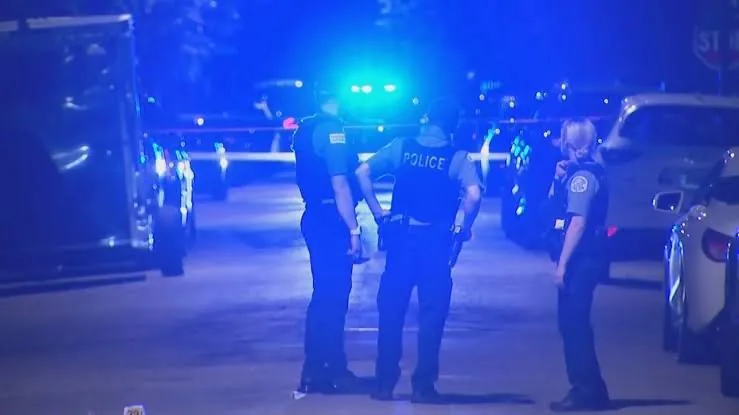
The victims ranged in age from 14 to 70, and the incident marked the latest in a string of mass shootings that have plagued the city in recent months.
Mayor Brandon Johnson addressed the mass shooting on Saturday, saying it was a heartbreaking reminder of the work that still needs to be done to protect the lives of those impacted by gun violence.
“As a father, as a husband, as a brother, as a cousin, just as a resident, it is heartbreaking,” he said. “It’s difficult to even digest and consume.
There are too many families that have experienced loss in this city.”
But critics argue that the mayor’s words are not enough, and that more needs to be done to address the root causes of the violence.
“We need to get to the root of the problem, which is poverty, lack of opportunities, and a lack of investment in our communities,” said one community leader.
“We can’t just keep putting Band-Aids on the problem and expecting it to go away.”
Analysis: What This Means for Australia
The surge in gun violence in Chicago has significant implications for Australia, particularly in terms of national security and law enforcement. As a country with strict gun control laws, Australia has often been held up as a model for how to reduce gun violence.
However, the Chicago shootings highlight the challenges of addressing the root causes of violence, and the need for a comprehensive approach that goes beyond simply regulating firearms.
Security analysts say that the Chicago shootings demonstrate the importance of addressing the social and economic factors that contribute to violence. “Gun violence is often a symptom of deeper issues, such as poverty, lack of opportunities, and social isolation,” said one analyst.
“We need to be addressing these underlying issues if we want to reduce violence in our communities.”
Law enforcement insiders warn that the surge in gun violence in Chicago also highlights the need for more effective policing strategies. “We need to be using data-driven approaches to identify hotspots of violence and target our resources accordingly,” said one insider.
“We also need to be working more closely with communities to build trust and prevent violence from occurring in the first place.”
Industry observers believe that the Chicago shootings also have implications for Australia’s approach to community development.
“We need to be investing more in community programs that address the root causes of violence, such as poverty and lack of opportunities,” said one observer.
“We also need to be supporting community-led initiatives that promote social cohesion and prevent violence.”
As the city of Chicago continues to grapple with the aftermath of the shootings, one thing is clear: addressing gun violence requires a comprehensive approach that goes beyond simply regulating firearms.
It requires a commitment to addressing the social and economic factors that contribute to violence, and a willingness to work with communities to build trust and prevent violence from occurring in the first place.
gun violence community development law enforcement Chicago Police Department