Outback Apocalypse: Record-Breaking Rains Wreak Havoc on South Australia’s Roads, Leaving Remote Communities Isolated and Livestock Stranded
- South Australia’s network of unsealed roads has been decimated by record-breaking rains, with 10,000 kilometres of roads damaged or closed.
- Remote communities have been cut off for weeks, with children unable to attend school and livestock inaccessible on stations.
- The road network may take up to 12 months to recover, with the Department of Infrastructure and Transport working to reopen roads and restore access.
- The disaster has highlighted the vulnerability of rural communities and the need for improved infrastructure in the face of extreme weather events.
The usually arid landscape of South Australia’s outback has been transformed into a sea of mud and water, with record-breaking rains causing widespread damage to the state’s network of unsealed roads.
The disaster has left remote communities isolated, with children unable to attend school and livestock stranded on stations.
The Department of Infrastructure and Transport has reported that every single one of the 10,000 kilometres of outback roads has been affected, with closures, restrictions, or warnings in place.
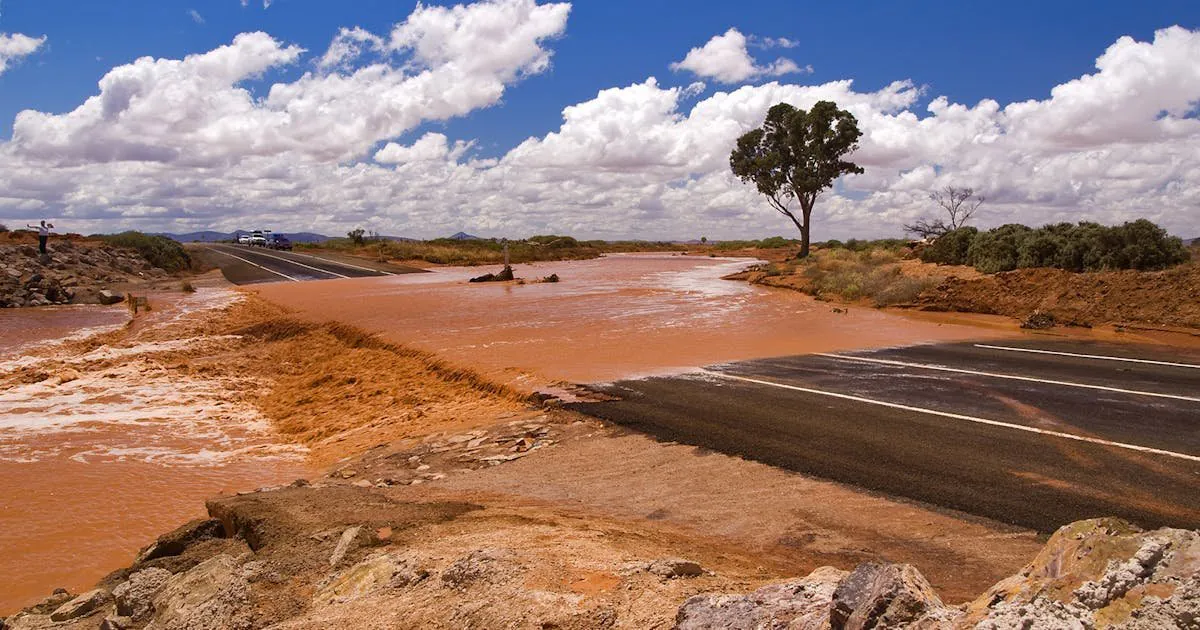
The Birdsville and Strzelecki tracks, two of the major outback paths, are among those closed, with large sections underwater.
For Ellen Litchfield, whose son attends preschool in Marree, 50 kilometres from their property, the road closures have been a major challenge.


“They’ve just got to spend the day with us working on the station, so when you’re a four and two-year-old, that loses its shine pretty quickly,” she said.
The station has had a record-breaking rainfall year, with 330 millimetres already, 120mm of which fell on the same day. The annual average is 150mm.
While the rain has been welcome, it has also caused significant disruptions to the family’s daily life.
“Obviously we love the rain, and it’s great to have, but it does mean that there’s long stretches of time where the roads are cut off, where we can’t get basic supplies in, and sort of everything goes to a bit of a standstill,” Ms Litchfield said.
In the state’s far east, the roads to Quondong Station have been hit hard, with station owner MaryLou Bishop unable to get back to the property for four months.
“It’s only through the generosity of neighbouring stations that we can actually get in, because they allow us to access over their properties,” she said.
The Department of Infrastructure and Transport has begun the process of reopening roads, but it’s a slow and challenging task.
“We’ve had widespread damage to more than 100 roads, and we’re able to get to about 98 of those roads,” said road maintenance director Craig Eckermann.
“What we’re seeing is major washouts, damaged floodways to shoulders and culverts. We’ve had over 600 millimetres of rain over five weeks, and particularly in parts of the Birdsville Track.”
Security analysts warn that the road closures have significant implications for national security, with the potential for organised crime groups to exploit the situation. “The lack of access to remote areas creates a power vacuum that can be exploited by criminal groups,” said one analyst.
“This is a concern for law enforcement agencies, who must work to maintain order and prevent crime in these areas.”
Law enforcement insiders also warn that the road closures have the potential to impact community safety, with emergency services struggling to access remote areas. “The road closures create a significant challenge for emergency services, who must navigate treacherous terrain to reach those in need,” said one insider.
“This can lead to delayed response times and a reduced ability to respond to emergencies.”
Analysis: What This Means for Australia
The road closures in South Australia’s outback have significant implications for the state’s rural communities, economy, and national security. The disaster highlights the need for improved infrastructure in the face of extreme weather events, as well as the importance of community resilience and cooperation.
As the state begins the long process of recovery, it’s clear that the road to recovery will be long and challenging.
Industry observers believe that the disaster will have a significant impact on the state’s agricultural industry, with livestock stranded on stations and farmers struggling to access markets.
“The road closures will have a significant impact on the state’s agricultural industry, with farmers facing significant challenges in getting their products to market,” said one observer.
As the state works to recover from the disaster, it’s clear that the road to recovery will be long and challenging. However, with the generosity of strangers and the resilience of rural communities, there is hope for a brighter future.
Experts say that the disaster highlights the need for improved infrastructure in the face of extreme weather events, as well as the importance of community resilience and cooperation.
“The road closures demonstrate the need for more investment in rural infrastructure, including roads and emergency services,” said one expert. “It also highlights the importance of community resilience and cooperation in the face of disaster.”
As the state begins the long process of recovery, it’s clear that the road to recovery will be long and challenging. However, with the right investment and planning, it’s possible to build a more resilient and sustainable future for South Australia’s rural communities.