
‘Space Junk’ Alert: Mysterious ‘Space Balls’ Wash Ashore in Australia, Raising Fears of Hazardous Debris and the Dark Side of Space Exploration
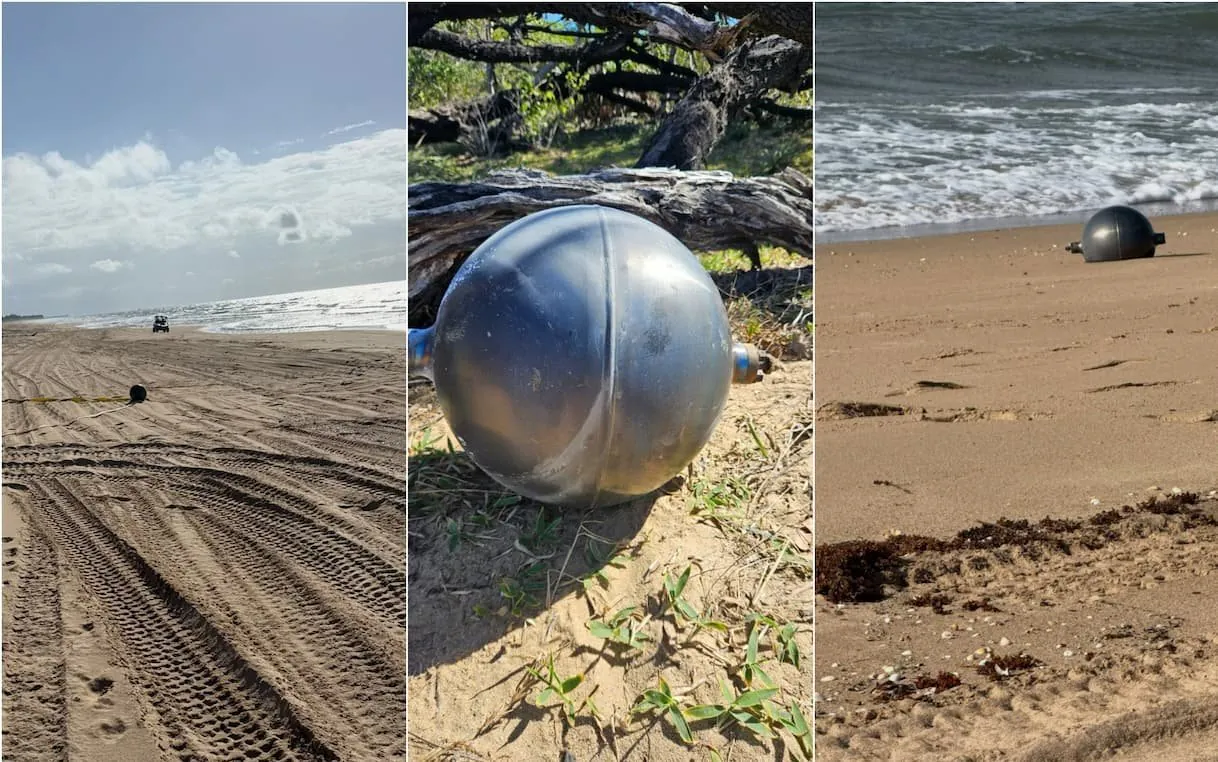
- Multiple pieces of space debris, dubbed ‘space balls’, have been discovered on a north Queensland beach, sparking a multi-agency investigation and warnings of potentially hazardous materials
- The Australian Space Agency has confirmed the objects are likely pressure vessels from a foreign rocket body that re-entered the atmosphere, but the exact origin remains unclear
- Experts warn that Australia’s land mass makes it a hotspot for space junk, with the nation bracing for more frequent encounters with hazardous debris as space exploration intensifies
- The incident raises questions about the risks and consequences of space exploration, and the need for greater international cooperation to mitigate the impact of space junk on populated areas
The small seaside community of Forrest Beach, near Ingham in north Queensland, was thrust into the centre of a high-stakes investigation on Friday when locals stumbled upon mysterious objects washing ashore.
The discovery prompted a swift response from authorities, with firefighters clad in hazmat suits descending upon the scene and an exclusion zone established. As the situation unfolded, residents were advised to evacuate the area, sparking fears of a potentially hazardous situation.
Within days, the Australian Space Agency confirmed that the objects were likely pressure vessels from a space launch vehicle, with the agency’s spokesperson stating that the “recovered objects appear to be safe”.
However, the incident has left many in the community shaken, and experts warning of a growing problem.
As the nation grapples with the reality of space junk washing ashore, the Australian Space Agency has issued a stark warning: “Never touch, move, or recover suspected space debris and assume it to be hazardous — move away and contact emergency services.”
So, how did these mysterious ‘space balls’ end up on an Australian beach?
According to Flinders University Associate Professor Alice Gorman, a space archaeologist who researches space junk and orbital debris, the spherical pressure vessels are a common find.
“This is a classic example of what is known as ‘space balls’,” she explained. “Many rockets and spacecraft have liquid fuel systems that involve fuels under high pressure that are in these pressure vessels made over robust material.”
But as space exploration intensifies, the risk of space junk washing ashore in populated areas increases.
Australia’s land mass makes it more likely that space debris will land on the continent, although experts note that it often doesn’t land in populated areas.
However, with the rise of private space companies and governments launching more rockets into orbit, the likelihood of hazardous debris entering Earth’s atmosphere is growing. As Professor Gorman warned, “We are going to see more of this — more rockets means more space junk.”
Analysis: What This Means for Australia
The discovery of space junk on a north Queensland beach serves as a stark reminder of the risks and consequences of space exploration.
As the nation continues to play a significant role in the global space industry, it is crucial that authorities and policymakers take a proactive approach to mitigating the impact of space debris on populated areas.
This includes investing in research and development to improve the design and disposal of spacecraft, as well as enhancing international cooperation to track and recover space junk.
Security analysts say that the incident highlights the need for Australia to develop a comprehensive strategy to address the risks associated with space junk.
“The discovery of space debris on our shores is a wake-up call for Australia to take a more proactive approach to space security,” said one expert.
“We need to work closely with international partners to develop a coordinated response to the growing threat of space junk.”
Law enforcement insiders warn that the incident also raises concerns about the potential for space debris to be used for malicious purposes.
“The fact that these pressure vessels can be buoyant and wash ashore in populated areas raises concerns about the potential for them to be used as a delivery mechanism for hazardous materials,” said one source.
As the nation continues to navigate the complexities of space exploration, one thing is clear: the discovery of space junk on a north Queensland beach is a harbinger of a much larger issue.
It is essential that Australia takes a proactive approach to addressing the risks and consequences of space debris, and works closely with international partners to mitigate the impact of space junk on populated areas.