
Western Sydney Councillor Defies Backlash After Racking Up 623 Complaints Over Social Media Conduct, Refusing to Apologise as Council Forks Out $100,000
- A Western Sydney councillor has sparked outrage after refusing to apologise for his social media conduct, which has led to a staggering 623 complaints and cost the council over $100,000.
- Councillor Ahmed Ouf has been accused of making divisive comments, including suggesting people who celebrate Australia Day on January 26 “might start another genocide”.
- The councillor’s defiant stance has raised concerns about the limits of free speech and the role of social media in local government, with some calling for stricter regulations.
- The controversy has also highlighted the need for councils to have clear social media policies in place to manage councillor conduct and protect ratepayers’ money.
The furore surrounding Cumberland City councillor Ahmed Ouf’s social media conduct has left many in the community reeling.
In a 12-month period, the councillor racked up an astonishing 623 complaints, making up a whopping 97 per cent of all objections about councillors’ social media conduct.
The complaints, which were lodged between July 1, 2025, and June 6 this year, have cost the council a staggering $100,303 and 498 hours in staff time.
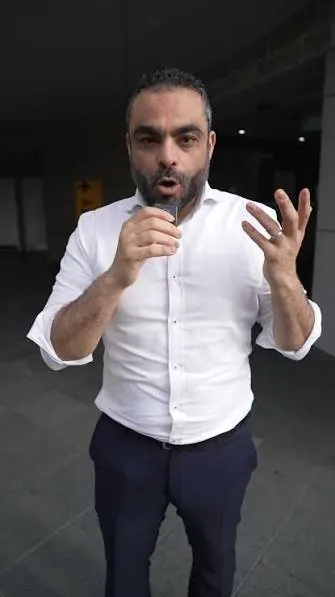
Despite the backlash, Cr Ouf has refused to apologise, instead taking to Facebook to declare he would “apologise to absolutely nobody”.
The councillor claimed the complaints were “the price of refusing to stay silent” and that he would continue to speak up for his community, even if it meant ruffling a few feathers.
However, not everyone is convinced by Cr Ouf’s stance.
Some have accused him of making divisive comments, including a video posted to his work social media account in January, in which he suggested people who celebrate Australia Day on January 26 “might start another genocide”.
The comments sparked widespread outrage, with over 2000 people commenting on the post, mostly disagreeing with the councillor’s remarks.
The controversy has raised concerns about the limits of free speech and the role of social media in local government. While some argue that councillors should be free to express their opinions, others believe that their conduct should be subject to stricter regulations.
As one insider noted, “Councillors are elected to represent their community, but that doesn’t give them a free pass to say whatever they want, whenever they want.”
Analysis: What This Means for Australia
The Cumberland City Council controversy highlights the need for clear social media policies in local government. As more and more councillors turn to social media to connect with their communities, the risk of controversy and backlash increases.
The question is, how can councils balance the need for free speech with the need to protect ratepayers’ money and maintain a positive reputation?
Security analysts say that councils need to take a proactive approach to managing councillor conduct on social media.
“This includes having clear policies in place, providing training and support for councillors, and having a plan in place for dealing with complaints and backlash,” one expert noted.
Law enforcement insiders warn that the lack of clear regulations around councillor conduct on social media can have serious consequences.
“If councillors are allowed to say whatever they want, without consequences, it can create a culture of impunity and undermine trust in local government,” one source said.
Industry observers believe that the Cumberland City Council controversy is a wake-up call for local governments across Australia. “Councils need to take social media seriously and have clear policies in place to manage councillor conduct,” one expert noted.
“This includes investing in staff training and support, as well as having a plan in place for dealing with complaints and backlash.”
As the debate around councillor conduct on social media continues, one thing is clear: the need for clear regulations and policies has never been more pressing.
As Cr Ouf’s case shows, the consequences of inaction can be costly – both financially and reputationally.