
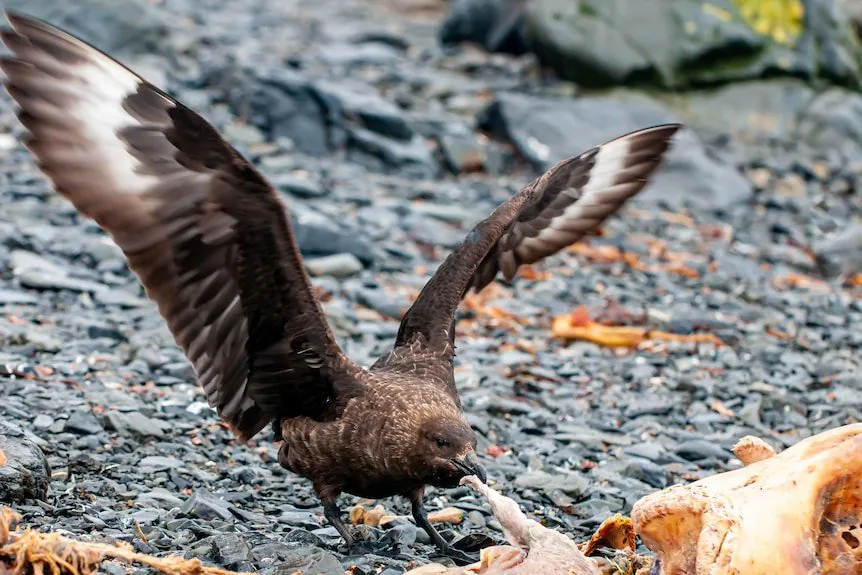
Bird Flu Outbreak: ‘Deadly Strain’ Hits Australia, Victoria on High Alert as Wildlife Groups Scour Coast for Signs of Infection
- A highly contagious and deadly strain of bird flu, H5N1, has been detected in multiple states across Australia, sparking a high alert in Victoria.
- Wildlife groups and authorities are racing against time to monitor and contain the spread of the virus, which has already decimated bird populations overseas.
- The Victorian government has deployed a high-tech helicopter to scour the coastline for signs of infection, with experts warning of a potential disaster for native wildlife.
The usually serene coastline of Victoria is on high alert as a deadly strain of bird flu, H5N1, threatens to decimate its native wildlife.
The virus, which has already been detected in Western Australia, New South Wales, and South Australia, has prompted authorities and wildlife groups to spring into action.
For Mike Risk, a member of the Point Danger Committee of Management, the stakes are personal.
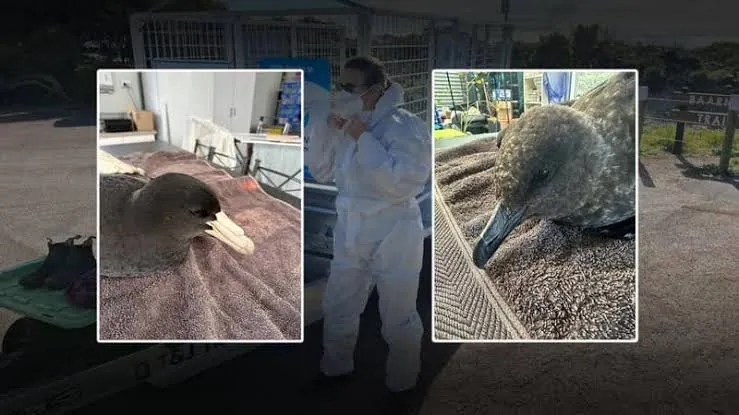
He’s been watching over the only mainland colony of gannets in Australia, located at Point Danger on Victoria’s rugged south-west coast, with a sense of trepidation.
Risk’s beloved gannets, a majestic flock of about 300 seabirds, are usually a sight to behold as they circle in the air and dive into the swirling sea.
But this month, Risk has been scanning the skies and shores for signs of something more sinister – the telltale symptoms of bird flu.
With a positive case recorded just across the Victorian-South Australian border in Robe, about 200 kilometres north-west of the gannet colony, the threat is all too real.
The H5N1 strain of bird flu has already wreaked havoc on bird populations overseas, with a recent study by the Royal Society for the Protection of Birds and Aarhus University revealing that gannet populations in Europe may not recover from the impact until 2041 at the earliest.
Risk fears the same could happen in Australia, and is closely monitoring the situation. “We’re monitoring constantly, obviously looking for any signs of illness or death,” he said.
The Victorian government has called in its top guns to combat the threat, with the Department of Energy, Environment, and Climate Action (DEECA) deploying a helicopter equipped with the latest video and infrared technology to scour the coastline for birds.
The helicopter is covering between 250 and 300 kilometres a day, and staff are ready to act quickly if any signs of infection are detected. “In some cases, that might involve further testing or sampling of that colony, or that bird nesting area,” said Chief Biodiversity Officer James Todd.
The recent outbreak of the H7 strand in Australia forced farmers to destroy millions of chickens, but the new H5 variety presents a threat to native wildlife as well.
Chief Veterinary Officer Graeme Cook warned that the new variant is behaving differently, emphasizing the importance of surveillance for early detection. Minister for Agriculture Michaela Settle urged Victorians to keep an eye out for wildlife showing any signs of the virus.
“If you see a dead mammal or seabird, please contact DEECA because we need everyone in Victoria protecting our wildlife,” she said.
Analysis: What This Means for Australia
The outbreak of H5N1 bird flu in Australia has significant implications for the country’s native wildlife and ecosystem. The virus has already shown its devastating impact on bird populations overseas, and the consequences of a widespread outbreak in Australia could be catastrophic.
The Victorian government’s swift response is a step in the right direction, but more needs to be done to contain the spread of the virus and protect the country’s unique wildlife.
Security analysts say that the outbreak highlights the need for increased surveillance and monitoring of wildlife, particularly in high-risk areas such as coastal regions. Law enforcement insiders warn that the outbreak could also have economic and social consequences, particularly for farmers and communities that rely on wildlife tourism.
Industry observers believe that the outbreak serves as a wake-up call for the country to take a more proactive approach to biosecurity and wildlife conservation.
With the virus showing no signs of slowing down, it’s crucial that authorities and wildlife groups continue to work together to contain the spread and protect Australia’s unique and fragile ecosystem.