‘Miracle Avoidance’: Sydney Airport Near Miss Exposes Alarming Shortage of Air Traffic Controllers as Two Workers Stood Down Amid Probe
- Air traffic controller shortage sparks chaos at Sydney Airport, with two near misses in recent weeks
- Two airport workers stood down pending investigation into Sunday’s incident, which left a Jetstar crew member injured
- Government vows to address systemic issues, with improved rostering practices promised from September
- Civil Air union warns of burnout and stress among air traffic controllers, with some working over 20 hours of overtime per week
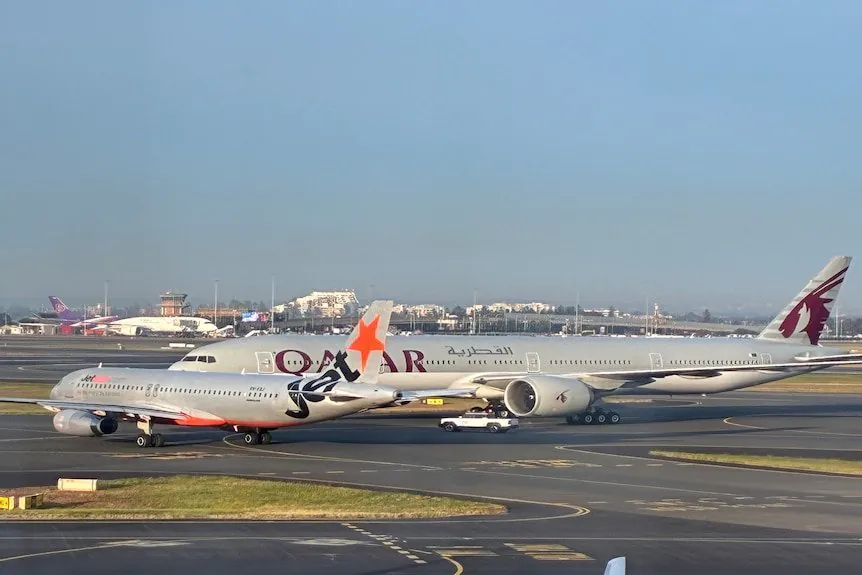
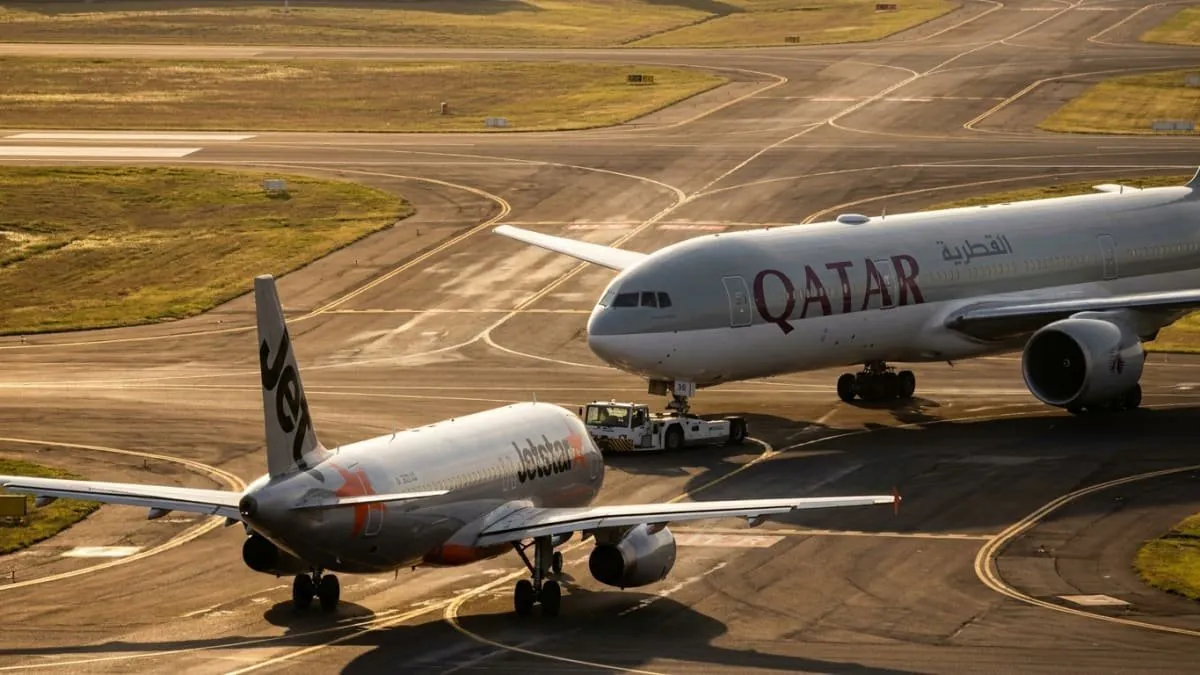
The nation’s air safety watchdog has launched an investigation into a near-miss at Sydney Airport on Sunday, which has left a Jetstar crew member injured and raised concerns about the alarming shortage of air traffic controllers.
The incident, which saw a Jetstar flight forced to slam on the brakes to avoid colliding with a Qatar Airways plane, has sparked an emergency meeting in Canberra and prompted the government to vow to address systemic issues.
Federal Transport Minister Catherine King met with Airservices Australia CEO Rob Sharp on Monday, following the incident, and said the organisation had committed to implementing improved rostering practices for Sydney’s air traffic controllers from early September.
However, the Civil Air union has warned that the shortage of air traffic controllers has been a long-running issue, with workers doing excessive overtime and struggling with burnout and stress.
The incident on Sunday was the second near-miss at Sydney Airport in recent weeks, with two Qantas planes narrowly avoiding crashing late last month.



In both instances, the pilots were able to act quickly to avoid a collision, but the Australian Transport Safety Bureau’s Chief Commissioner, Angus Mitchell, said it was too early to know the cause of the near miss and that investigators were examining all possibilities.
Commissioner Mitchell said the investigation would be wide-ranging and would scrutinise whether the understaffing issues within the airport’s air traffic control fleet had any role to play.
He also said that the probe would look into whether individual errors were made and whether systemic changes were needed to ensure that if individual errors are made, there are other mechanisms in place to avoid serious problems.
The Civil Air union has been warning about the shortage of air traffic controllers for years, with president Scott Nugent saying that workers are struggling to cope with the demands of the job.
“Air traffic controllers in Australia are working very hard, and for a long time they have not necessarily had the resources they need to do their jobs properly,” he said.
“There aren’t enough controllers in Australia.”
The union has also raised concerns about the impact of excessive overtime on air traffic controllers, with some working over 20 hours per week.
“People no longer want to work the overtime because they’re very stressed and upset, and the whole system is propped up on overtime,” Mr Nugent said.
The government has confirmed that the air traffic control ground worker and the tug operator involved in Sunday’s near collision have both been stood down, pending the outcome of the investigation.
A Jetstar spokesperson said the aircraft had been following air traffic control instructions during the incident and its captain acted “quickly and decisively”.
Analysis: What This Means for AustraliaThe near-miss at Sydney Airport on Sunday has exposed a critical shortage of air traffic controllers, which poses a significant risk to the safety of passengers and crew.
The incident has also highlighted the need for improved rostering practices and better resourcing for air traffic controllers.
The government’s commitment to addressing systemic issues is a positive step, but it remains to be seen whether the changes will be enough to prevent similar incidents in the future.
The Civil Air union has warned that the shortage of air traffic controllers is a long-running issue that requires a more comprehensive solution. Security analysts say that the incident highlights the need for greater investment in air traffic control systems and better training for air traffic controllers.
“The safety of passengers and crew is paramount, and it’s clear that the current system is not working,” said one analyst. Law enforcement insiders warn that the incident also raises concerns about the potential for more serious incidents in the future.
“If air traffic controllers are overworked and understaffed, it increases the risk of human error, which can have catastrophic consequences,” said one insider. Industry observers believe that the incident will have significant economic and social consequences, with thousands of passengers affected by lengthy delays and flight disruptions.
“The impact on the aviation industry will be significant, with potential losses in the millions of dollars,” said one observer. As the investigation into the near-miss continues, it’s clear that the shortage of air traffic controllers is a critical issue that requires urgent attention.
The government and Airservices Australia must work together to address the systemic issues and ensure that the safety of passengers and crew is prioritised.
The nation’s air safety watchdog has launched an investigation into a near-miss at Sydney Airport on Sunday, which has left a Jetstar crew member injured and raised concerns about the alarming shortage of air traffic controllers. The incident, which saw a Jetstar flight forced to slam on the brakes to avoid colliding with a Qatar Airways plane, has sparked an emergency meeting in Canberra and prompted the government to vow to address systemic issues.
Federal Transport Minister Catherine King met with Airservices Australia CEO Rob Sharp on Monday, following the incident, and said the organisation had committed to implementing improved rostering practices for Sydney’s air traffic controllers from early September. However, the Civil Air union has warned that the shortage of air traffic controllers has been a long-running issue, with workers doing excessive overtime and struggling with burnout and stress.
The incident on Sunday was the second near-miss at Sydney Airport in recent weeks, with two Qantas planes narrowly avoiding crashing late last month. In both instances, the pilots were able to act quickly to avoid a collision, but the Australian Transport Safety Bureau’s Chief Commissioner, Angus Mitchell, said it was too early to know the cause of the near miss and that investigators were examining all possibilities.
Commissioner Mitchell said the investigation would be wide-ranging and would scrutinise whether the understaffing issues within the airport’s air traffic control fleet had any role to play. He also said that the probe would look into whether individual errors were made and whether systemic changes were needed to ensure that if individual errors are made, there are other mechanisms in place to avoid serious problems.
The Civil Air union has been warning about the shortage of air traffic controllers for years, with president Scott Nugent saying that workers are struggling to cope with the demands of the job. “Air traffic controllers in Australia are working very hard, and for a long time they have not necessarily had the resources they need to do their jobs properly,” he said. “There aren’t enough controllers in Australia.”
The union has also raised concerns about the impact of excessive overtime on air traffic controllers, with some working over 20 hours per week. “People no longer want to work the overtime because they’re very stressed and upset, and the whole system is propped up on overtime,” Mr Nugent said.
The government has confirmed that the air traffic control ground worker and the tug operator involved in Sunday’s near collision have both been stood down, pending the outcome of the investigation. A Jetstar spokesperson said the aircraft had been following air traffic control instructions during the incident and its captain acted “quickly and decisively”.
The near-miss at Sydney Airport on Sunday has exposed a critical shortage of air traffic controllers, which poses a significant risk to the safety of passengers and crew. The incident has also highlighted the need for improved rostering practices and better resourcing for air traffic controllers.
The government’s commitment to addressing systemic issues is a positive step, but it remains to be seen whether the changes will be enough to prevent similar incidents in the future. The Civil Air union has warned that the shortage of air traffic controllers is a long-running issue that requires a more comprehensive solution.
Security analysts say that the incident highlights the need for greater investment in air traffic control systems and better training for air traffic controllers. “The safety of passengers and crew is paramount, and it’s clear that the current system is not working,” said one analyst.
Law enforcement insiders warn that the incident also raises concerns about the potential for more serious incidents in the future. “If air traffic controllers are overworked and understaffed, it increases the risk of human error, which can have catastrophic consequences,” said one insider.
Industry observers believe that the incident will have significant economic and social consequences, with thousands of passengers affected by lengthy delays and flight disruptions. “The impact on the aviation industry will be significant, with potential losses in the millions of dollars,” said one observer.
As the investigation into the near-miss continues, it’s clear that the shortage of air traffic controllers is a critical issue that requires urgent attention. The government and Airservices Australia must work together to address the systemic issues and ensure that the safety of passengers and crew is prioritised.