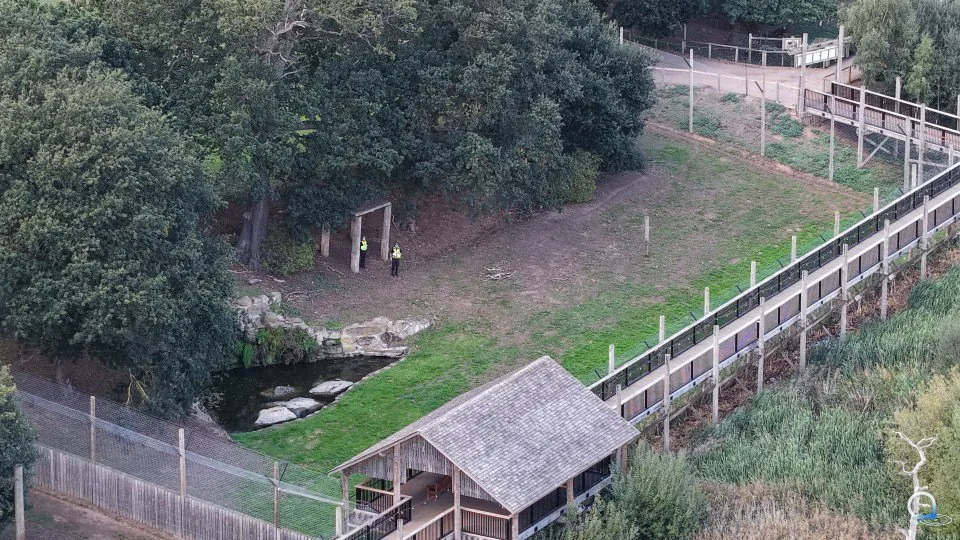
Witnesses Left Traumatised As ‘Agitated’ Intruder Is Mauled To Death By 30-Stone Siberian Tiger After Climbing Into Enclosure At Yorkshire Wildlife Park
- A man in his 20s was killed by a Siberian tiger after he climbed into its enclosure at a wildlife park, leaving witnesses shocked and horrified.
- Videos of the attack show the tiger, called Altai, circling the man before shaking him like a ragdoll, with the victim heard crying ‘no, no’ during the attack.
- Visitors and staff at the park were left traumatised by the incident, with one witness praising the staff for remaining calm during the emergency.
- The incident has raised concerns about the safety and security of wildlife parks, with questions being asked about how the man was able to climb into the enclosure and what measures can be taken to prevent similar incidents in the future.
The incident occurred at Yorkshire Wildlife Park, near Doncaster, on Saturday afternoon, when a man climbed into the tiger enclosure, despite warnings and security measures in place.
Witnesses described the man as ‘agitated’ and said he appeared to ‘psyche himself up’ by performing a ‘dance’ in the spectator area before climbing the fence.
The man, who was wearing AirPods and had a mobile phone, was seen kneeling on the ground with his arms out wide, pointing his finger at the tiger and repeatedly screaming ‘stop’.
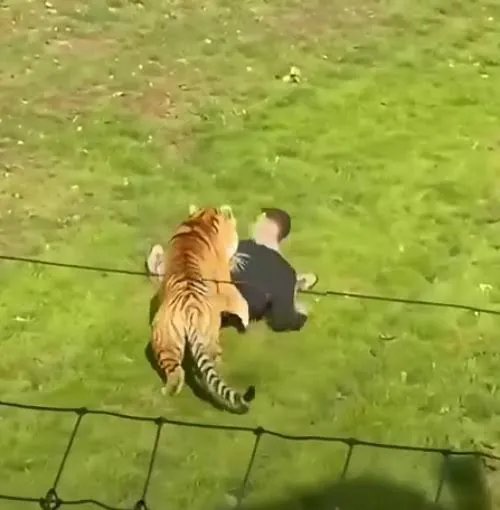
Before the tiger struck, visitors started shouting in a desperate bid to distract the animal, with one woman’s voice heard saying: ‘I tried to stop him.’ However, it was too late, and the tiger, called Altai, attacked the man, grabbing him by the throat and shaking him like a ragdoll.
The man was heard crying ‘no, no’ during the attack, which was captured on video by witnesses.

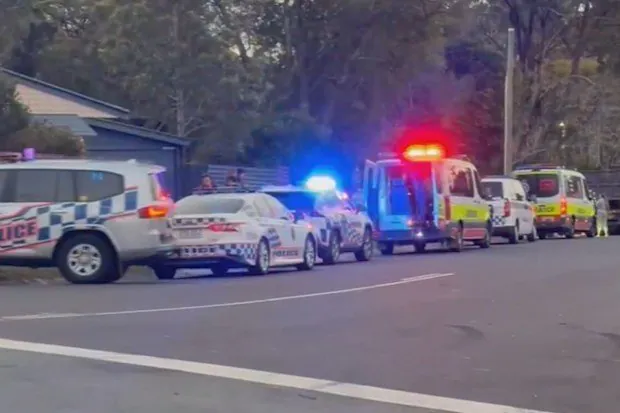

Zoo keepers rushed to the scene, armed with gas-powered acoustic guns, and fired five loud, shotgun-like blasts close to the predator in an attempt to drive it off.
Despite the best efforts of the zoo keepers and emergency services, the man was pronounced dead at the scene. The incident has left witnesses and staff at the park traumatised, with one witness describing the scene as ‘horrific’.
The park was evacuated, and the tiger enclosure was closed off, with black plastic sheeting wrapped around the area to shield it from view. The incident is being investigated by the police, who are working closely with the park to establish exactly what happened.
The incident has raised concerns about the safety and security of wildlife parks, with questions being asked about how the man was able to climb into the enclosure and what measures can be taken to prevent similar incidents in the future.
The park has said that it is working closely with the authorities to establish exactly what happened and that the safety and wellbeing of its visitors, staff, and animals remain its highest priority.
The incident is a reminder of the importance of following safety guidelines and warnings when visiting wildlife parks, and the need for parks to have robust security measures in place to prevent such incidents.
The attack on the man by the Siberian tiger is a tragic reminder of the risks and dangers associated with wildlife parks. While such incidents are rare, they highlight the importance of taking safety precautions seriously and following guidelines and warnings.
The incident has also raised questions about the role of wildlife parks in conservation and education, and the need for parks to balance the needs of visitors with the needs of the animals in their care.
Analysis: What This Means for Australia is that the incident highlights the importance of having robust security measures in place at wildlife parks and zoos.
While the incident occurred in the UK, it has implications for Australia, where there are many wildlife parks and zoos that attract millions of visitors each year.
The incident is a reminder of the need for parks to have strong safety protocols in place, including secure enclosures and trained staff, to prevent such incidents from occurring.
Security analysts say that the incident highlights the importance of risk assessment and management in wildlife parks, and the need for parks to be prepared for emergency situations.
Law enforcement insiders warn that the incident could have been prevented if the park had more robust security measures in place, including CCTV cameras and alarms.
Industry observers believe that the incident will lead to a review of safety protocols at wildlife parks and zoos in Australia, and potentially new regulations and guidelines to prevent similar incidents from occurring.
The incident is a reminder of the importance of prioritising safety and security at wildlife parks and zoos, and the need for parks to be proactive in preventing such incidents from occurring.
The incident has also raised questions about the role of social media in spreading information and footage of such incidents. While social media can be a powerful tool for raising awareness and sharing information, it can also be used to spread graphic and disturbing content.
In this case, videos of the attack were shared on social media, despite warnings from the police not to share footage of the incident.
This highlights the need for social media companies to have robust policies in place for removing graphic and disturbing content, and for users to be mindful of the impact of sharing such content.
As the investigation into the incident continues, it is likely that there will be a review of safety protocols at wildlife parks and zoos in Australia.
This could include the introduction of new regulations and guidelines, as well as increased funding for safety measures and staff training.
The incident is a reminder of the importance of prioritising safety and security at wildlife parks and zoos, and the need for parks to be proactive in preventing such incidents from occurring.
By learning from this tragic incident, we can work towards creating safer and more secure wildlife parks and zoos for everyone.
In terms of national security, the incident highlights the importance of having robust security measures in place at wildlife parks and zoos. This includes having secure enclosures, trained staff, and emergency response plans in place.
The incident also highlights the need for parks to be proactive in preventing such incidents from occurring, through measures such as risk assessment and management.
By prioritising safety and security, we can help to prevent such incidents from occurring and ensure that wildlife parks and zoos remain safe and enjoyable places for visitors.
Furthermore, the incident has implications for law enforcement and border control in Australia. It highlights the need for increased cooperation and communication between law enforcement agencies and wildlife parks and zoos, to prevent such incidents from occurring.
It also highlights the need for increased funding for safety measures and staff training, to ensure that parks have the resources they need to prevent such incidents from occurring.
By working together, we can help to create safer and more secure wildlife parks and zoos for everyone.
In conclusion, the incident at Yorkshire Wildlife Park is a tragic reminder of the risks and dangers associated with wildlife parks. While such incidents are rare, they highlight the importance of taking safety precautions seriously and following guidelines and warnings.
The incident has implications for Australia, where there are many wildlife parks and zoos that attract millions of visitors each year.
By prioritising safety and security, and learning from this tragic incident, we can work towards creating safer and more secure wildlife parks and zoos for everyone.
For more information on wildlife conservation, visit the website of the Australian Wildlife Conservancy.