
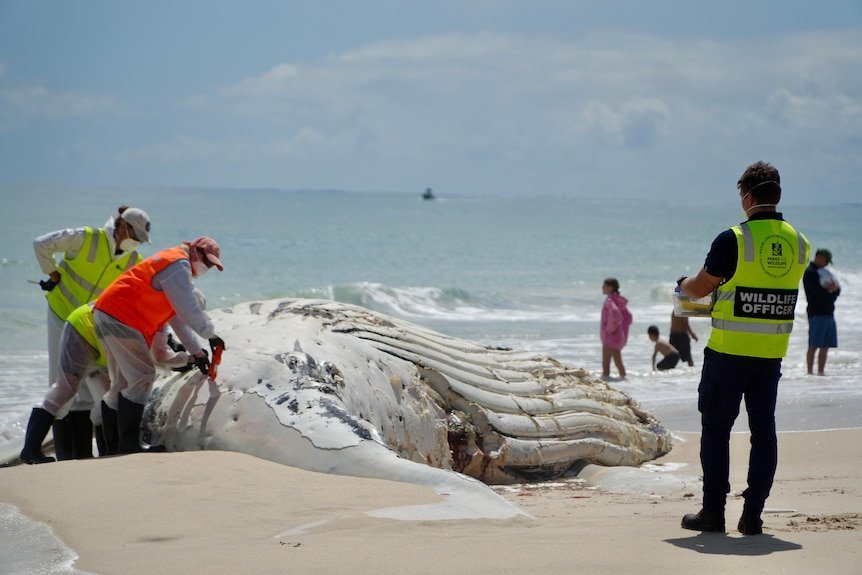
Beached Whale Crisis Sparks Fears Of Shark Attacks As Sydney Beaches Closed Indefinitely Due To ‘Culturally Respectful’ Approach To Carcass
- A decomposed whale carcass has washed up on a rocky cove in Sydney’s eastern suburbs, forcing the closure of two popular beaches and sparking fears of shark attacks
- The local council has prioritised a ‘culturally respectful’ approach to the remains, working with Indigenous rangers to find a sensitive solution that respects the whale’s importance to the local Bidjigal people
- Despite the risks, there are no plans to remove the carcass, with authorities instead opting to let nature take its course and allow the whale to decompose naturally
- The situation has raised questions about the balance between cultural sensitivity and public safety, as curious onlookers gather to catch a glimpse of the beached whale
The discovery of a beached whale carcass on a rocky cove in Sydney’s eastern suburbs has sparked a major response from local authorities, with two popular beaches closed indefinitely due to fears of shark attacks.
The whale, believed to be a juvenile humpback, was found on Thursday morning at Lurline Bay, surrounded by cliffs and accessible only at low tide.
Despite the potential risks to beachgoers, the local council has prioritised a ‘culturally respectful’ approach to the remains, working with Indigenous rangers to find a sensitive solution that respects the whale’s importance to the local Bidjigal people.
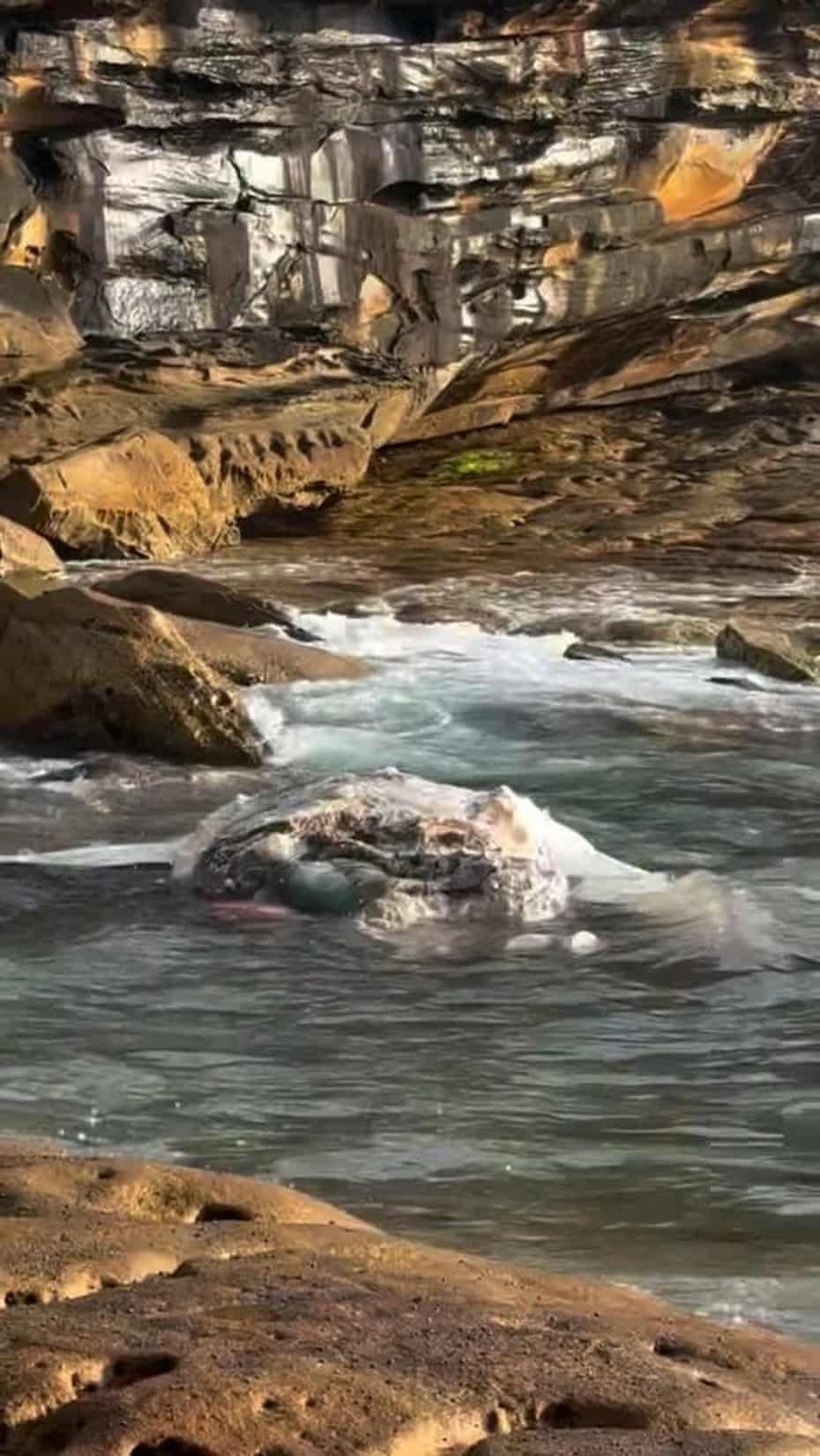
The council’s decision not to remove the carcass has raised eyebrows, with some questioning the balance between cultural sensitivity and public safety.
However, according to Randwick Council mayor, Dr Clare Willington, the approach is designed to allow nature to take its course and permit the whale to decompose naturally.
“This is a natural occurrence and in time nature will deal with the carcass,” Dr Willington said.
The Gamay Rangers, an Indigenous ranger team, are working with the council to develop a plan that respects the cultural significance of the whale, which is an important totem animal to the local Bidjigal people.
The situation is not without precedent, with previous instances of beached animal carcasses being taken to landfill having distressed the local community.
Robert Cooley, manager of the Gamay Rangers, said that his team was working to find a solution that respected the cultural significance of the whale, while also ensuring public safety.
“We’re got a reasonably strong north-east wind here and a bit of a swell pushing it back up – so that’s going to be a challenge,” he said.
The whale is believed to be in an advanced stage of decomposition, and it is difficult to confirm its age or species due to its condition.
The discovery of the whale carcass has also raised questions about the potential risks to beachgoers.
While there have been no reports of increased shark activity in the area, the council has contacted Surf Life Saving to introduce extra drone patrols as a precaution.
The closure of Coogee and Maroubra beaches is likely to have a significant impact on the local community, with both beaches popular with swimmers, surfers, and tourists.
The council is encouraging residents and visitors to avoid the area and follow directions from lifeguards and authorities.
Analysis: What This Means for Australia.
The beached whale crisis in Sydney’s eastern suburbs has significant implications for public safety, cultural sensitivity, and environmental management. As authorities work to find a solution that balances these competing interests, it is clear that the situation is complex and multifaceted.
Security analysts say that the closure of the beaches is a necessary precaution, given the potential risks to beachgoers. However, law enforcement insiders warn that the situation also highlights the need for more effective strategies to manage and respond to marine wildlife incidents.
Industry observers believe that the situation also has significant economic and social consequences, particularly for the local tourism industry. The closure of the beaches is likely to have a major impact on local businesses, which rely heavily on tourist trade.
However, experts also note that the situation presents an opportunity for the local community to come together and find a solution that respects the cultural significance of the whale, while also ensuring public safety.
As one local resident noted, “My interest is in if it’s newborn, or if it’s juvenile…
I thought it would be more complete.” The situation is a powerful reminder of the complex relationships between humans, wildlife, and the environment, and the need for sensitive and effective management strategies to balance these competing interests.
As the situation continues to unfold, it is clear that the beached whale crisis in Sydney’s eastern suburbs is a major challenge for local authorities, requiring a nuanced and multifaceted response.
By prioritising cultural sensitivity, public safety, and environmental management, authorities can work towards a solution that respects the significance of the whale, while also protecting the local community.
According to marine conservation experts, the situation highlights the need for more effective strategies to manage and respond to marine wildlife incidents, including the development of protocols for the management of beached whale carcasses.
Meanwhile, Australian Maritime Safety Authority officials are working to develop guidelines for the safe disposal of marine wildlife carcasses, in order to minimize the risks to beachgoers and the environment.