
Australian Lawmakers Pave The Way For ‘Human Composting’ Revolution: A New Era In Death Care That’s Set To Change The Way We Say Goodbye
- New South Wales MPs are embracing a radical new approach to death, with several lawmakers expressing their desire to be ‘human composted’ after passing groundbreaking legislation
- The innovative practice, known as natural organic reduction or terramation, offers a third option for the treatment of bodies, providing an eco-friendly alternative to traditional burial and cremation methods
- As the world grapples with the environmental impact of death care, Australia is at the forefront of a ‘green funeral’ revolution, with terramation poised to transform the way we approach mortality
- With its potential to reduce carbon emissions, preserve natural resources, and provide a unique opportunity for families to honour their loved ones, terramation is set to challenge traditional funeral practices and change the face of the death care industry
Imagine a world where death is not just an end, but a new beginning – where the body is not just disposed of, but transformed into a nutrient-rich soil that can nourish the earth and give life to new plants and trees.
This is the vision behind ‘human composting’, a radical new approach to death care that is set to revolutionise the way we say goodbye to our loved ones.
In a groundbreaking move, New South Wales lawmakers have passed legislation that paves the way for the practice of natural organic reduction, or terramation, to become a reality in Australia.
The private member’s bill, introduced by independent Sydney MP Alex Greenwich, provides a third legal option for the treatment of bodies, in addition to traditional burial and cremation.
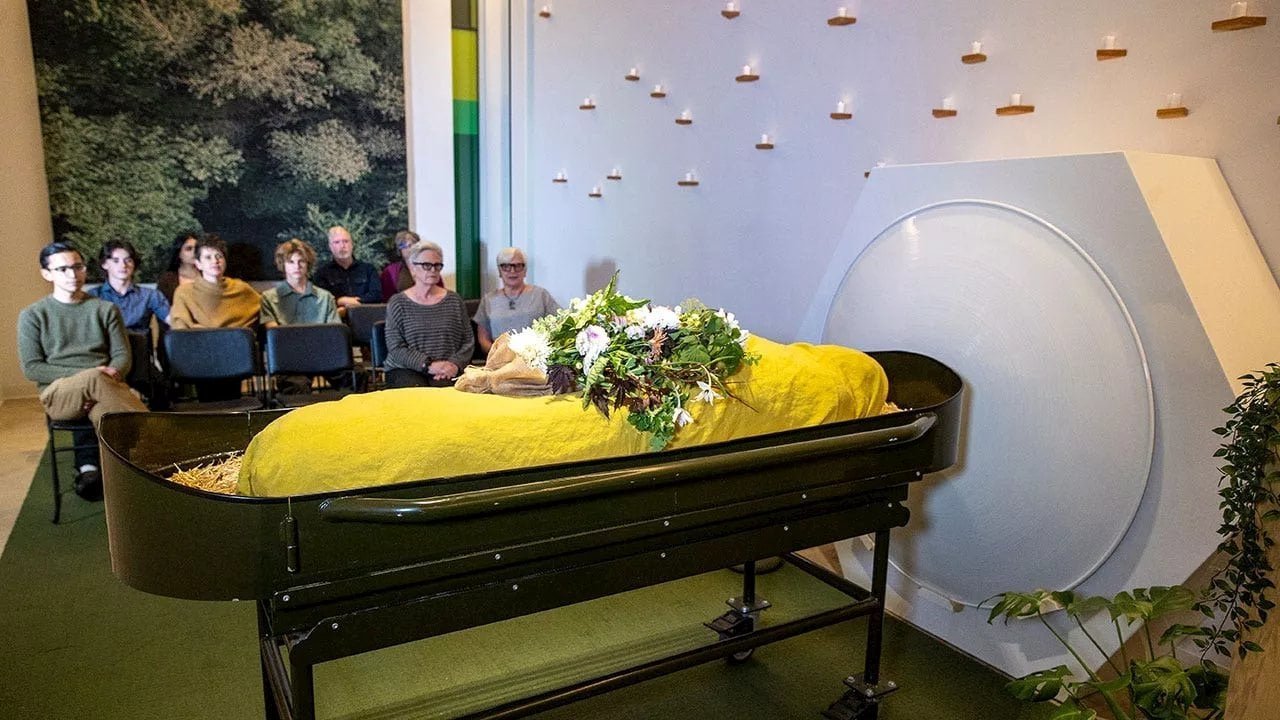
The practice involves placing the body in a temperature-controlled vessel with organic matter such as alfalfa, straw, or mulch, where it is broken down by naturally occurring microbes over a period of several weeks.
The result is a dry, rich soil that is fertile and free of pathogens, which can be used to nourish plants and trees. For lawmakers like John Ruddick, a Libertarian MP, terramation offers a welcome alternative to traditional funeral practices.
“I like the idea of being buried somewhere and having a nice big gum tree grow there for 100 years,” he said. “The idea of being cremated or buried has always freaked me out.
This is a much better option.”
But terramation is not just a personal choice – it also has significant environmental benefits.
According to Emma Hurst MP, the Animal Justice MP who introduced the bill into the legislative council, terramation can avoid the need for large burial plots and can be wholly carbon neutral, compared with cremation, which is energy intensive and releases substantial greenhouse gas emissions.
“Terramation provides possibilities to grow living things, like trees and plants, in honour of a life,” she said.
“Because terramation is a slow process, there are multiple opportunities for ceremonies, including for the laying of the body in the vessel and for opening the vessel after a body has been terramated.” As the world grapples with the challenges of climate change, terramation offers a unique opportunity for individuals to make a positive impact on the environment, even in death.
As Australia embarks on this new era in death care, it’s clear that terramation is set to challenge traditional funeral practices and change the face of the death care industry.
With its potential to reduce carbon emissions, preserve natural resources, and provide a unique opportunity for families to honour their loved ones, terramation is an innovative solution to the environmental and emotional challenges of death.
But what does this mean for Australia, and how will it impact our communities and our environment?
Analysis: What This Means for Australia is that we are on the cusp of a revolution in death care, one that has the potential to transform the way we approach mortality and our relationship with the natural world.
Security analysts say that the rise of terramation could have significant implications for national security, as it challenges traditional notions of death and the afterlife. “The way we approach death is a fundamental aspect of our culture and our identity,” said one analyst.
“As we move towards a more sustainable and eco-friendly approach to death care, we need to consider the potential impacts on our national security and our place in the world.” Law enforcement insiders warn that the regulation of terramation will be critical in ensuring that the practice is carried out in a safe and respectful manner.
“We need to ensure that the dead are treated with dignity and respect, and that the process of terramation is transparent and accountable,” said one insider.
Industry observers believe that terramation has the potential to disrupt the death care industry, which has traditionally been dominated by funeral homes and crematoria. “The rise of terramation could lead to a significant shift in the way we approach death care,” said one observer.
“As consumers become more aware of the environmental and emotional benefits of terramation, we could see a significant increase in demand for this type of service.” As the NSW government moves to implement the new legislation, it’s clear that terramation is set to play a major role in shaping the future of death care in Australia.
With its potential to reduce carbon emissions, preserve natural resources, and provide a unique opportunity for families to honour their loved ones, terramation is an innovative solution to the environmental and emotional challenges of death.
For more information on terramation and the new legislation, visit the NSW Government website.
You can also learn more about the environmental benefits of terramation and how it compares to traditional funeral practices by visiting the Australian Bureau of Statistics website.
As we move forward into this new era in death care, it’s clear that terramation is set to play a major role in shaping the future of our relationship with death and the natural world.
With its potential to transform the way we approach mortality and our place in the world, terramation is an exciting and innovative development that has the potential to make a positive impact on our communities and our environment.