
Horror on the Farm: Man Crushed to Death Beneath Loading Ramp on Rural Property Near Shepparton as Victoria’s Deadly Farm Toll Claims Another Life
- A man was found pinned beneath a heavy loading ramp on a rural property at Waggarandall, in Victoria’s north-east, on Sunday morning
- Advanced life support paramedics raced to the scene, but nothing could be done to save him and he died where he lay
- WorkSafe has been called in, while police will prepare a report for the coroner on how a routine farm job ended in tragedy
- The death is another grim reminder that Australian farms remain among the most dangerous workplaces in the country
It began as an ordinary Sunday morning in the quiet farming country of northern Victoria.
By mid-morning, it had become a scene of devastation.
A man has lost his life after becoming trapped beneath a loading ramp on a rural property at Waggarandall, a tiny farming locality in the Goulburn Valley region, leaving a close-knit community reeling and reigniting urgent questions about safety on the nation’s farms.

For the family left behind, the loss is immeasurable. For regional Victoria, it is a painfully familiar story.
The alarm was raised at about 10.20am on Sunday, when triple zero operators received a call reporting that a man was stuck under a loading ramp at a property on Evans Road.
Waggarandall sits roughly 40 kilometres north-east of Shepparton, deep in the agricultural heartland that feeds much of the state.
Emergency crews were dispatched immediately. Advanced life support paramedics from Ambulance Victoria arrived at the property and worked on the man, but their efforts were in vain.
He was declared dead at the scene.
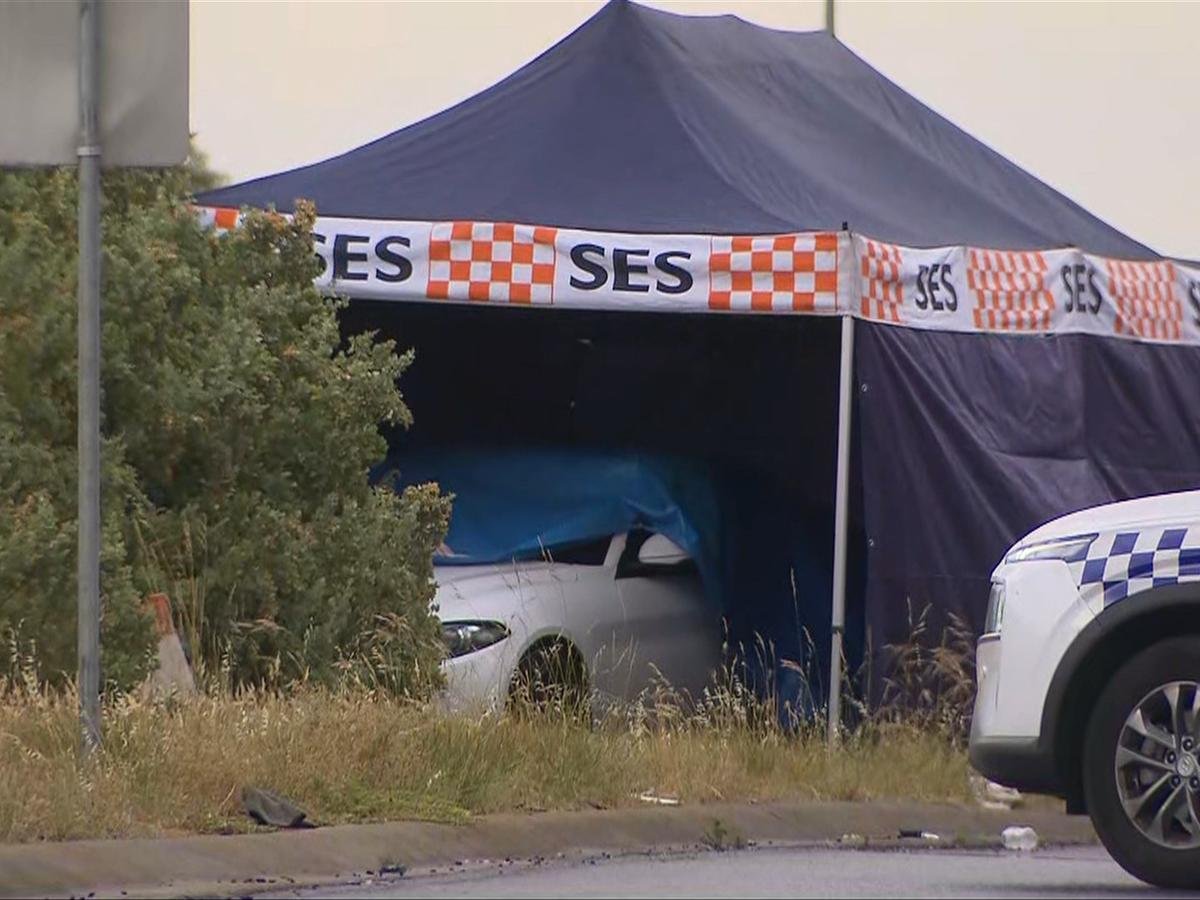
Officers from Victoria Police attended, alongside volunteers from the Victoria State Emergency Service, as the grim task of managing the site got underway.
The man has not been publicly identified.
Police have confirmed the death is not being treated as suspicious. However, WorkSafe Victoria has been notified, signalling that authorities consider the tragedy a workplace incident warranting scrutiny.
Investigators will now prepare a report for the coroner, who will ultimately examine the circumstances surrounding the man’s final moments.
The precise sequence of events that led to the ramp coming down on him remains unclear.
But while the details of Sunday’s incident are still being pieced together, the broader picture is depressingly well established.
Agriculture has long ranked among Australia’s deadliest industries.
Year after year, figures compiled by Safe Work Australia show that the agriculture, forestry and fishing sector records one of the highest rates of work-related fatalities in the nation, far out of proportion to the size of its workforce.
The reasons are no mystery to anyone who has spent time on the land.
Farmers and farmhands routinely work alone, often kilometres from the nearest neighbour. They operate heavy machinery, handle livestock, and manoeuvre bulky equipment such as ramps, gates and trailers that can weigh hundreds of kilograms.
When something goes wrong, it goes wrong fast. And help can be a long way off.
Many farms are also family-run operations where the line between home and workplace blurs. Work continues on weekends and public holidays, frequently without the safety systems, supervision or second set of hands found on larger industrial sites.
Regulators in Victoria have repeatedly issued warnings about the dangers, urging farmers to plan jobs carefully, secure heavy equipment and never take shortcuts. Yet the deaths keep coming.
Analysis: What This Means for Australia
Every death on an Australian farm is first and foremost a human tragedy. But collectively, these incidents represent something larger: a persistent failure to protect the people who keep the nation fed.
Australia’s food security depends heavily on regions like the Goulburn Valley, renowned for its dairy, fruit and livestock production. When farm workers are killed or seriously injured, the impact ripples outward through families, businesses and entire towns.
In small rural communities, the loss of a single person can be felt by everyone. These are places where neighbours share machinery, help out at harvest and turn up at the same footy club on a Saturday.
A sudden death leaves a hole that does not easily close.
There are also serious questions for regulators and policymakers. Enforcing workplace safety standards across thousands of remote, privately owned properties is an enormous challenge.
Inspectors cannot be everywhere, and much of the responsibility falls on farmers themselves, many of whom are already stretched thin by rising costs, labour shortages and the pressures of the cost of living crisis.
Economically, the toll is significant. Workplace deaths and injuries carry heavy costs, from lost productivity to compensation claims and the long-term burden on grieving families.
For family farms, the death of a key worker can threaten the viability of the entire operation.
The mental health consequences cannot be ignored either. Those who witness or respond to such incidents, including volunteer SES members drawn from the local community, often carry the trauma for years.
rural mental health services are already under strain across regional Australia.
Ultimately, Sunday’s death adds weight to calls for a fresh national conversation about how to make farming safer, without crushing an industry that is already battling on multiple fronts.
Workplace safety analysts say incidents involving heavy, movable structures such as loading ramps are a recurring hazard on farms, particularly when equipment is aged, poorly maintained or improvised.
Industry observers believe that the culture of self-reliance that defines rural life, while admirable, can sometimes work against safety. Farmers are known for getting the job done themselves, often alone, rather than waiting for assistance.
Law enforcement insiders note that the coronial process will be crucial in establishing exactly what happened and whether any lessons can be drawn to prevent a repeat.
Rural health advocates warn that isolation compounds the danger. When an incident occurs on a remote property, the time it takes for emergency crews to arrive can make the difference between life and death.
Agricultural safety experts have long pushed for practical measures, including working in pairs on high-risk jobs, carrying communication devices at all times, and regularly inspecting heavy equipment for wear and instability.
For now, the property on Evans Road falls quiet once more, the emergency vehicles gone and the investigators’ work just beginning.
A family is grieving. A community is in shock.
And once again, Australia is left to confront the brutal reality that for too many people, the farm gate is the last place they are ever seen alive.
Anyone affected by this incident can contact Lifeline on 13 11 14.