
‘Incredibly Difficult’ Rescue Ends in Tragedy as Coffs Harbour Service Station Worker Dies After Being Crushed Beneath Ute While Checking Fuel Tanks, Driver on Bail Faces Court This Week
- A 36-year-old service station attendant has died in a Newcastle hospital, a week after he was struck and dragged under a ute while crouched on the forecourt doing routine work.
- Bystanders gave first aid as emergency crews worked for 30 minutes to free him from beneath the vehicle, which left him with critical crush injuries.
- Jessica Mae Breen, 44, has been charged with negligent driving occasioning grievous bodily harm and a breach of bail over separate matters. No further charges have been laid at this stage.
- Police say the incident was not targeted and the pair did not know each other. Crash investigators and SafeWork are now examining what went wrong.
He was doing the most ordinary part of an ordinary shift.
Kneeling low on the concrete of a busy forecourt, a service station worker in Coffs Harbour was taking readings from the underground fuel tanks. It is a job carried out at thousands of servos across the country every day.
Within moments he was trapped beneath a ute, pinned under its weight, as strangers rushed to help and a long, desperate rescue began.
Seven days later, he is dead.
NSW Police have confirmed the 36-year-old died yesterday at John Hunter Hospital in Newcastle. He had been flown there in a critical condition after the incident on the New South Wales Mid North Coast.
Officers will now prepare a report for the coroner.
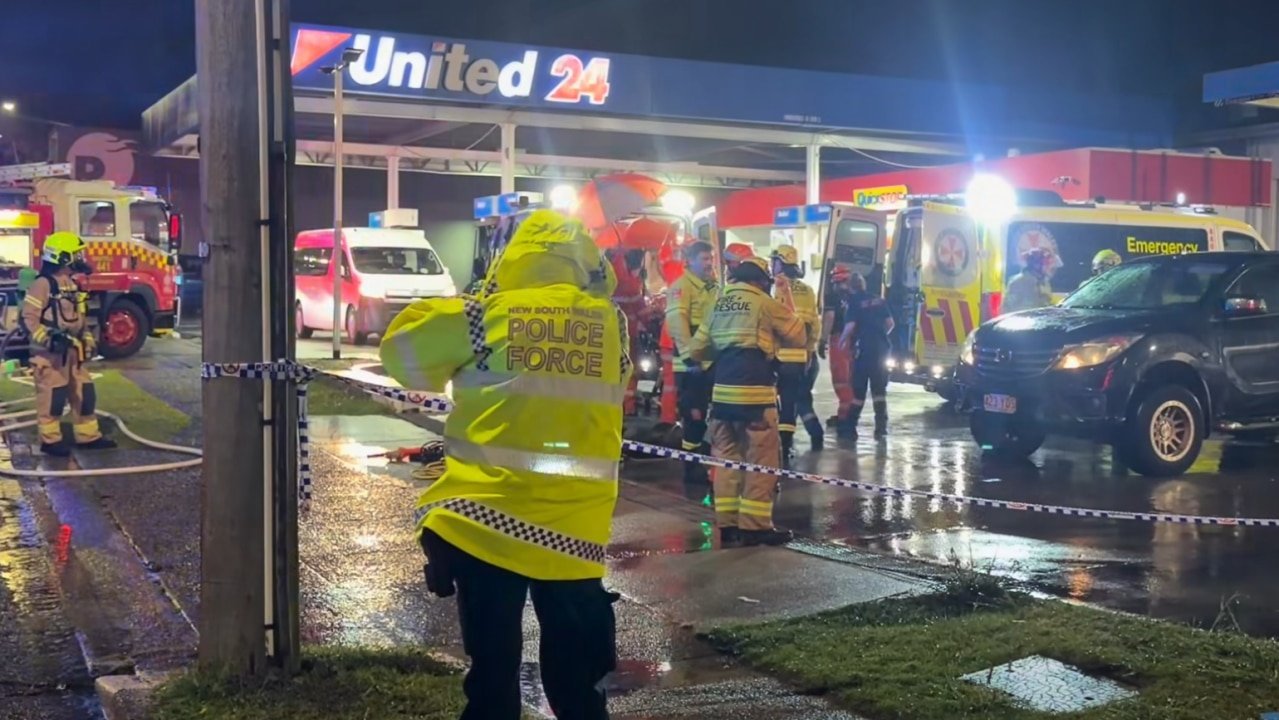
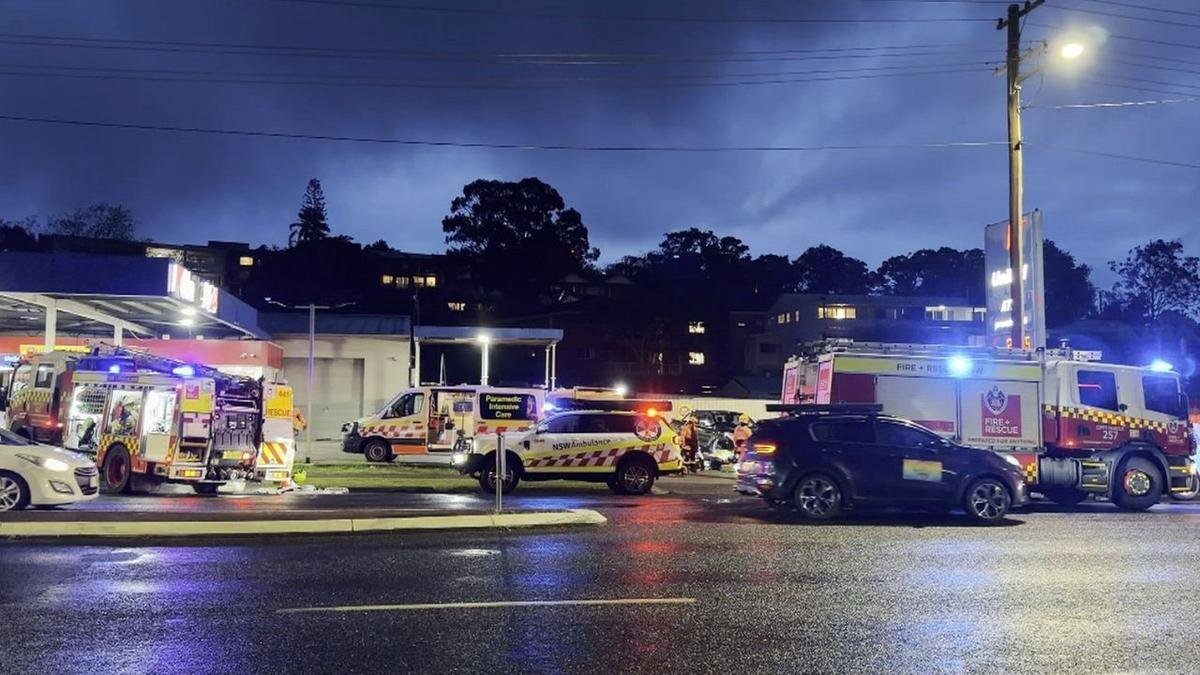
The tragedy unfolded at about 7pm last Tuesday at the United service station on Harbour Drive, one of the main roads through the coastal city.
According to police, a woman had pulled in to fill up her vehicle. As she drove off the forecourt, the ute allegedly struck the crouching employee and dragged him underneath.
People who saw what happened did not hesitate. Bystanders gave first aid while they waited for paramedics, firefighters and police to arrive.
What followed was a gruelling operation.
Fire and Rescue NSW crews spent around half an hour working to free the man from under the vehicle while paramedics treated him in an extremely confined space.
NSW Ambulance Acting Inspector Tayla Chapman later described the rescue as highly complex. She said paramedics initially struggled to reach their patient because access was so restricted.
Once freed, the man was taken to Coffs Harbour Base Hospital with serious crush injuries. He was then airlifted south to John Hunter Hospital, one of the state’s major trauma centres.
Despite a week of specialist care, he could not be saved.
The driver has been named as Jessica Mae Breen, 44. She was charged with negligent driving occasioning grievous bodily harm.
She was also charged with breaching bail conditions linked to separate, unrelated offences.
Breen was granted bail last Wednesday and is due to appear again before Coffs Harbour Local Court this Wednesday. Police said no additional charges had been laid at this stage.
The charges have not been tested in court.
Speaking to reporters in the days after the incident, Acting Inspector Amanda Crouch said early inquiries pointed to it not being a deliberate act.
She explained that the woman had gone to the service station simply to buy fuel and was leaving the forecourt when the worker was hit. She added that the driver and the victim had never had any previous dealings with each other and were strangers.
The matter is now being examined by two separate bodies: the NSW Police Force Crash Investigation Unit and SafeWork NSW.
That second investigation matters. Because the man was killed while at work, the case is also a potential workplace fatality.
Investigators are likely to look not only at the actions of the driver but at the conditions under which forecourt staff carry out their duties.
Tank-level checks often require workers to bend or kneel near access points set into the ground. In that position, they can sit below the sightline of a driver behind the wheel of a high-bodied vehicle such as a ute.
These are the same vehicles that have become a fixture of Australian roads in recent years.
Analysis: What This Means for Australia
This tragedy goes well beyond one service station on the NSW coast. It raises urgent questions about workplace safety for the thousands of Australians who staff fuel stations, often alone and often after dark.
Service station forecourts combine heavy vehicle movement, pedestrians and workers in one tight space. Workers move between bowsers, tank points and store entrances while cars pull in and out constantly.
A brief lapse in attention can have catastrophic results.
For regional communities like Coffs Harbour, the loss cuts deep. A local servo is part of the fabric of town life.
Its staff are familiar faces, and residents will be asking how a routine check on an ordinary weeknight ended in a death.
There are also justice implications.
The coroner’s report and the SafeWork findings could shape recommendations for the wider fuel retail industry, including how and when tank inspections are carried out, the use of barriers or high-visibility markers, and procedures for working near moving vehicles.
The case will also renew debate about road safety and the growing popularity of larger vehicles. Safety advocates have long warned that bigger front ends can create blind spots close to the vehicle, particularly for anyone crouching or kneeling nearby.
Questions will inevitably be asked about the bail conditions attached to the driver’s separate matters. Those issues will play out in court, where she is entitled to the presumption of innocence.
Law enforcement insiders note that when a victim of a serious driving incident dies, police routinely review the case. Whether the charges laid so far remain unchanged will depend on the outcome of the crash investigation and advice from prosecutors.
Workplace safety observers believe the SafeWork inquiry could prove just as significant as the criminal case. Such investigations can examine whether employers had adequate systems in place to protect staff doing low-level tasks in vehicle traffic zones.
Industry observers say fuel retailers across the country will be watching closely. Any findings that point to systemic risk on forecourts could prompt changes to safety protocols nationwide.
Emergency services sources say rescues involving people trapped beneath vehicles are among the most technically demanding jobs crews face. Lifting a vehicle without worsening a patient’s injuries requires precision and time.
They praised the bystanders whose quick first aid gave the man a fighting chance.
For now, a family is grieving, a community is in shock, and a forecourt on Harbour Drive has become the scene of a tragedy that should never have happened during a routine shift.
Anyone who witnessed the incident or has dashcam footage is urged to contact Crime Stoppers. Those affected by this story can seek support through Lifeline on 13 11 14.