
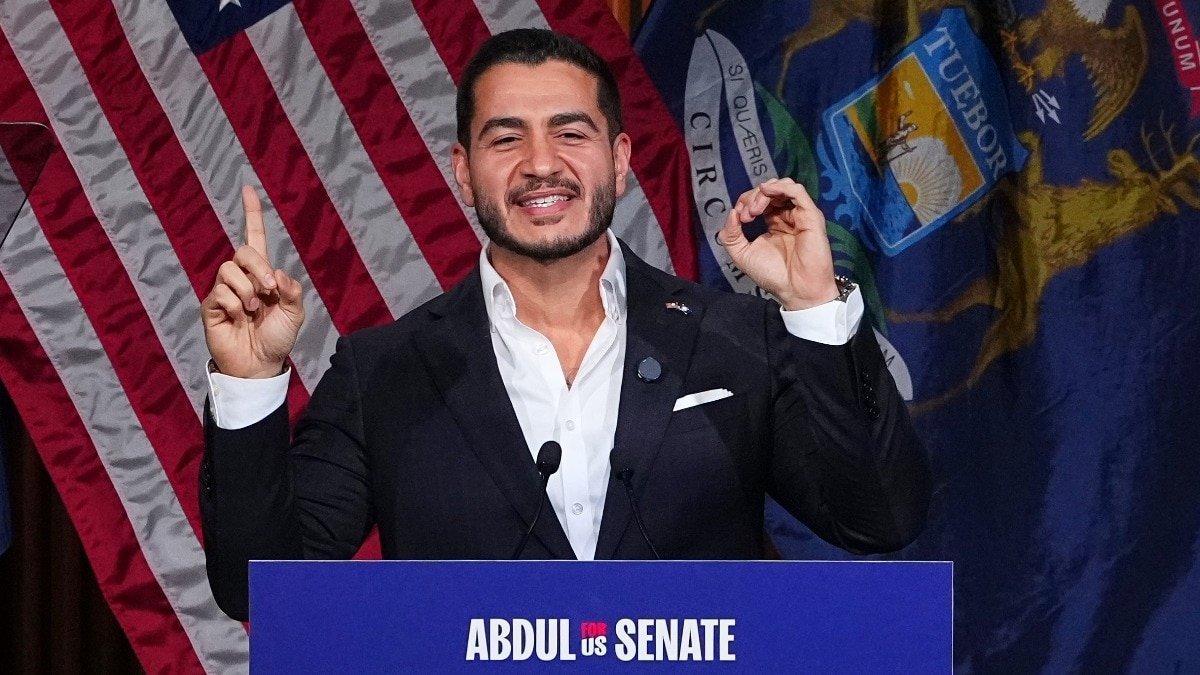
‘JD, Habibi’: Abdul El-Sayed Mocks Trump and Vance After Becoming America’s First Muslim Senator in Stunning Michigan Win That Tips Control of Washington
- Son of Egyptian immigrants Abdul El-Sayed has become the first Muslim ever elected to the US Senate, defeating Republican heavyweight Mike Rogers in battleground Michigan
- In a defiant victory speech, he taunted Vice President JD Vance that he would soon have to swear him in, and told Donald Trump he could simply call him ‘Senator’
- Trump repeatedly tried to tie El-Sayed to terror groups without evidence, questioned his loyalty and called him ‘Mohammed’
- Democrats have seized control of the Senate, a shift with direct consequences for AUKUS, Middle East policy and Canberra’s most important alliance
He was called a terror sympathiser. He was mocked by name from the most powerful office on Earth.
His loyalty to the only country he has ever called home was openly questioned.
On Tuesday night, Abdul El-Sayed answered all of it with a single word: Senator.
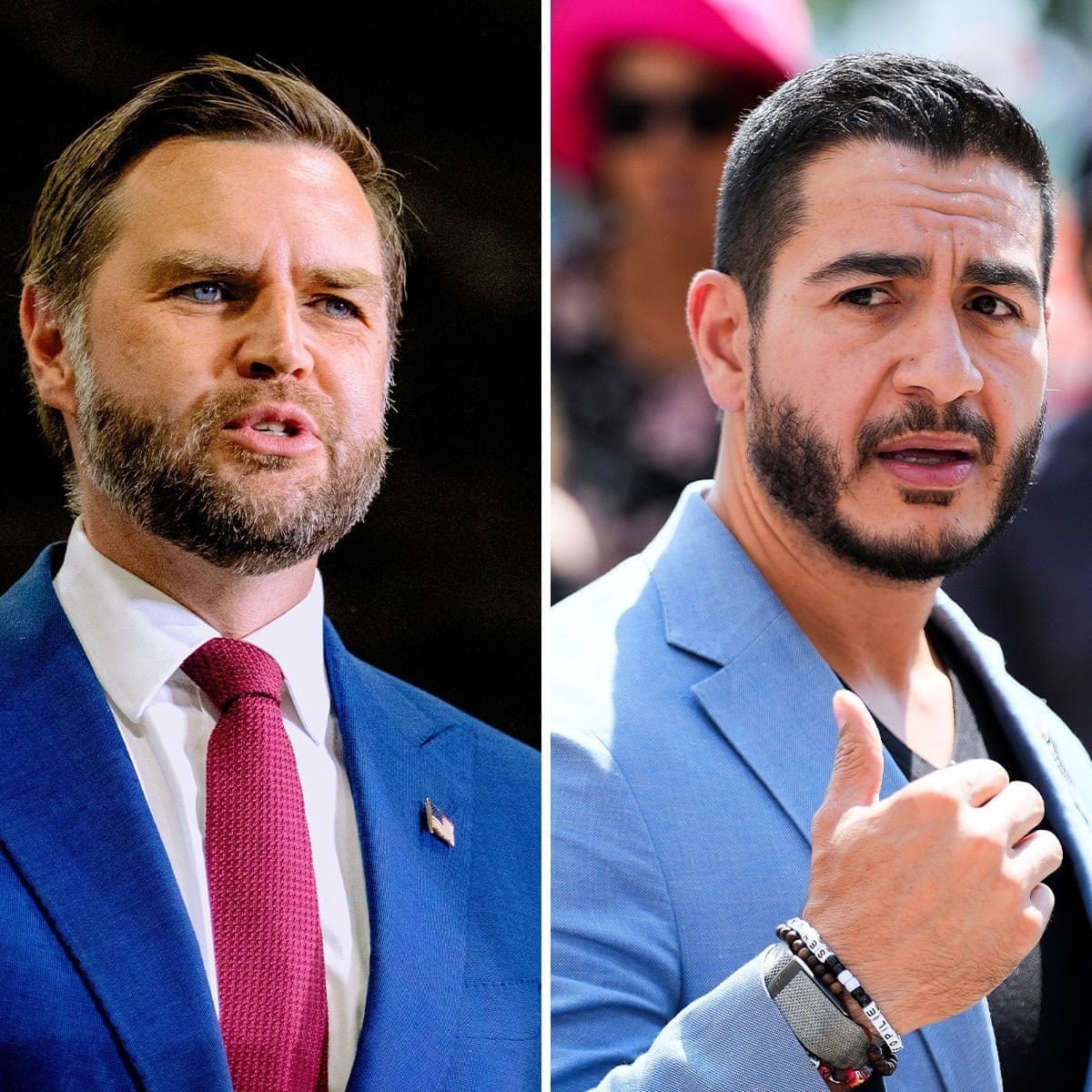
The progressive Democrat has made American history in Michigan, becoming the first Muslim elected to the US Senate. And he did not waste the moment on polite gratitude.
Standing before a roaring crowd of supporters, the former public health official turned his fire squarely on the two men at the top of the Republican Party, delivering a victory address that was part celebration, part settling of scores.
His first target was Vice President JD Vance.
Addressing him with the Arabic term of endearment ‘Habibi’, El-Sayed told the crowd he found it deliciously ironic that Vance, as president of the Senate, would be the one administering his oath of office in January.
He then twisted the knife with a college football jibe, declaring the Michigan Wolverines had beaten the Ohio State Buckeyes. The barb was pointed: Vance hails from Ohio and represented the state in the Senate before joining Trump’s ticket.
Then came the President.
Throughout the campaign, Trump had sought to connect El-Sayed to terrorist organisations, despite there being no evidence of any such links. He questioned whether the candidate was truly loyal to America and repeatedly referred to him as ‘Mohammed’ rather than by his actual name.
El-Sayed’s response drew some of the loudest cheers of the night.
Since Trump apparently had trouble with his name, he suggested, the President could skip the problem entirely and address him as Senator once Vance had sworn him in.
Nor was the defeated Republican spared. El-Sayed wished Mike Rogers, a former congressman, a happy retirement, before accusing him of choosing hate while Michigan chose hope.
He told supporters he hoped the state would never see the likes of Rogers again.
It was a brutal send-off for a candidate who came agonisingly close to winning a Michigan Senate seat just two years ago, when he narrowly lost to Democrat Elissa Slotkin in 2024.
El-Sayed’s rise has been anything but conventional. The son of Egyptian immigrants, he trained as a physician and epidemiologist and led Detroit’s health department during the city’s long recovery from bankruptcy.
He first burst onto the national stage in 2018 with an insurgent run for Michigan governor, losing the Democratic primary to Gretchen Whitmer.
This time, he refused to moderate.
He ran on an unashamedly left-wing platform that left some centrist Democrats deeply uncomfortable, championing ‘Medicare for All’, a plan to scrap America’s patchwork of private and public insurance in favour of a single, government-run system.
He has also been one of the most outspoken critics of Israel to win high office in the United States, a stance that resonated in Michigan, home to one of the largest Arab and Muslim American communities in the country, particularly around Dearborn.
His win was not an isolated shock.
Democrats flipped Republican-held seats across the nation on Tuesday, wresting back control of the Senate and handing Trump a bruising rebuke midway through his second term.
Analysis: What This Means for Australia
For Canberra, this is far more than a colourful American election night story.
The Senate is where treaties are ratified, defence budgets are shaped and senior appointments, including ambassadors and military chiefs, are confirmed.
A Democrat-controlled chamber changes the political arithmetic surrounding every major element of the alliance, from the AUKUS submarine deal to intelligence sharing and arms sales in the Indo-Pacific.
AUKUS has historically enjoyed bipartisan support in Washington, but its success depends on sustained congressional funding for American shipyards and the transfer of Virginia-class submarines.
A new Senate majority with its own priorities, and a President now facing a hostile chamber, could inject fresh uncertainty into timelines Australia has already spent billions of dollars to lock in.
Middle East policy is another flashpoint. El-Sayed’s election signals that sharp criticism of Israel is no longer politically fatal in a key swing state.
Any shift in Washington’s posture would ripple directly into Australian foreign policy debates, where the government has walked a careful line on the Israel-Gaza conflict.
There is also a domestic dimension. Australia has seen a surge in tensions linked to the conflict, with rising reports of both antisemitism and Islamophobia.
Security agencies, including Australian Security Intelligence Organisation, have repeatedly warned that politically motivated violence and social cohesion are pressing concerns.
Inflammatory rhetoric from overseas leaders, such as attempts to brand a Muslim candidate a terror sympathiser without evidence, can travel instantly to Australian social media feeds and inflame divisions here.
And economically, a divided Washington raises the prospect of legislative gridlock on trade and tariffs, issues that weigh heavily on Australian exporters and the broader cost of living picture.
Security analysts say Canberra should prepare for a more turbulent period in which the White House and Senate are openly at odds. They warn that defence programs reliant on multi-year American funding are particularly vulnerable when Congress and the President are locked in political warfare.
Foreign policy observers believe the Michigan result reflects a generational shift within the Democratic Party on Israel and the Palestinians, one that Australian diplomats will need to track closely as they cultivate relationships with the incoming Senate class.
Community leaders and social cohesion experts in Australia have long argued that the language politicians use matters.
Some note that El-Sayed’s victory, coming after a campaign marked by baseless terror smears, may be seen by Muslim Australians as evidence that such tactics can fail at the ballot box.
Political strategists, meanwhile, say the broader Democratic surge suggests voter fatigue with the Trump administration that could reshape the 2028 presidential race, a contest whose outcome will define the alliance for years to come.
For now, one image is likely to endure: a Michigan doctor, mocked by name from the Oval Office, preparing to raise his right hand in January before the very Vice President he so gleefully taunted.