
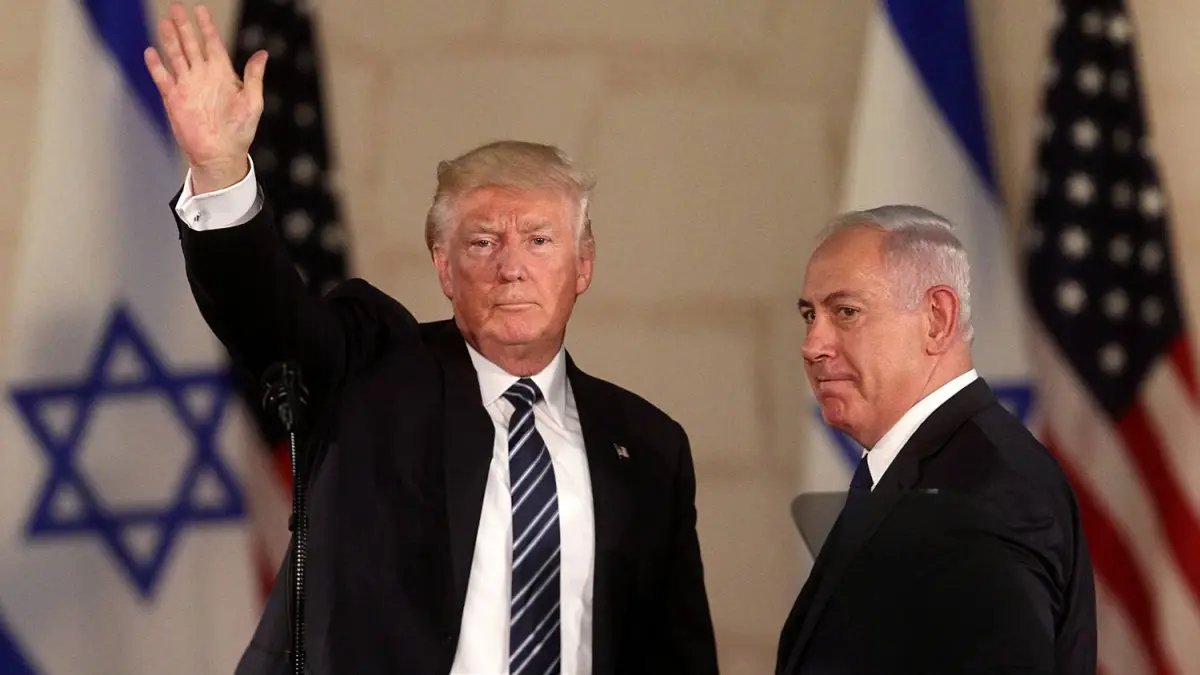
‘They Don’t Need It’: Trump Stuns Allies by Declaring He Will Turn Off Billions in US Funding to Israel, a Warning Shot for Every Nation That Leans on Washington, Including Australia
- Donald Trump says he and Benjamin Netanyahu have agreed that America’s roughly $US4 billion ($A5.7 billion) in annual support to Israel will stop by the end of this year
- The President insists Israel can now “buy whatever they want” from US weapons makers, and says the same applies to Europe
- The move comes as American support for Israel collapses, with two-thirds of Democrats now saying Washington is too supportive of the Jewish state
- The announcement adds to pressure on Australia, which relies heavily on the US alliance and is spending billions under AUKUS
For more than half a century it was one of the most reliable cheques in global politics.
Now, according to Donald Trump, it is about to stop.
In a single television interview, the US President signalled the possible end of an era of American financial and military support for Israel. The message to allies around the world, from Jerusalem to Canberra, was blunt: Washington’s generosity has limits, and the bill is being handed back.
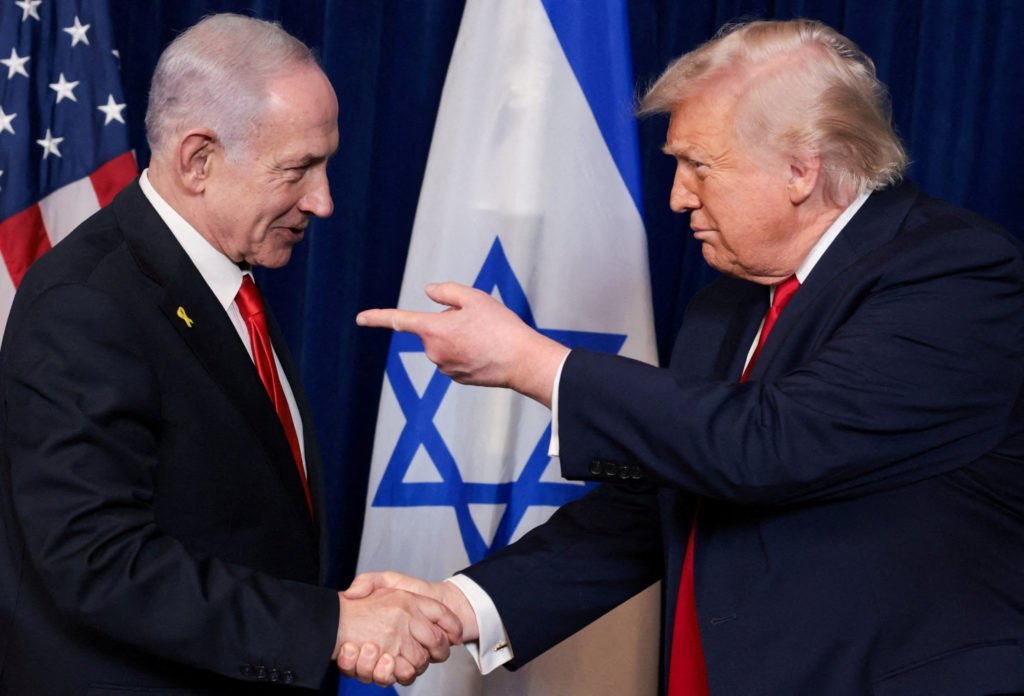
Speaking to Fox News on Tuesday, Mr Trump claimed he had struck an arrangement with Israeli Prime Minister Benjamin Netanyahu to wind down the annual package before the end of this year.
He put the figure at around $US4 billion, roughly $A5.7 billion, and said Israel simply no longer required it. He described the assistance as a mix of weapons and cash, saying it could be viewed as either military aid or money.
The President said Mr Netanyahu, whom he referred to by his nickname Bibi, had approached him about the issue. He said the pair had been discussing it for a couple of years because of the size of the sum involved.
Mr Trump stressed America would still step in if Israel needed help. But he said the regular payments would stop at the end of the year, and repeated his reasoning: Israel does not need them.
He was equally frank about the politics.
Mr Trump said left-wing Democrats had seized on the well-known payment as a symbol of unfairness to attack Republicans, and that he would not allow it to continue to serve that purpose.
He also had a sales pitch. Israel, he said, could purchase whatever it wanted, and so could Europe, adding that America makes the best weapons in the world.
Mr Netanyahu’s office did not immediately respond to the President’s comments.
The timing is no accident.
The current memorandum of understanding between the two nations, which provides about $US3.8 billion a year in military aid, is due to expire in 2028.
Officials on both sides have been discussing what US support should look like after that.
Mr Netanyahu has already hinted at change. In a CBS interview in May, he said he hoped to end Israel’s reliance on American military support within a decade.
In a June letter to a US congressman, he wrote that Israel should move from being an aid recipient to being a partner.
The scale of recent spending explains why the issue has become so contentious. Washington has sent tens of billions of dollars in military assistance to Israel in recent years.
An academic study released last year found that the administrations of Democrat Joe Biden and Mr Trump together provided at least $US21.7 billion in military aid after the Gaza war began in 2023.
That study was deliberately published on the second anniversary of the October 7, 2023 Hamas attacks on Israel, which triggered the conflict.
Since then, American public opinion has shifted sharply.
A Quinnipiac University poll in June found 48 per cent of US voters, and 66 per cent of Democrats, believe the US is too supportive of Israel.
When the question was first asked in 2017, those figures were just 16 per cent and 20 per cent.
Candidates critical of Israel are now winning Democratic primaries. Even moderates are increasingly willing to question a bipartisan commitment that lasted for decades.
Analysis: What This Means for Australia
Australians might be tempted to see this as a distant dispute between Washington and Jerusalem. That would be a mistake.
The core of Mr Trump’s argument is that wealthy allies should pay for their own security and buy American weapons to do it. That principle sits at the centre of Australia’s most important strategic relationship.
Canberra has committed enormous sums to the AUKUS submarine deal, and US officials have repeatedly urged Australia to increase defence spending.
If Israel, long regarded as Washington’s closest partner in the Middle East, can be told its support is ending, no ally can assume its arrangements are permanent.
For Department of Defence planners, the lesson is clear. The alliance increasingly looks like a commercial relationship, with American weapons sold rather than supplied.
That has direct implications for the federal budget, for cost of living pressures and for the trade-offs governments must make between defence, health and housing.
There is also a home-front dimension. The Gaza war has divided communities across Australia, sparking repeated street protests and a rise in reports of antisemitism and Islamophobia.
Any major change in US policy towards Israel is likely to reignite those debates, putting fresh strain on social cohesion and on the police forces responsible for managing large demonstrations.
For Australia’s diplomats, it is another reminder that American foreign policy can change abruptly, sometimes announced first on cable television before allies are formally told.
Security analysts say the announcement fits a broader pattern of Washington pushing the costs of security back onto its partners. They warn that Canberra should prepare for more demands, not fewer.
Defence industry observers believe Mr Trump’s emphasis on selling American weapons, rather than giving them away, could reshape procurement relationships worldwide, with nations expected to pay full price for access to US technology.
Foreign policy experts caution that the details remain unclear.
It is not yet known how any arrangement would affect the existing agreement running to 2028, or whether Congress would accept such a change, and Israel has not publicly confirmed the President’s account.
Community leaders, meanwhile, warn that heated rhetoric about the Middle East rarely stays overseas. They say governments should be ready for renewed tension in Australian cities.
Whether the arrangement happens exactly as Mr Trump describes it remains to be seen. But the message from the White House is unmistakable: in this administration, even the closest friendships come with an invoice.