
Two Australian Pilots Survive Terrifying Helicopter Plunge Into Borneo River While Fighting Indonesia’s Worst Wildfires in a Decade, as Desperate Search for Missing Indonesian Crewman Continues
- Two Australian pilots survived after their Super Puma firefighting helicopter lost control and slammed into the Barito River in South Kalimantan.
- An 18-strong rescue team is searching the murky waters for a third crew member, an Indonesian national, who has not been found.
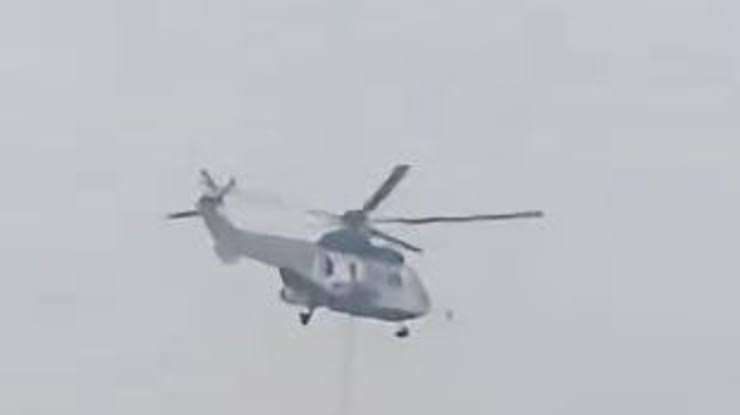
- Amateur footage appears to show the aircraft dipping low over the river to collect water before crashing into the current.
- The crash highlights the danger facing Australians sent into Indonesia’s fire zones, where toxic haze has drifted more than 800km across the region.
One moment they were skimming the surface of a river, filling a bucket to drop on a forest fire. The next, their helicopter was in the water.
Two Australian pilots survived the crash in the heart of Indonesian Borneo.
A third man, an Indonesian member of their crew, is still missing, and rescuers are combing a wide, fast-flowing river for any sign of him.
The incident is a stark reminder of the risks faced by the Australians who fly into the smoke on the front line of one of Asia’s worst environmental emergencies.
The aircraft, a Eurocopter EC225LP Super Puma, went down in the Barito River in South Kalimantan province on Sunday.
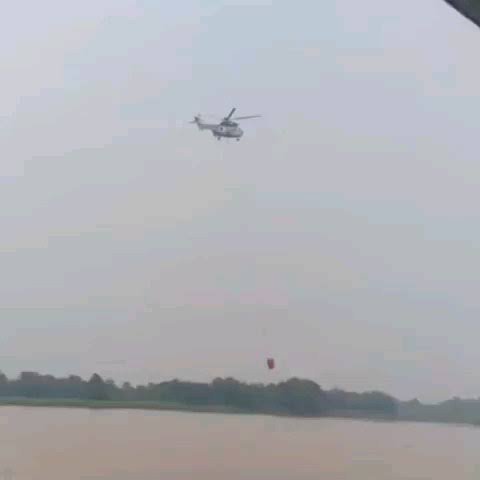
According to Indonesia’s National Disaster Management Agency (BNPB), the helicopter was drawing water from the river with a suspended bucket when the crew lost control and it plunged into the water.
Both Australian pilots were pulled from the river and taken for medical treatment. Authorities have not given details of their injuries.
The fate of their Indonesian colleague is still unknown. An 18-member rescue team was sent to the area to search for him.
Video filmed by onlookers and shared widely online appears to show the moment of the crash. The Super Puma descends low over the river during the water-collection run, then drops into the water.
The helicopter is privately owned. It was contracted by the BNPB for water-bombing operations against the fires burning across the archipelago.
It was no newcomer to emergency work. The agency said the aircraft had regularly supported disaster response missions across Indonesia, including deployments to Banjarmasin, Pontianak and Surabaya.
The crash happened as Indonesia battles its most severe wildfire season in ten years.
Fires have been burning since July, mainly on Borneo and Sumatra. The Indonesian government says a severe El Nino weather pattern has made them much worse by drying out forests and peatlands.
Human activity is also to blame. Clearing land with fire, a cheap but devastating practice, has long been linked to Indonesia’s recurring blazes.
Water shortages have made the job harder still, leaving ground crews short of what they need.
That is why aircraft like the Super Puma matter so much. When ground access is difficult and water is scarce, helicopters that can scoop from rivers and lakes become essential to the firefight.
The consequences have spread well beyond Indonesia’s borders. Thick toxic haze has caused a public health crisis in neighbouring nations, with smoke reaching as far as the Philippines, more than 800km away.
Australia has responded by sending firefighting personnel to help Indonesian authorities bring the fires under control.
Analysis: What This Means for Australia
For Australians, this crash is a reminder that disasters in the region are not someone else’s problem.
Canberra’s decision to send firefighting help to Indonesia reflects a growing reality. Regional emergencies now affect Australia’s diplomatic, security and humanitarian interests directly.
Indonesia is one of Australia’s most important neighbours, and helping in a crisis builds goodwill that is hard to earn any other way.
That help comes at a cost. The Australians who fly these missions face real danger, from low-level flying in heavy smoke to unpredictable winds over water.
Sunday’s crash shows how quickly a routine manoeuvre can turn into a fight for survival.
It also raises questions that will interest regulators and the aviation industry at home. Australia relies heavily on contracted aircraft and experienced pilots to fight its own bushfire season.
Many of those aviators work across borders, moving between hemispheres as the fire seasons change.
Any lessons from this investigation, whether about equipment, procedures or pilot fatigue, could matter to Australian fire agencies that use similar aircraft and crews.
The EC225 has a contested history.
The type was grounded in several countries after a fatal crash off Norway in 2016, though there is no suggestion so far that the same issue played any part in Sunday’s crash.
The health effects of the haze are another concern. Smoke that can travel 800km is a reminder of how environmental disasters cross borders.
Many Australians remember the choking smoke from their own catastrophic fires and know how damaging prolonged exposure can be.
The wider issue is climate change.
As El Nino events and longer dry seasons stretch firefighting resources across the Asia-Pacific, Australia may be asked to send crews and aircraft overseas more often, just as its own fire seasons grow longer and more intense.
Security analysts say the deployment shows how far “soft security” now shapes Australia’s strategic standing in South-East Asia. They argue that being seen to help during a disaster strengthens partnerships in ways that formal agreements alone cannot.
Aviation industry observers point out that water-bucket operations are among the most demanding tasks in rotary-wing flying.
They say hovering low over a moving river while a heavy load swings beneath the aircraft leaves almost no margin for error, especially when visibility is poor.
Emergency management insiders warn that the growing global demand for aerial firefighting is stretching a limited pool of specialist aircraft and pilots. Many of the same aircraft and crews are needed in several countries in a single year, which raises concerns about maintenance schedules and crew fatigue.
Disaster response experts believe that recurring fire crises in Indonesia, driven by land clearing and worsened by weather patterns, will continue to draw in neighbouring countries until the root causes are addressed.
In their view, international firefighting help treats the symptoms but cannot fix the underlying problem.
Australians who are worried about relatives overseas are encouraged to check updates from the Department of Foreign Affairs and Trade.
For now, attention is fixed on the brown waters of the Barito River, where rescuers are still searching for the missing Indonesian crewman, and on two Australian pilots who came closer to death than most people ever will.