
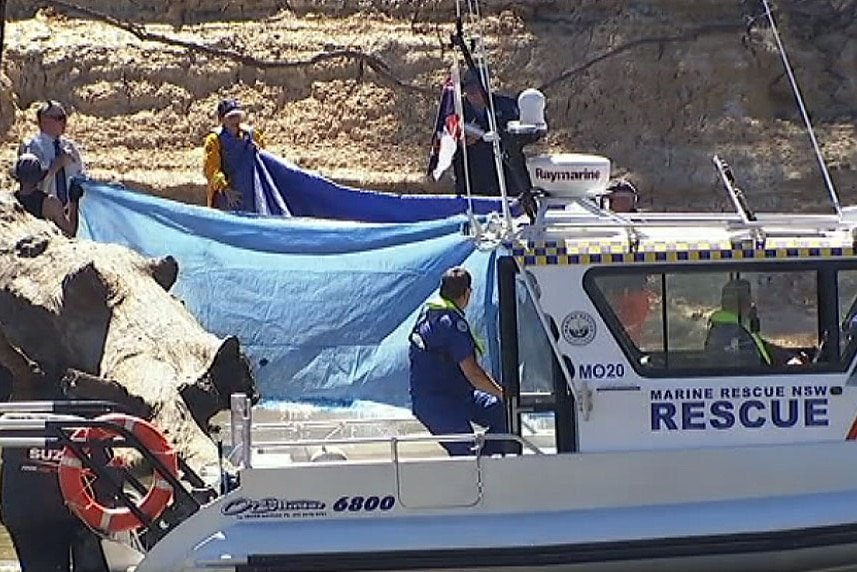
‘Help Me!’: Desperate Final Screams Of Gold Coast Liveaboard Sailor Swept Away By Brutal Tide As His Own Sister Joins Frantic Overnight Search Before Body Is Found
- A 55-year-old man who lived on a sailboat in the Broadwater was heard crying for help in the water near Hope Island just after 7pm on Sunday
- He had been trying to paddle a broken-down tender only about 50 metres back to his floating home when a ferocious outgoing tide overpowered him
- Hours earlier he had sent his mother a photo of a deep gash to his foot, sliced open on barnacle-covered rocks
- His sister joined rescuers on the water overnight, but his body was recovered at the mouth of Saltwater Creek on Monday morning
It was a distance most people could cover in under a minute on foot.
Just 50 metres of water separated a Gold Coast man from the sailboat he called home. On Sunday night, that short stretch of the Broadwater cost him his life.
As dusk settled over Hope Island, people near the Boykambil Esplanade boat ramp heard the sound every boatie dreads: a man in the water, screaming for help.
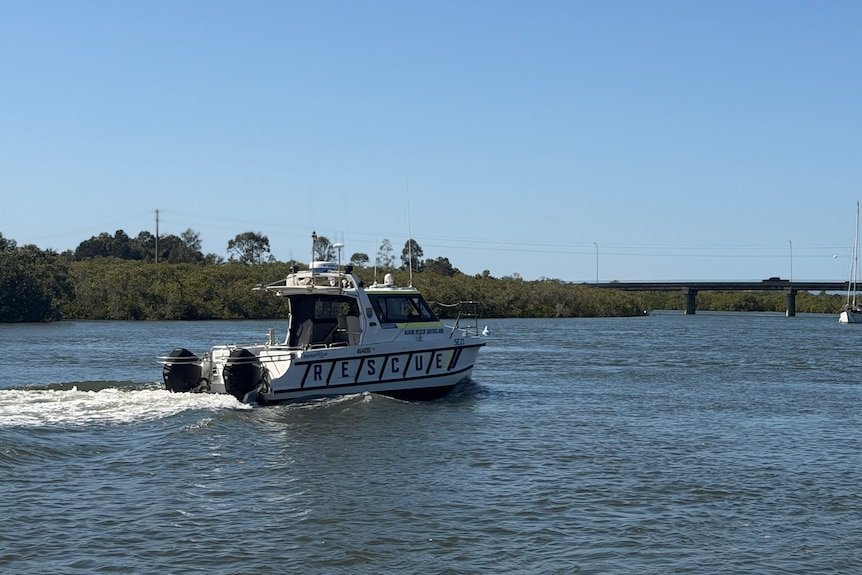
By the time emergency crews arrived, all that remained was his empty tender, drifting in the dark.
The 55-year-old was a confident swimmer with no known medical conditions. His family knew the waterway was his life.
And yet a powerful ebbing tide, a stubborn engine and a nasty injury combined into a sequence that ended in tragedy.
The alarm was raised at about 7.10pm on Sunday, November 8, when the man’s cries carried across the water near the ramp.
Emergency services rushed to the area. Around 20 minutes later, at roughly 7.30pm, they found his small power boat in Coombabah Creek.
There was no one aboard.
What followed was a major air and sea operation stretching through the night.
Among those searching the black water were the man’s own sister and other relatives, who refused to wait on shore while strangers looked for someone they loved.
Their worst fears were confirmed at about 8.45am on Monday, November 9, when his body was located at the mouth of Saltwater Creek.
Police say the death is not suspicious. A report will be prepared for the coroner.
According to Acting Inspector Peter Venz of the Queensland Police Service, the man lived aboard a sailboat anchored in the Broadwater and had come ashore during the day to fix his tender, the small motorboat liveaboard sailors rely on to get between their vessel and land.
He swapped out several spark plugs, but the outboard would not start.
With no engine, he chose to drag the dinghy along the water’s edge and then paddle the final stretch to his sailboat. On paper, it was a modest task.
In reality, he was fighting a fierce outgoing tide. Police said the current was so strong he was forced to repeatedly drop anchor just to rest his arms between bursts of paddling.
At some point, he and the boat became separated, and he ended up in the water.
There was another factor that may have weighed on him. At around 2.30pm, hours before he went missing, he had badly cut his foot on barnacles clinging to the rocks.
He photographed the wound and sent it to his mother, a small, ordinary moment between a son and his mum that now takes on heartbreaking significance.
The Broadwater and its maze of creeks, channels and canals form one of the busiest recreational waterways in the country. Thousands of locals and visitors launch boats there every year, and a quiet community of liveaboard sailors moor in its sheltered reaches.
But the calm surface masks real danger.
Tidal flows funnel through narrow creek mouths and channels, and when the tide turns, water can rush out with surprising force, even well inside the seaway.
This tragedy also lands at the start of the warmer months, when Gold Coast waterways fill with holidaymakers, fishers and families.
Analysis: What This Means for Australia
Australians love the water, and many assume that drownings happen far offshore, in raging surf or during wild storms. This death challenges that belief.
It happened in a sheltered estuary, close to a public boat ramp, within shouting distance of shore.
For public safety, the lesson is stark.
The tender is often the most overlooked vessel a boatie owns, yet it is frequently used alone, at dusk, without a lifejacket, and with an engine that has not been properly serviced.
When that small boat fails, the margin for error can disappear in seconds.
For law enforcement and rescue services, overnight searches in tidal waterways stretch resources and put crews at risk. Every operation like this involves police, volunteer marine rescue groups and air assets working against darkness and moving water.
There is also a community dimension. Liveaboard sailors often move between boat and shore alone, with fewer daily touchpoints than people living on land.
In this case, family were quickly drawn in, but the episode raises questions about how isolated boaties are checked on, and how quickly an absence is noticed.
The social cost of drowning deaths is measured in grieving families, traumatised witnesses and rescuers who carry these searches with them long after they end.
Water safety advocates say the circumstances here reflect a pattern seen again and again across Australian estuaries and rivers, where people underestimate how quickly a current can carry even a strong swimmer away from safety.
Marine rescue insiders warn that if an engine fails, staying with the boat is almost always the safest choice, because the hull offers flotation and is far easier for searchers to spot than a person in the water.
Boating safety observers believe tender use deserves far more attention in public campaigns run by authorities such as Maritime Safety Queensland.
They urge anyone heading out, however briefly, to wear a lifejacket, check tide times, carry a phone in a waterproof pouch and tell someone their plans.
Medical experts also note that an open wound, pain and fatigue can affect a person’s ability to swim or grip a boat, particularly after a long day of physical effort.
None of that will ease the grief of a mother who received a photo of her son’s injured foot on Sunday afternoon, or a sister who searched the water through the night.
The coroner will now examine the circumstances. For the Gold Coast boating community, the message is already painfully clear: even 50 metres can be too far when the tide is against you.
Anyone needing support can contact Lifeline on 13 11 14. For more on staying safe on the water, see boating safety.