
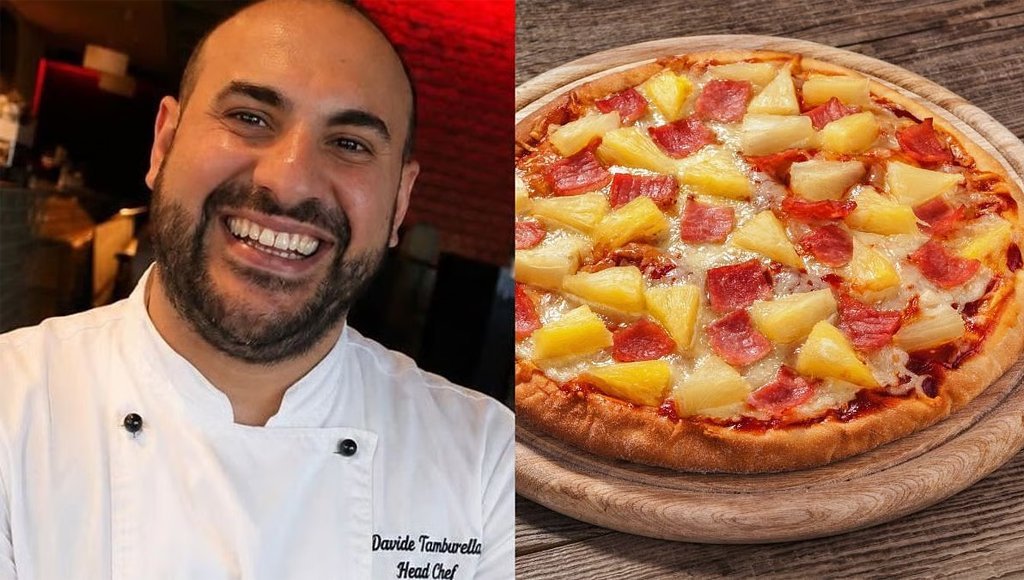
‘An Insult to My Culture’: Italian Chef Sacked From Brisbane Restaurant After Refusing to Put Pineapple on Pizza in the Heart of Australia’s Pineapple Country, and Loses His Dream of Permanent Residency
- Italian chef Davide Tamburella refused three times in four years to serve ham and pineapple pizza, claiming the topping offended his heritage
- He was fired from Brisbane’s now-closed La Costa restaurant in May, about a fortnight after management confronted him with a list of complaints
- His sacking ended the restaurant’s sponsorship of his application for skilled permanent residency
- His unfair dismissal fight collapsed because he lodged it too late, and his former boss says there is “more to this story than a pizza topping”
He came to Australia chasing a permanent future. He lost it, at least for now, over a slice of fruit.
A tribunal ruling has revealed how an Italian chef’s refusal to put pineapple on pizza in Queensland, the state that grows every commercially farmed pineapple in the country, became part of a workplace breakdown that cost him his job and his employer-sponsored path to residency.
It is the kind of story that sounds like a joke. For the man at the centre of it, the consequences were real.

Davide Tamburella was dismissed in May from La Costa, a Brisbane restaurant that has since closed. Roughly two weeks earlier, managers had sat him down to go through a series of concerns about his conduct in the kitchen.
One of those concerns involved a function booking. Guests wanted ham and pineapple pizza, and Tamburella would not make it.
His reasoning, as recorded by the Fair Work Commission, was that as an Italian he regarded pineapple on pizza as an insult to his culture. He had also argued that instructions from management did not have to be obeyed if they offended his cultural sensibilities.
It was not a one-off. The commission noted it was the third time in four years that he had refused to use the fruit.
On an earlier occasion, he had urged his boss to look into just how important it was to Italians that pineapple be kept off pizza.
The pizza dispute was only one item on the list. Management also raised concerns about his swearing, the way he communicated with colleagues and what was described as an escalation of frustration in the workplace.
The ruling also described an incident in April in which Tamburella hit a metal handrail at work and fractured bones in his right hand.
The details came out only because Tamburella took his case to the Fair Work Commission, alleging he had been unfairly dismissed. In a ruling released on Tuesday, his claim was thrown out.
The tribunal did not decide whether the sacking was fair. It found his application had been lodged outside the required time frame.
La Costa’s managing director, Elliot Ingram, told the Daily Mail the saga involved far more than a debate over toppings.
The setting makes the row even more striking. Queensland is the centre of Australian pineapple production, and the fruit is part of the state’s identity.
On the Sunshine Coast, the heritage-listed Big Pineapple stands 16 metres tall and draws a steady stream of tourists stopping for photos.
Refusing to serve pineapple in Queensland is a bit like refusing to pour a beer at the MCG. In Brisbane, it was almost bound to cause trouble.
The Hawaiian pizza has divided food lovers for decades.
It was not invented in Hawaii or Italy but in Canada in the 1960s, and it has since become a staple of Australian takeaway menus, particularly in the Sunshine State.
Many Italian purists consider it a culinary crime. Many Australian diners consider it a Friday night tradition.
Tamburella’s online presence suggests his views on food run deep. On LinkedIn, he describes a career focused on delivering exceptional food and improving business performance.
About three months ago, he published a “letter for chefs” built around the idea of respecting the ingredients.
His profile says he now works at another Brisbane restaurant. Pineapple does not appear on its menu.
Analysis: What This Means for Australia
Beyond the jokes, the case highlights a real tension in Australia’s skilled migration system.
Tamburella had been hoping La Costa would sponsor him for a visa that allows skilled workers to become permanent residents. When he was dismissed, that process ended.
His future in the country was effectively tied to keeping his employer happy.
This is the arrangement many migrant workers in hospitality live under. Sponsorship can give employers enormous leverage over a worker’s life, and it leaves workers exposed when a relationship breaks down, whatever the cause.
The social stakes are significant. Australia’s hospitality industry has struggled with skills shortages, and kitchens across the country depend on overseas-trained chefs.
When sponsorship arrangements fail, businesses lose staff and workers can lose their footing in the country.
There is also a broader workplace question. Cultural identity is a legitimate and protected part of Australian working life.
But the commission’s record shows the chef argued that cultural objection could override reasonable directions, an argument that is unlikely to hold up when the task is putting a legal, popular ingredient on a menu item.
The procedural outcome is also a warning. Tamburella’s case was never heard on its merits because it arrived too late.
Workers who believe they have been wronged often do not realise how short the deadline for an unfair dismissal claim is, and missing it can end a case before it starts.
Workplace relations observers say the case should remind migrant employees that sponsorship gives them less security than many assume. Losing a job can mean losing a visa pathway, sometimes within weeks.
Industry insiders note that hospitality managers walk a fine line. They need talented, passionate chefs, but they also need staff who will deliver what paying customers order.
When a chef’s personal philosophy clashes with a function booking, the business usually wins.
Employment law specialists point out that the commission never ruled on whether the dismissal was justified. The public record reflects management’s complaints, but the chef’s side was never fully tested in a hearing.
Migration advocates have long warned that employer-sponsored pathways can leave workers dependent on a single boss. Cases like this, they argue, show how quickly a long-held plan for permanent residency can unravel.
For now, Tamburella is cooking at a new Brisbane restaurant with no pineapple on the menu. Media outlets have sought his comment.