
‘He’s Grounded for Life’: Miracle in the Gippsland Wilderness as Teen Missing for Six Days in Shorts and Work Boots Is Found Alive After Police Helicopter Spots His Tacklebox
- Seventeen-year-old Will vanished after stepping a short distance away from his campsite near Walhalla East, sparking a desperate six-day search across some of Victoria’s most unforgiving terrain
- The teenager was wearing only shorts and work boots as wild weekend weather lashed the bushland, leaving family and police fearing the worst
- A tacklebox glimpsed from the air led rescuers to the exhausted teen lying in a creek, before he was winched to safety
- His overjoyed mother says his decision to stay in one place saved his life, and has jokingly declared he will never leave the house again
For six agonising days, a mother waited for news she was terrified to hear.
Her teenage son had walked away from a bush campsite in the rugged hills of Gippsland and simply disappeared. No phone call.
No sighting. No trace.
He was wearing shorts and a pair of work boots. The weather turned brutal.
And with every cold, wet night that passed, the odds grew longer.
Then, on Thursday, a police helicopter crew spotted something small and out of place in the dense scrub below: a tacklebox.
Moments later, the search for Will was over. He was alive.
The 17-year-old was discovered lying in a creek bed roughly two kilometres east of Stoney Creek, deep in the bushland that had swallowed him almost a week earlier.
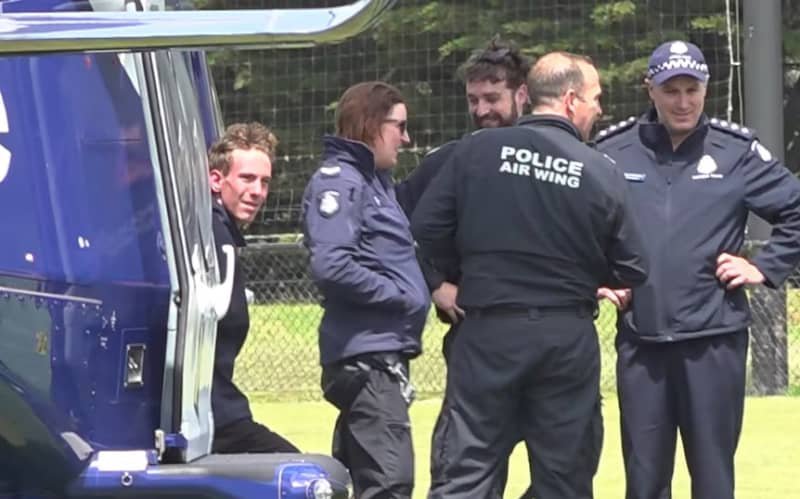
Rescuers lowered from the aircraft secured him and winched him up and out of the gully.
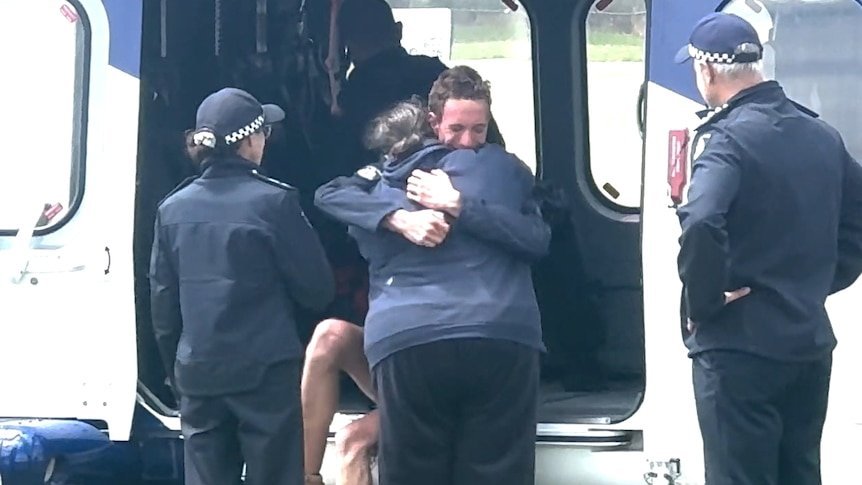
Not long after, he was in the arms of his mother, Elizabeth Barkley.
Speaking to reporters, an emotional Ms Barkley said her boy was in perfect health, and credited his survival to one crucial decision: he stayed put. Rather than wandering further into the wilderness, Will remained in a single location and waited for help to find him.
Relief quickly gave way to a mother’s humour.
Ms Barkley told the ABC her son was ‘grounded for life’ and would not be going anywhere ever again, adding that she was simply over the moon.
Victoria Police confirmed the teenager had been taken to hospital for monitoring, but said he was in good spirits and largely in good health, a remarkable outcome given the conditions he endured.
The ordeal began innocuously.
Will, known to his friends simply as Will rather than William, had been camping with another teenager in Walhalla East, about 180 kilometres east of Melbourne.
At some point he wandered a short way off to another section of the camp, near the junction of Stoney Creek Road and the T2 Track.
He never came back.
His companion went looking when he failed to return, combing the surrounding area. He found nothing.
What followed was one of the region’s most significant land searches in recent memory. Police established a command post at Cowwarr, a small township that became the nerve centre of the operation.
Officers from surrounding stations were drafted in, joined by specialist units including the Public Order Response Team, the Dog Squad, the Mounted Branch and the elite Search and Rescue Squad.
Volunteers and personnel from the Victoria State Emergency Service bolstered the effort on the ground, picking through steep slopes, thick undergrowth and waterlogged gullies.
Police said early on that they believed Will had become disoriented and lost his bearings in the surrounding terrain. But their concern sharpened as the days dragged on.
Investigators publicly flagged two factors that made the case especially alarming: how little clothing he had on, and the foul weather that swept through over the weekend.
Anyone who knows the country around Walhalla understands why.
The old gold-mining district sits in steep, heavily timbered ranges where valleys fold into one another and a short walk off a familiar track can quickly become a disorienting maze.
Temperatures can plunge overnight, rain can soak through to the skin within minutes, and mobile reception is patchy at best.
It is precisely the kind of landscape where a few wrong turns can turn a casual camping trip into a life-or-death struggle.
Analysis: What This Means for Australia
Will’s survival is a joyous ending, but it also throws a harsh spotlight on a recurring danger facing Australian communities: how easily people, particularly young people, can become lost in the vast and unforgiving bush that sits on the doorstep of our major cities.
Every year, emergency services across the country are called to missing persons cases in national parks, state forests and remote camping grounds. Each one demands a huge commitment of resources.
This single search tied up helicopters, specialist police squads, mounted officers, dog handlers and SES volunteers for almost a week, a heavy drain on regional services that must still respond to car crashes, crime and other emergencies.
For regional towns like Cowwarr and the wider Gippsland community, such operations become all-consuming, with locals often opening their homes, businesses and local knowledge to support searchers.
The case also underlines the critical role of aerial support.
It was not a ground team but a helicopter crew who made the breakthrough, and only because a single, recognisable object stood out against the bush.
That raises important questions about funding for air wings, thermal imaging and drone technology in regional search operations.
And there is a public safety message that cannot be ignored.
As warmer months draw more Australians into the outdoors, the lessons of bushwalking safety become ever more urgent: carry adequate clothing, tell someone your plans, take a personal locator beacon, and never assume a short stroll is risk-free.
Search and rescue specialists say Will did exactly what they urge every lost person to do.
Staying in one place dramatically shrinks the area searchers must cover and increases the chance of being spotted, while wandering can carry a person further from where crews are concentrating their efforts.
Law enforcement insiders note that the outcome of land searches can hinge on tiny details.
A brightly coloured item, a piece of equipment or a disturbance in the scrub can be the clue that turns a recovery mission back into a rescue.
In this case, a humble tacklebox may well have saved a life.
Emergency management observers also warn that exposure remains one of the gravest threats in the Australian bush, even outside winter.
Wet conditions combined with minimal clothing can drain body heat rapidly, which is why authorities were so openly worried about the teen’s attire and the weekend storms.
Outdoor safety advocates believe cases like this should prompt families to have frank conversations with teenagers heading off on independent camping trips, from basic navigation skills to what to do the moment they realise they are lost.
For now, though, those debates can wait. A family that spent six days bracing for heartbreak instead has its boy back home.
And if his mother has her way, he will not be straying far from it any time soon.