
‘A Climate Challenge They Did Not Create’: Albanese Pleads With World Leaders to Rescue Drowning Pacific Neighbours, but Critics Pounce Over the Two Words He Refused to Say
- Anthony Albanese used the world stage at COP31 in Türkiye to beg nations to help Pacific islands threatened by rising seas and extreme weather.
- Not once did the Prime Minister say ‘fossil fuels’, and critics claim the omission exposes how deeply the industry shapes Australian politics.
- Marshall Islands President Hilda Heine warned that every new oil well and coal seam is a direct threat to her nation’s survival.
- Outgoing UN chief António Guterres declared the world is on a path of ‘mutually assured destruction’.
For millions of people across the Pacific, the climate crisis is not a forecast. It is the tide creeping into the family home.
That is the reality Anthony Albanese carried onto the global stage this week.
He made an impassioned plea for the world to stand behind Australia’s island neighbours, but he left one glaring hole in his message that critics say could undermine Canberra’s standing in the region it most wants to protect.

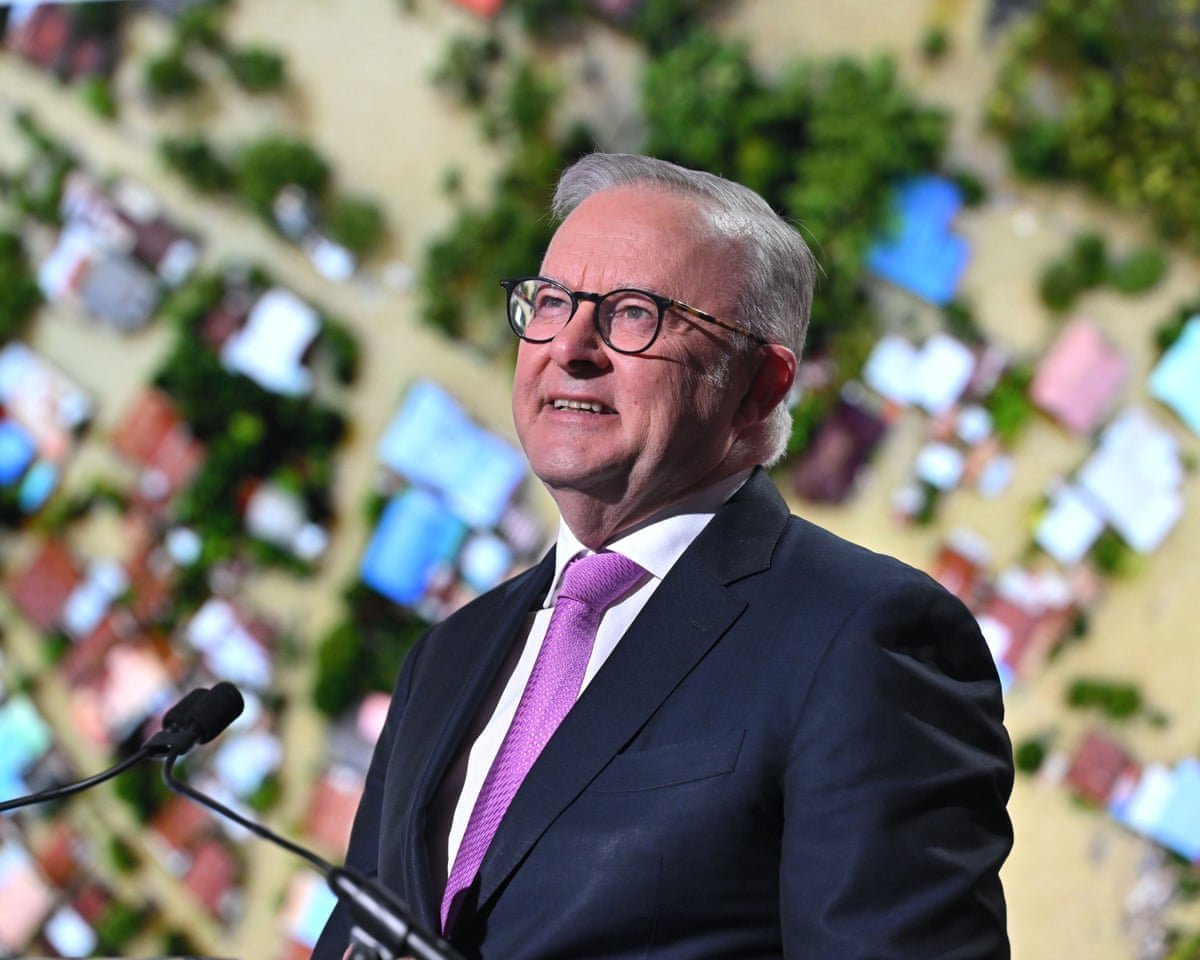
Speaking on Wednesday as the two-day World Leaders Climate Action Summit opened the high-level segment of the United Nations COP31 conference in Türkiye, the Prime Minister urged governments to throw a lifeline to Pacific nations battered by rising sea levels and increasingly violent weather.
Australia is steering negotiations at this year’s talks.
Albanese made clear that Canberra pursued the role precisely so it could amplify the voices of those facing the most urgent danger, which he described as the ‘Pacific family’.
He called on nations to back the Pacific Resilience Facility, a fund launched in 2025 with the goal of raising US$500 million, roughly A$726 million, to bankroll climate adaptation projects across the region.
In the most emotive moment of his address, he implored his fellow leaders to join the campaign, stressing that Pacific nations were confronting a crisis they ‘certainly did not create’.
The backlash was swift.
Climate campaigners and crossbench politicians seized on the fact that the speech made no direct reference to coal, oil or gas, the very fuels driving the warming that endangers the Pacific.
Independent ACT senator David Pocock told SBS News that the omission revealed how ‘captured’ both major parties were by the fossil fuel industry.
Pocock acknowledged that Australia had some genuine success stories to share on renewable energy. But he pointed to what he described as the government’s inconvenient record: 38 new fossil fuel projects or extensions approved since Labor took office.
That tally, he argued, was simply incompatible with a liveable Pacific, let alone with the climate impacts already being felt at home.
The senator said Australia, which he identified as the world’s third-largest fossil fuel exporter, needed to ‘get real’. That meant a serious plan to halt new approvals and map out a deliberate phase-out.
Those on the front line were blunter still.
Hilda Heine, President of the Marshall Islands, a nation of low-lying atolls barely rising above the Pacific Ocean, warned that each new oil well and each fresh tonne of extracted coal endangered her country’s future.
The discovery of new fossil fuel reserves, she said, should inspire fear, not celebration.
Outgoing UN Secretary-General António Guterres delivered an equally stark message.
He insisted that the ‘brutal truth’ was that the climate crisis was outrunning humanity’s response, noting that the past four years had been the hottest on record.
He accused fossil fuel interests of ‘making a killing while killing our planet’, branded the current trajectory one of mutually assured destruction, and declared that coal, oil and gas ‘must go the way of the dinosaurs’.
Expanding solar and other renewables, he argued, offered the escape route, but only if nations finally chose to ‘kick the habit’.
The urgency is not abstract. Months before the summit, the UN warned that the planet was on course to breach 1.5C of warming within a few years.
It urged governments to act now to limit both the severity and the length of that overshoot.
For Australia, the stakes at COP31 were set long before Albanese took the podium. Canberra campaigned hard to host the summit itself.
A compromise was eventually struck that handed Türkiye the hosting duties while Australia took charge of the negotiations, a role it pledged to use as a platform for the Pacific.
That promise now places the government under an intense spotlight.
Pacific leaders have spent decades warning that rising seas pose an existential threat, and they have increasingly framed climate change as the region’s single greatest security concern.
Analysis: What This Means for Australia
This is far more than a diplomatic squabble over wording. It strikes at the heart of Australia’s national security strategy.
The Pacific has become one of the most contested regions on Earth, with Beijing steadily expanding its economic and security footprint across island nations.
Canberra’s influence there rests heavily on credibility, and Pacific governments have repeatedly told Australia that climate action is the yardstick by which they judge a partner.
If island leaders conclude that Australia’s words do not match its export ledger, analysts warn, that trust could erode, opening the door to rival powers.
There are practical consequences too. Climate-driven disasters across the region are likely to place growing demands on Australian Defence Force humanitarian missions, foreign aid budgets and emergency response capacity.
Displacement of island populations could reshape migration pressures and regional stability for generations.
At home, the tension is economic. Coal and gas exports underpin thousands of Australian jobs and billions in revenue, particularly in regional Queensland, New South Wales and Western Australia.
Any planned phase-out of the kind Pocock demands would ripple through those communities, while failing to act exposes Australians to worsening bushfires, floods and heatwaves.
Security analysts say Canberra is attempting a delicate balancing act: championing Pacific survival on the world stage while protecting a lucrative export industry. Many believe that balance is becoming harder to sustain with every summit.
Foreign policy observers believe the Pacific Resilience Facility could be a genuine win if wealthy nations commit real money. They caution, however, that adaptation funding alone will not satisfy island leaders who want the source of the problem tackled.
Regional diplomacy insiders warn that Pacific governments are increasingly sophisticated negotiators who notice exactly what is said, and what is left unsaid. Energy industry figures, meanwhile, argue that Australian gas remains essential to the energy security of Asian trading partners during the transition.
As negotiations grind on in Türkiye, one question hangs over the Australian delegation. Can a nation that speaks for the Pacific also remain one of the world’s biggest suppliers of the fuels threatening to wash it away?