
Bulldozers Unleashed: Land Clearing Approvals Soar Almost Six-Fold in the Top End as Scientists Warn of ‘Dramatic’ Habitat Loss and Traditional Owners Accuse Government of ‘Cutting Corners’
- More than 32,000 hectares of Northern Territory pastoral land was approved for clearing in 2025, up from fewer than 6,000 hectares the year before.
- The NT is now the only jurisdiction in Australia without laws that specifically protect native vegetation.
- Endangered Gouldian finches and black-footed tree rats can now be disturbed by farmers without a separate wildlife permit.
- The Environment Minister has dismissed the concerns of conservationists as ‘fear mongering’.
Across the vast cattle country of the Northern Territory, the bulldozers are rolling at a pace never seen before.
Woodland that has stood for centuries is being flattened to make way for cotton and fodder crops. Scientists say some of the richest wildlife habitat in the country sits squarely in the firing line.
And, critics warn, almost nothing in Territory law stands in the way.
Official figures from the NT Pastoral Land Board reveal that clearing approvals on pastoral leases climbed by roughly 470 per cent in a single year. In 2024, permission was granted to clear 5,764 hectares.
By 2025, that figure had exploded to more than 32,000 hectares.
The surge coincides almost exactly with the arrival of Lia Finocchiaro’s Country Liberal Party government, which swept to power promising to get the Territory’s economy moving again.
Now a coalition of scientists, environmental campaigners and Indigenous leaders is demanding the CLP reverse its rollback of so-called ‘green tape’ and introduce dedicated native vegetation laws, bringing the Territory into line with every other state.
Charles Darwin University ecologist Dr Brett Murphy described the jump as dramatic. He warned that with such weak environmental legislation on the books, there was effectively no ceiling on how high the numbers could climb.
Environment Centre NT director Bree Ahrens raised a separate alarm.
Because there is no requirement for threatened species surveys on pastoral land earmarked for clearing, she said, the government has little idea whether it is pushing vulnerable animals closer to extinction.
A typical clearing application, she noted, overlaps the known range of around a dozen threatened species, yet those impacts are not being properly assessed.
The pressure building in the Top End did not appear overnight.
Back in 2023, the then Labor government and the NT Farmers Association launched a plan to grow the Territory’s cropping footprint to 100,000 hectares and turn it into a $2 billion sector by the end of the decade.
Cotton has become the poster child of that push. Global demand is strong and the profits on offer are considerable.
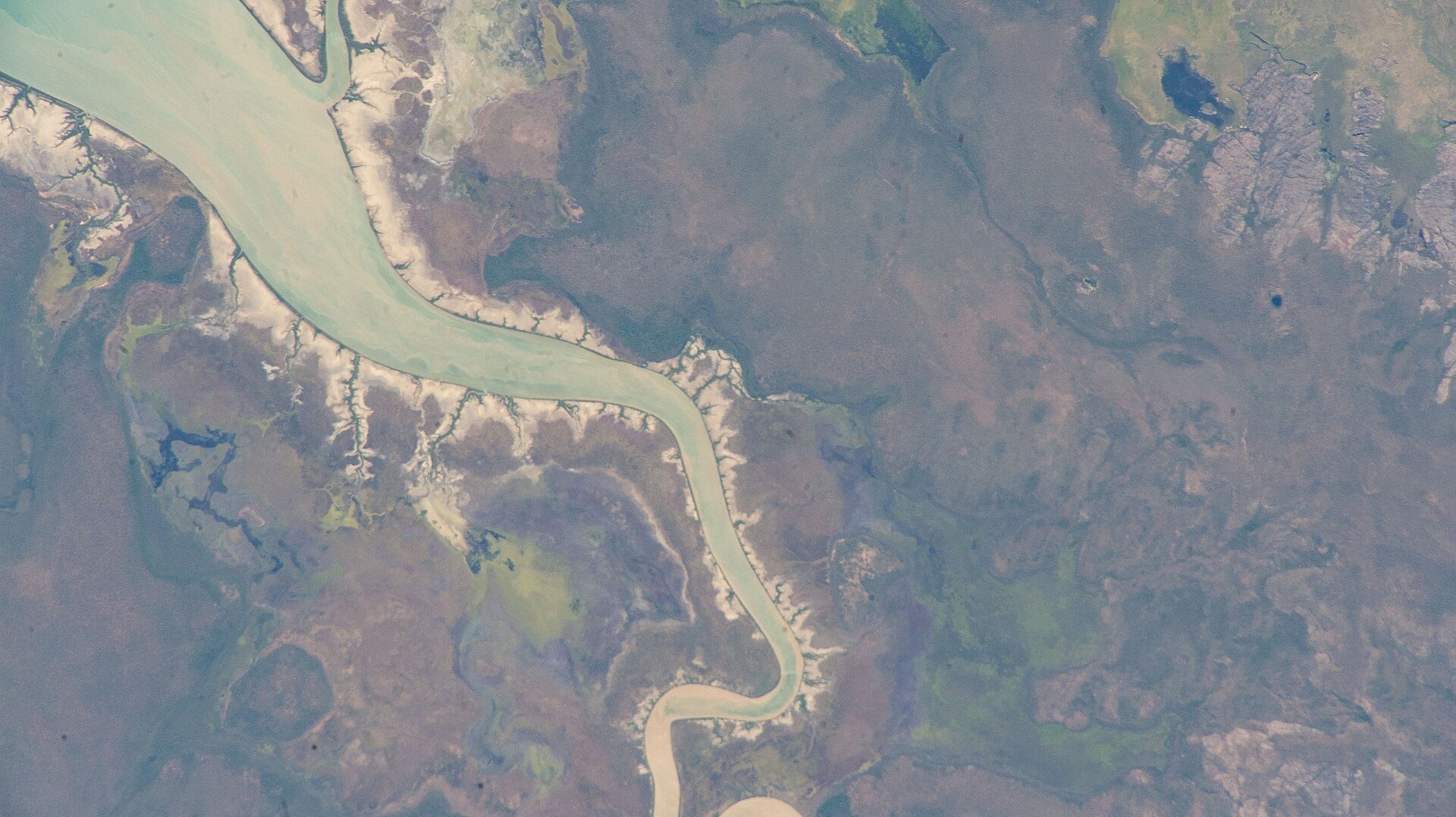
But the growth is unfolding in one of the last great intact tropical savannas on Earth, laced with river systems that remain largely untouched.
Under the CLP, critics say, the guardrails have steadily been removed. Applications to clear more than 5,000 hectares no longer have to pass before the Territory’s Northern Territory Environment Protection Authority for scrutiny.
Environment groups argue the approval system is fundamentally flawed because each application is judged in isolation. Nobody, they say, is adding up the cumulative toll of habitat loss across the landscape.
Then, in 2025, the government amended its wildlife laws. Farmers can now interfere with endangered species, including the striking Gouldian finch and the black-footed tree rat, without first obtaining a separate wildlife permit.
Dr Murphy stresses that measuring clearing as a share of the Territory’s total land mass paints a misleading picture. The clearing, he explains, is concentrated in the very regions where biodiversity is highest, meaning the damage is far greater than raw percentages suggest.
Analysis: What This Means for Australia
The Territory’s land clearing boom is not a local squabble. It strikes at the heart of a national debate over how Australia balances economic growth against its fast-shrinking natural heritage.
Australia already carries one of the worst mammal extinction records in the world.
Allowing large-scale clearing in biodiversity hotspots, without mandatory species surveys, risks adding fresh names to that grim list, and exposes the country to international criticism over its threatened species obligations.
There are legal and regulatory consequences too.
With the NT the only jurisdiction lacking native vegetation protections, pressure is likely to mount on Canberra to step in through federal Department of Climate Change, Energy, the Environment and Water powers, setting up a potential clash between the Commonwealth and the Territory.
For communities on the ground, the stakes are deeply personal.
Northern Land Council chair Matthew Ryan says traditional owners holding native title over pastoral stations are troubled by a lack of consultation on applications to clear huge tracts of country.
He has accused the government of cutting corners and undermining traditional owners, arguing it should be safeguarding land, plants and animals alongside Indigenous decision-making.
Economically, the gamble is enormous. Supporters see cotton and fodder as a lifeline for a Territory battling population loss, crime concerns and a fragile budget.
But if the environmental cost triggers federal intervention, market backlash over sustainability or long-term water security problems, the promised $2 billion windfall could prove far harder to bank.
The government is unmoved. Environment Minister Josh Burgoyne, responding to questions about whether the regime would be tightened, labelled the Environment Centre’s concerns ‘fear mongering’.
In his statement, he said the government backed responsible development and effective regulation as it works to rebuild the economy and restore the Territory lifestyle.
NT Farmers Association chief executive Andrew Bourne also pushed back, stating that the 100,000-hectare figure was an aspirational target rather than a predetermined area cleared for bulldozing.
He said the organisation supports responsible agricultural growth that meets environmental requirements and delivers lasting economic benefits.
Environmental policy analysts say the core problem is not development itself but the absence of a clear limit. Without one, they warn, decisions are made piecemeal until the damage is irreversible.
Conservation insiders believe the Territory risks repeating the mistakes of Queensland and New South Wales, where decades of aggressive clearing left a legacy of degraded land and political fights that dragged on for years.
Industry observers acknowledge that investors increasingly scrutinise the environmental credentials of agricultural supply chains, and that a reputation for unchecked clearing could ultimately hurt the very farmers the policy aims to help.
Dr Murphy argues the missing piece is leadership.
The Territory, he says, has no plan for how much of its landscape it is prepared to sacrifice, and the government is failing to lead that conversation.
Until it does, the question hanging over the savanna remains brutally simple: how much clearing is too much?