
Islamic State-Linked Women Accused of Buying and Enslaving Women in Syria to Remain Behind Bars as Bail Bids Stall
- Two Australian women, Kawsar Ahmad and Zeinab Ahmad, charged with slavery offences and crimes against humanity, will stay in custody after failing to lodge bail applications.
- The pair, linked to Islamic State, allegedly bought and enslaved women in Syria, with one victim sold for $US10,000.
- The women’s bid for freedom has been postponed, with new bail applications scheduled for June, as they face serious charges that could see them jailed for life.
- The case has sparked concerns about the return of Australians who travelled to the Middle East to join terrorist organisations, and the potential risks they pose to national security.
As the Melbourne Magistrates Court heard the case of Kawsar Ahmad, 53, and Zeinab Ahmad, 31, the pair’s bid for conditional freedom stalled, leaving them to remain behind bars.
The women, dressed in Islamic attire, smiled and looked at the courtroom crowd, which included supporters, throughout the proceeding. Their lawyers had flagged plans to seek release into the community, but no bail applications were submitted on Monday.
The Ahmads were among a group of women and children who returned to Australia after spending years in a Syrian refugee camp. They were charged with several crimes against humanity and slavery offences allegedly committed in Syria.
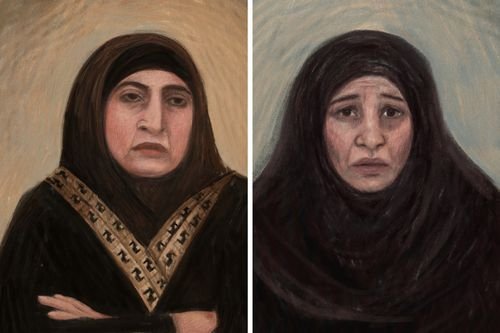
Detectives allege Kawsar Ahmad, also known as Abbas, travelled to the region with her husband and children in 2014 and was complicit in buying a female slave for $US10,000.
She has been charged with enslavement, possessing a slave, using a slave, and slave trading.




The charge sheets released by the court allege the 53-year-old enslaved, possessed, and used the slave in various locations in the Deir ez-Zu province of Syria between June 2017 and November 2018.
The younger Ahmad, Zeinab, was also allegedly involved in knowingly keeping a female slave in her Syrian home, with police charging her with enslavement and using a slave offences over the same period.
The document stated the pair’s conduct was “committed intentionally or knowingly as part of a widespread or systemic attack directed against a civil population”.
The Ahmads’ case is part of an almost decade-long investigation that began after the women travelled to the Middle East with their partners who allegedly intended to fight for Islamic State.
A third woman, Janai Safar, 32, who flew into Sydney, was arrested and charged with entering a prohibited area and being a member of a terrorist organisation.
She was denied bail due to the seriousness of the charges and will return before the court in July.
Security analysts say the return of Australians who have been involved with terrorist organisations poses a significant risk to national security. “These individuals have been indoctrinated with extremist ideologies and have potentially gained skills and knowledge that could be used to harm Australians,” said one expert.
“It’s essential that law enforcement agencies closely monitor their activities and ensure they do not pose a threat to the community.”
Law enforcement insiders warn that the Ahmads’ case highlights the need for stronger laws to deal with Australians who have been involved in terrorist activities overseas.
“We need to ensure that those who have committed crimes against humanity and supported terrorist organisations are held accountable for their actions,” said a source. “This case demonstrates the importance of having robust laws in place to protect the Australian community.”
Analysis: What This Means for Australia
The Ahmads’ case raises concerns about the potential risks posed by Australians who have been involved with terrorist organisations. The Australian government has been working to strengthen its counter-terrorism laws and increase funding for law enforcement agencies to combat the threat of terrorism.
However, experts say more needs to be done to address the issue of returning foreign fighters and their supporters.
The case also highlights the need for greater community engagement and education to prevent the spread of extremist ideologies.
“We need to work with communities to identify and prevent radicalisation, and provide support to those who may be vulnerable to extremist ideologies,” said a security expert.
“This requires a collaborative effort between governments, law enforcement agencies, and community groups.”
As the Ahmads’ case progresses, it is likely to have significant implications for national security and law enforcement in Australia.
The government will need to carefully consider the risks posed by returning foreign fighters and their supporters, and develop strategies to mitigate these risks and protect the Australian community.