Graveyard of Innocents: Horror Discovery of Up to 30 Unborn Babies in Polish Garden Sparks Probe into Pathologist’s Dark Secret
- A shocking discovery of up to 30 unborn babies in a Polish garden has sent shockwaves through a quiet village, with a 57-year-old pathologist at the center of a major investigation.
- The gruesome find was made by construction workers digging up a driveway, sparking an emergency response and a probe into claims of medical waste dumping and body tampering.
- Prosecutors have detained the pathologist, Magdalena H., who allegedly admitted to burying medical waste on the property, including the unborn babies, in a bid to cut costs.
- The discovery has raised questions about the pathologist’s past practices and the safety of the community, with locals describing her as “unsettling” and “reclusive.”
The quiet village of Lutoryż, east of Krakow, Poland, was plunged into chaos when construction workers stumbled upon a horrific discovery while digging up a driveway on a private plot.
The excavator uncovered the remains of up to 30 unborn babies, sparking panic and an immediate emergency response. Prosecutors were quickly alerted, and a major probe was launched into the shocking find.
The current owners of the five-acre plot, a young couple, had unknowingly begun the work that exposed the buried secret. They had purchased the property from Magdalena H., the 57-year-old pathologist at the center of the investigation.
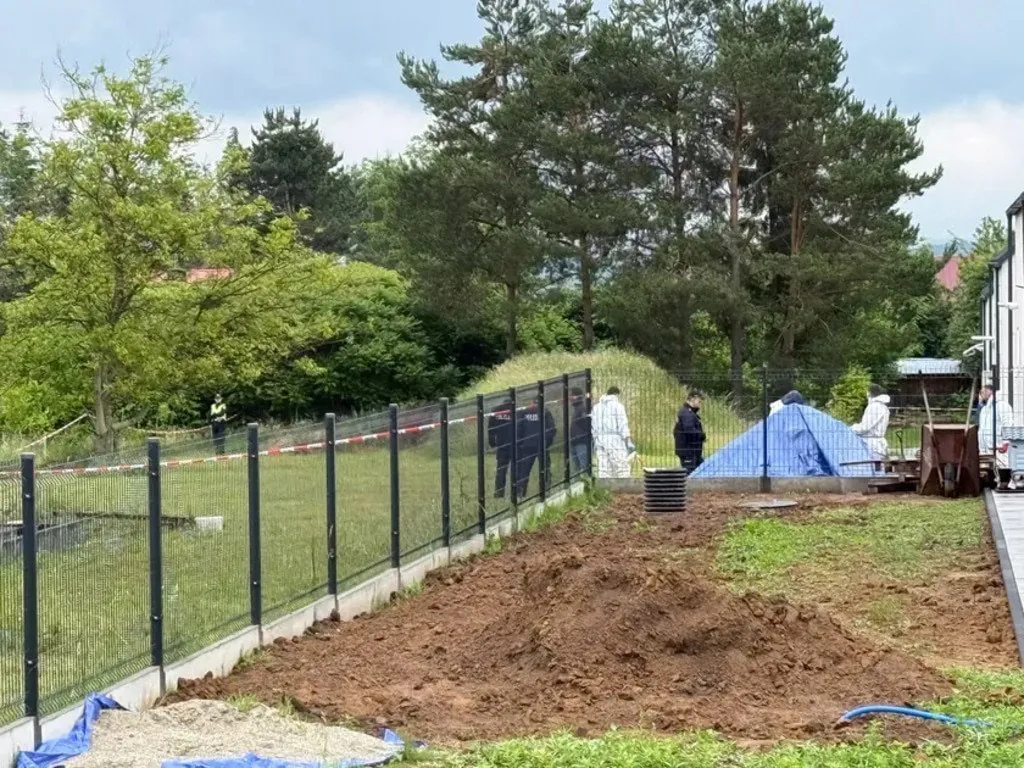
Initial reports suggested at least 13 tiny remains had been found, but the scale of the discovery quickly escalated, with later estimates claiming several dozen foetuses had been buried beneath the soil.
Prosecutors revealed that they were first alerted on June 10 after chilling reports of medical waste, including “paraffin blocks and microscope slides,” being discovered on the property.

Medical experts were dispatched to the scene and confirmed that the recovered remains were those of human foetuses. Magdalena H.
was detained in Zamość on June 12 as investigators swarmed the site under strict supervision from the prosecutor’s office.
The once-peaceful neighborhood was transformed into a full-scale forensic zone, with police tents, specialist teams in white protective suits, and heavy machinery flooding the scene.
Forensic crews wearing masks were seen sifting through the soil around the house, meticulously searching for further evidence. A table was set up nearby where officers photographed and examined each disturbing discovery piece by piece.
Analysis: What This Means for AustraliaThe shocking discovery in Poland raises serious questions about the safety and regulation of medical practices, not just in Eastern Europe but also in Australia.
The case highlights the need for strict regulations and oversight to prevent such heinous acts from occurring.
In Australia, the storage and disposal of human remains are subject to strict laws and regulations, but the incident serves as a grim reminder of the importance of vigilance in the medical profession.
Security analysts say that the case also highlights the risks of medical waste dumping and the need for improved protocols to prevent such incidents.
“This is a wake-up call for the medical community to review their practices and ensure that they are adhering to the highest standards of ethics and safety,” said one expert.
Law enforcement insiders warn that the investigation into Magdalena H. could lead to a wider probe into medical waste dumping and body tampering in Poland.
“This is a serious offense that could have far-reaching consequences, not just for the individuals involved but also for the community at large,” said a source.
Industry observers believe that the case will lead to increased scrutiny of medical practices and the regulation of the industry. “This incident is a stark reminder of the importance of transparency and accountability in the medical profession,” said one commentator.
As the investigation continues, the people of Lutoryż are left to grapple with the shocking discovery in their quiet village. The case serves as a grim reminder of the importance of vigilance and the need for strict regulations to prevent such heinous acts from occurring.
The pathologist, Magdalena H., is facing up to 12 years in prison if convicted of the alleged offenses. The case is ongoing, and further details are expected to emerge as the investigation continues.
In the meantime, the quiet village of Lutoryż will be forever changed by the shocking discovery in their midst. The graveyard of innocents will serve as a stark reminder of the importance of accountability and the need for vigilance in the medical profession.
The quiet village of Lutoryż, east of Krakow, Poland, was plunged into chaos when construction workers stumbled upon a horrific discovery while digging up a driveway on a private plot. The excavator uncovered the remains of up to 30 unborn babies, sparking panic and an immediate emergency response. Prosecutors were quickly alerted, and a major probe was launched into the shocking find.
The current owners of the five-acre plot, a young couple, had unknowingly begun the work that exposed the buried secret. They had purchased the property from Magdalena H., the 57-year-old pathologist at the center of the investigation. Initial reports suggested at least 13 tiny remains had been found, but the scale of the discovery quickly escalated, with later estimates claiming several dozen foetuses had been buried beneath the soil.
Prosecutors revealed that they were first alerted on June 10 after chilling reports of medical waste, including “paraffin blocks and microscope slides,” being discovered on the property. Medical experts were dispatched to the scene and confirmed that the recovered remains were those of human foetuses. Magdalena H. was detained in Zamość on June 12 as investigators swarmed the site under strict supervision from the prosecutor’s office.
The once-peaceful neighborhood was transformed into a full-scale forensic zone, with police tents, specialist teams in white protective suits, and heavy machinery flooding the scene. Forensic crews wearing masks were seen sifting through the soil around the house, meticulously searching for further evidence. A table was set up nearby where officers photographed and examined each disturbing discovery piece by piece.
The shocking discovery in Poland raises serious questions about the safety and regulation of medical practices, not just in Eastern Europe but also in Australia. The case highlights the need for strict regulations and oversight to prevent such heinous acts from occurring. In Australia, the storage and disposal of human remains are subject to strict laws and regulations, but the incident serves as a grim reminder of the importance of vigilance in the medical profession.
Security analysts say that the case also highlights the risks of medical waste dumping and the need for improved protocols to prevent such incidents. “This is a wake-up call for the medical community to review their practices and ensure that they are adhering to the highest standards of ethics and safety,” said one expert.
Law enforcement insiders warn that the investigation into Magdalena H. could lead to a wider probe into medical waste dumping and body tampering in Poland. “This is a serious offense that could have far-reaching consequences, not just for the individuals involved but also for the community at large,” said a source.
Industry observers believe that the case will lead to increased scrutiny of medical practices and the regulation of the industry. “This incident is a stark reminder of the importance of transparency and accountability in the medical profession,” said one commentator.
As the investigation continues, the people of Lutoryż are left to grapple with the shocking discovery in their quiet village. The case serves as a grim reminder of the importance of vigilance and the need for strict regulations to prevent such heinous acts from occurring.
The pathologist, Magdalena H., is facing up to 12 years in prison if convicted of the alleged offenses. The case is ongoing, and further details are expected to emerge as the investigation continues.
In the meantime, the quiet village of Lutoryż will be forever changed by the shocking discovery in their midst. The graveyard of innocents will serve as a stark reminder of the importance of accountability and the need for vigilance in the medical profession.