
Tesla’s Deadly Secret: ‘Autopilot’ Car Slams into Texas Home at 110km/h, Killing 76-Year-Old Grandmother
- A Tesla in self-driving mode ploughs into a Texas home, killing a 76-year-old grandmother and raising fresh concerns about the safety of the company’s automation technology.
- The crash, which occurred in Katy, Texas, is the latest in a long series of incidents involving Tesla’s driver-assistance technology that have drawn the attention of federal safety regulators.
- Security-camera footage shows the Tesla barrelling down a residential street before veering across a front lawn and smashing into the brick home, tearing deep into the residence.
- The National Highway Traffic Safety Administration has launched its own probe into the accident, which is also being investigated by local authorities.
The tranquility of a quiet Texas neighbourhood was shattered last week when a Tesla, allegedly travelling at speeds of up to 110km/h in self-driving mode, barrelled into a home, killing a 76-year-old grandmother.
The shocking incident has reignited concerns about the safety of Tesla’s automation technology, which has been implicated in a string of fatal crashes in recent years.
The crash occurred in Katy, Texas, when a Tesla Model 3, driven by 44-year-old Michael Butler, veered off the road and slammed into a brick home on Blooming Park Lane.
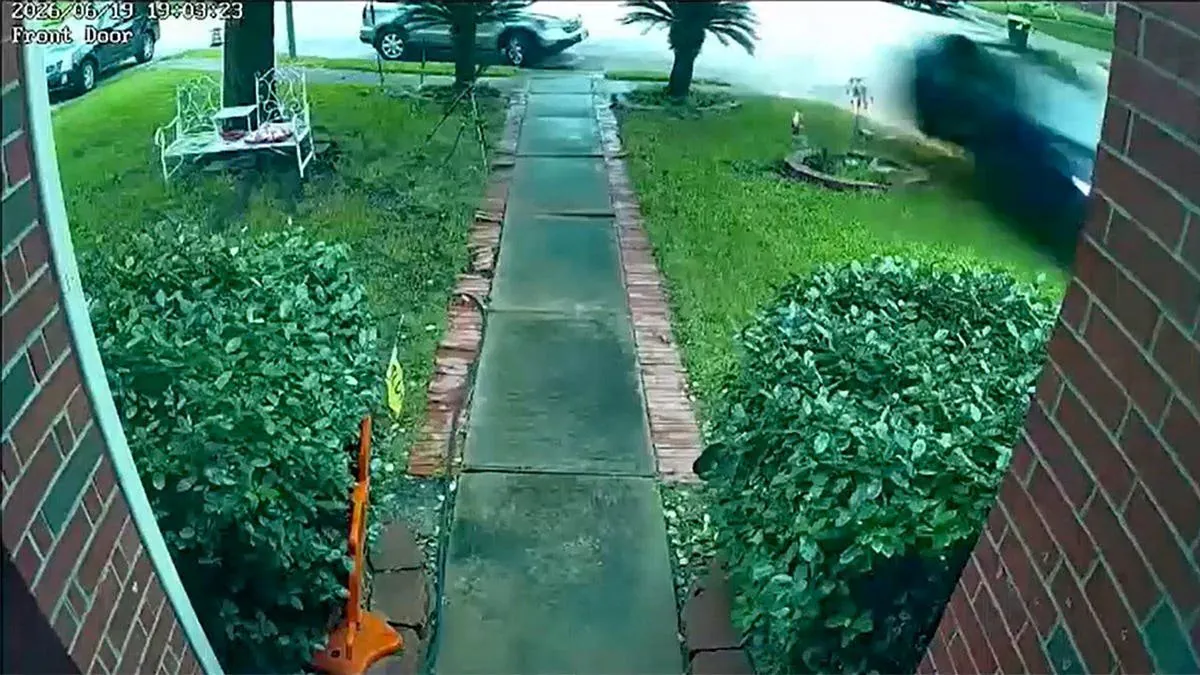
The impact was so severe that it tore deep into the residence, striking Martha Avila, who was inside putting away groceries. Avila suffered critical injuries and was pronounced dead at hospital.
Butler was also injured and taken to hospital for treatment.
According to the Harris County Sheriff’s Office, Butler told investigators that the vehicle’s automated driving-assistance feature, known as Autopilot, was engaged at the time of the crash.
The incident is still under investigation, and officials have not determined what caused the vehicle to veer off the road. The National Highway Traffic Safety Administration (NHTSA) has launched its own probe into the accident, which is also being investigated by local authorities.
The tragedy marks the latest in a long series of incidents involving Tesla’s driver-assistance technology that have drawn the attention of federal safety regulators, transportation investigators, and plaintiffs’ lawyers.
For years, the NHTSA and the National Transportation Safety Board have probed whether drivers became overly reliant on the technology and whether Tesla’s monitoring systems did enough to ensure motorists remained attentive behind the wheel.
Among the most closely scrutinised crashes was a 2016 fatal collision in Williston, Florida, in which a Tesla operating with Autopilot engaged struck a tractor-trailer.
Investigators later concluded that driver overreliance on automation contributed to the crash. Similar findings emerged from fatal crashes in Mountain View, California, in 2018 and Delray Beach, Florida, in 2019.
Analysis: What This Means for Australia
The incident raises serious concerns about the safety of semi-autonomous vehicles on Australian roads.
As the country continues to grapple with the challenges of introducing autonomous vehicles, the Tesla crash serves as a stark reminder of the need for robust regulation and rigorous testing.
The incident also highlights the importance of public education and awareness about the limitations of automation technology.
Security analysts say that the incident is a wake-up call for regulators and manufacturers to take a more proactive approach to ensuring the safety of semi-autonomous vehicles.
“The technology is not foolproof, and we need to be honest with the public about its limitations,” said one analyst.
“We need to make sure that drivers understand the risks and are not lulled into a false sense of security by the promise of ‘autopilot’ technology.”
Law enforcement insiders warn that the incident could have significant implications for road safety in Australia. “If drivers become too reliant on automation, they may become complacent and less attentive behind the wheel,” said one insider.
“We need to make sure that drivers understand the risks and are held accountable for their actions on the road.”
Industry observers believe that the incident will have significant consequences for Tesla and the wider automotive industry. “The incident is a major blow to Tesla’s reputation and could have significant financial implications for the company,” said one observer.
“It also raises questions about the safety of other semi-autonomous vehicles on the market and the need for more rigorous testing and regulation.”