
Derryn Hinch: The Fearless Broadcaster Who Defied Convention and Left a Lasting Legacy from Beyond the Grave
- A legendary radio broadcaster and politician, Derryn Hinch, has left a lasting impact on Australian media and politics, with a career spanning over five decades.
- In a tell-all interview recorded before his death, Hinch revealed his plans for his funeral, including a recording of his voice saying “I’m Derryn Hinch. That’s life. Goodbye.”
- Hinch’s life was marked by controversy and a willingness to break the rules, including his time behind bars for naming paedophiles and breaching suppression orders.
- As a senator, Hinch introduced a new law restricting the overseas travel of convicted paedophiles and pushed for a national public register for sex offenders.
Derryn Hinch was a man of contradictions, known for his fearless and provocative approach to journalism and politics. With a career spanning over five decades, he left an indelible mark on Australian media and politics.
In a recent interview recorded before his death, Hinch revealed his plans for his funeral, including a recording of his voice saying “I’m Derryn Hinch. That’s life.
Goodbye.” This was classic Hinch, a man who never shied away from controversy and always spoke his mind.
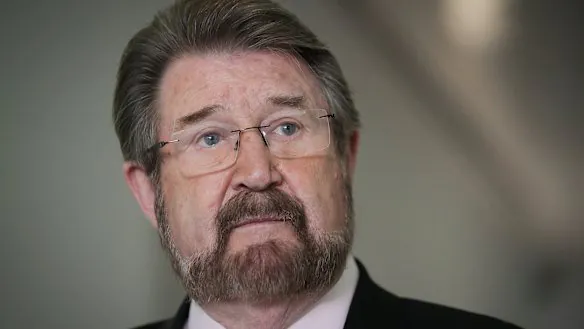
Hinch’s life was marked by a series of highs and lows, including his time behind bars for naming paedophiles and breaching suppression orders. In 1987, he was fined and jailed for 12 days for naming paedophile Catholic priest Michael Glannon while a criminal trial was pending.
He spent five months in home detention in 2011 for breaching suppression orders over two other offenders, and in 2014, he chose to spend 50 days in jail rather than pay a $100,000 fine for publishing suppressed information about Adrian Bayley, the man who murdered ABC employee Jill Meagher.
These instances reinforced his image as someone willing to break the rules to push for harsher treatment of sex offenders and more transparency.
But Hinch’s life was not just about controversy. He was also a man of great passion and conviction, who used his platform to campaign for causes he believed in.
As a senator, he introduced a new law restricting the overseas travel of convicted paedophiles and pushed for a national public register for sex offenders.
He was a strong advocate for marriage equality, voluntary euthanasia, and a ban on live exports, and he was willing to take on the tough issues, even if it meant going against the status quo.
Analysis: What This Means for Australia
Derryn Hinch’s legacy is a complex one, marked by both controversy and conviction.
His willingness to break the rules and push for harsher treatment of sex offenders was seen by many as a necessary evil, but it also raised questions about the balance between justice and freedom of speech.
As a senator, his introduction of a new law restricting the overseas travel of convicted paedophiles was a significant step forward in protecting the community, but it also raised concerns about the rights of individuals.
Hinch’s legacy serves as a reminder of the importance of a free press and the need for journalists to hold those in power to account, even if it means going against the status quo.
Security analysts say that Hinch’s approach to journalism and politics was a reflection of his fearless and provocative personality, but it also raised concerns about the impact on national security.
His willingness to name paedophiles and breach suppression orders may have been seen as a necessary evil, but it also raised questions about the potential consequences for individuals and the community.
As Australia continues to grapple with the issue of sex offenders and the need for greater transparency, Hinch’s legacy serves as a reminder of the importance of finding a balance between justice and freedom of speech.
Law enforcement insiders warn that Hinch’s approach to journalism and politics may have been effective in the short term, but it also raised concerns about the long-term consequences.
His willingness to break the rules and push for harsher treatment of sex offenders may have been seen as a necessary evil, but it also raised questions about the potential impact on the justice system.
As Australia continues to grapple with the issue of sex offenders and the need for greater transparency, Hinch’s legacy serves as a reminder of the importance of finding a balance between justice and freedom of speech.
Industry observers believe that Hinch’s legacy will be remembered for years to come, both for his fearless and provocative approach to journalism and politics, and for his commitment to pushing for harsher treatment of sex offenders.
His introduction of a new law restricting the overseas travel of convicted paedophiles was a significant step forward in protecting the community, and his advocacy for marriage equality, voluntary euthanasia, and a ban on live exports was a testament to his commitment to social justice.
As Australia continues to grapple with the complex issues of the day, Hinch’s legacy serves as a reminder of the importance of finding a balance between justice and freedom of speech.
Hinch’s private life was also marked by controversy, including his public spats with former colleagues and his struggles with alcohol. He was married five times, including to actress Jacki Weaver, and he continued to drink after receiving a liver transplant.
But despite the controversy, Hinch remained a beloved figure in Australian media, known for his wit and his willingness to speak his mind.
In the end, Derryn Hinch’s legacy is a complex one, marked by both controversy and conviction.
His fearless and provocative approach to journalism and politics raised questions about the balance between justice and freedom of speech, but it also served as a reminder of the importance of a free press and the need for journalists to hold those in power to account.
As Australia continues to grapple with the complex issues of the day, Hinch’s legacy serves as a reminder of the importance of finding a balance between justice and freedom of speech.