
China’s Rogue Missile Launch in the Pacific: A Reckless Gamble that Damages Ties and Fuels Fears of a New Cold War
- China’s test launch of a nuclear-capable missile into the Pacific has sparked outrage and fear among regional leaders, with Australia’s Pacific Minister Pat Conroy warning of a “destabilising” move that damages China’s reputation.
- The reckless gamble has strengthened the case for a regional security agreement, with Pacific leaders set to discuss the pact at a meeting of the Pacific Island Forum next month.
- As tensions escalate in the Indo-Pacific, Australia’s Defence Minister warns of a “largest military build-up since World War II” and vows to strengthen the country’s position through diplomacy and defence resourcing.
- Experts warn that conflict in the region would have “severe global consequences”, as China’s growing military strength and nuclear capabilities raise concerns about its intentions.
In a provocative move that has sent shockwaves throughout the Pacific, China launched a nuclear-capable missile into the region, sparking widespread condemnation from leaders and fuelling fears of a new Cold War.
The test launch, which was described as “routine” by China, was met with sharp criticism from Australian Prime Minister Anthony Albanese, who labelled it “provocative” and “destabilising”.
Pacific Minister Pat Conroy echoed these sentiments, warning that China’s actions had damaged its reputation as a potential security partner in the region.
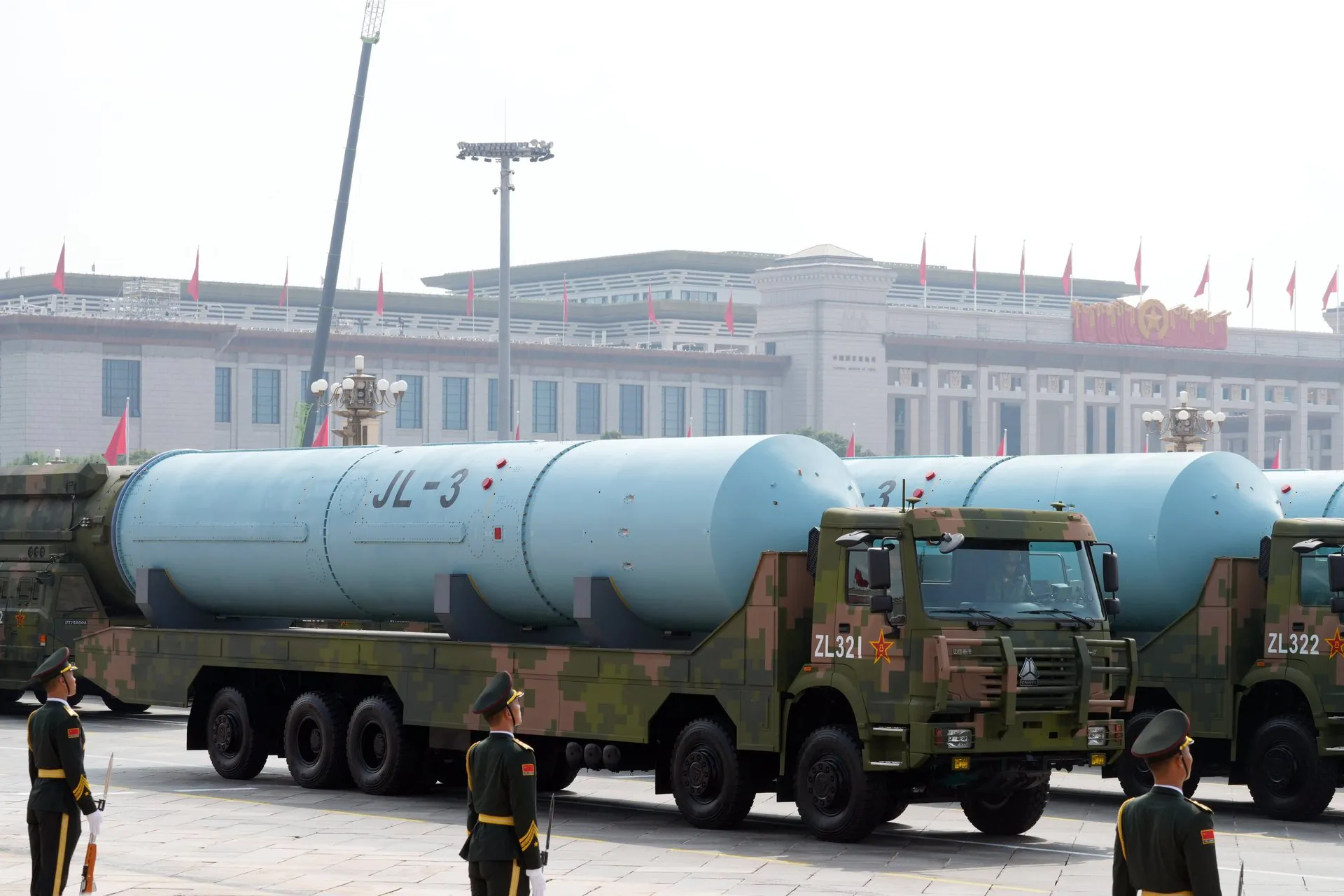
“I don’t think this was conducive to China’s standing in the region,” Mr Conroy said, pointing to criticism from leaders in Fiji, Papua New Guinea, Palau, the Solomon Islands, and Tuvalu.
The incident has strengthened the case for a regional security agreement, with Pacific leaders set to discuss the pact at a meeting of the Pacific Island Forum next month.
Solomon Islands Prime Minister Matthew Wale had been seeking support for the idea, and the missile test has provided a stark reminder of the need for Pacific-led security.
“China is a good friend of the Solomon Islands, but this is not something a friend does,” Mr Wale said, as he condemned the missile test.
The incident coincided with Mr Albanese’s diplomatic mission to the region, just hours after he signed a mutual-defence agreement with Fiji.
As tensions escalate in the Indo-Pacific, Australia’s Defence Minister has warned of a “largest military build-up since World War II”.
Mr Conroy said that conflict in the region would have “severe global consequences”, and that Australia was working hard to strengthen its position through diplomacy and defence resourcing.
“What we’re seeing in the region is the biggest arms race, the biggest build-up of military since 1945, and that is occurring without any transparency or strategic reassurance,” Mr Conroy warned.
“This is a race where we have to make sure the Australian Defence Force has the best possible equipment.”
Analysis: What This Means for Australia
The implications of China’s rogue missile launch are far-reaching, and have significant consequences for Australia’s national security. As China’s military strength and nuclear capabilities continue to grow, Australia must remain vigilant and proactive in its defence strategy.
Security analysts say that the incident highlights the need for Australia to strengthen its alliances and partnerships in the region, while also investing in its own defence capabilities.
“Australia needs to be prepared for a conflict in our region,” Mr Conroy said, as he refused to be drawn on hypothetical concerns about a Chinese missile reaching the Australian mainland.
Industry observers believe that the incident will fuel a surge in defence spending, as countries in the region seek to bolster their military capabilities. “This is a wake-up call for Australia and its allies,” said one defence expert.
“We need to take a more proactive approach to our defence strategy, and invest in the capabilities we need to protect our interests.”
As the situation in the Indo-Pacific continues to unfold, one thing is clear: China’s reckless gamble has raised the stakes, and Australia must be prepared to respond.
With the Pacific Island Forum meeting just around the corner, the region will be watching with bated breath as leaders navigate the complex web of alliances and rivalries that threaten to destabilise the region.