Victoria’s Electoral System Under Fire as New Parties Emerge to Exploit Loopholes Ahead of State Election
- New parties are flocking to register ahead of Victoria’s state election in November, with many seeking to exploit the state’s outdated electoral system.
- The system, which allows voters to select a single party “above the line” and hand over control of their preferences, has been abolished in every other state.
- Some parties, including Climate Action Now and I’m Voting To Avoid The Fine, have admitted to using tactics to “harvest” votes for other parties, including One Nation.
- The Allan government is reportedly planning to abolish group voting tickets, but the move has been met with criticism for being too little, too late.
As the Victorian state election looms closer, a flurry of new parties has emerged, seeking to take advantage of the state’s antiquated electoral system.
The system, which has been abolished in every other state, allows voters to select a single party “above the line” and hand over control of their preferences to that party.
However, many of these new parties are not interested in running a genuine election campaign, but rather in exploiting the system to funnel votes to other parties.
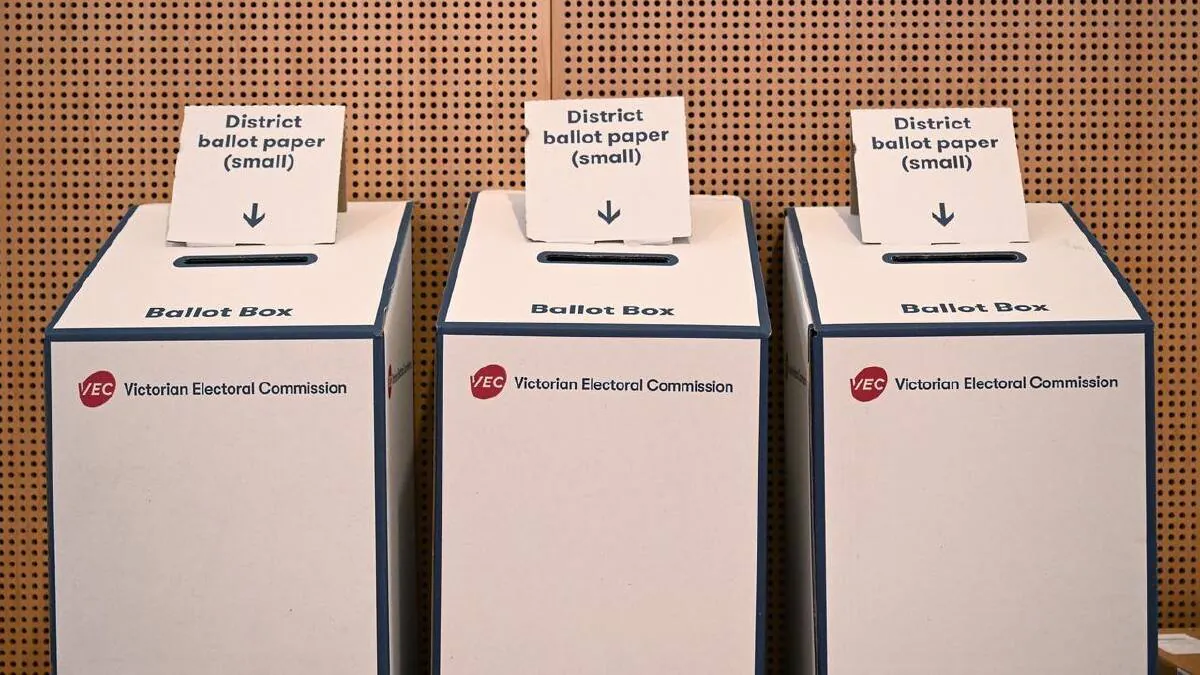
One such party is Climate Action Now, launched by Monica Smit, the founder of anti-vaccine and anti-lockdown group Reignite Democracy Australia. Smit has been open about her intentions, stating that she plans to use the party to “harvest” votes for other parties, including One Nation.
Her brother, Daniel Smit, is the leader of the I’m Voting To Avoid The Fine party, which also plans to send votes to parties like One Nation.




The use of such tactics has been criticized for undermining the democratic process and taking power away from voters.
As one commentator noted, the system “encourages deals, preference swaps, and games that are ultimately designed to deceive voters.” The fact that parties like One Nation, which has been excluded from these pacts in the past, may now benefit from the abolition of group voting tickets has been seen as a potential game-changer in the election.
The Allan government’s plan to abolish group voting tickets has been met with criticism for being too little, too late. With only a few months to go before the election, the move may not have a significant impact on the outcome.
Furthermore, the government has not yet released details of the new system that will replace group voting tickets, leaving many questions unanswered. The issue has sparked debate about the role of micro-parties in the electoral system.
Some argue that they provide a voice for marginalized communities, while others see them as nothing more than “preference harvesters.” The case of Rod Barton, who was elected to Victoria’s upper house in 2018 with a primary vote of just 0.6%, has been cited as an example of how the system can be manipulated.
Barton’s election was the result of a complex web of preference deals between micro-parties, including the anti-vaccination Health Australia Party and the Aussie Battler Party.
While Barton’s party described itself as “centre-left,” it was ultimately elected thanks to the support of parties with vastly different ideologies. The abolition of group voting tickets has been welcomed by some, who see it as a way to prevent micro-parties from manipulating the system.
However, others have raised concerns about the impact on smaller parties and the potential for unintended consequences. As the Victorian government considers the recommendations of the Electoral Matters Committee, one thing is clear: the state’s electoral system is in need of reform.
The question remains, however, whether the proposed changes will be enough to prevent the exploitation of loopholes and ensure a fair and democratic outcome.
Analysis: What This Means for AustraliaThe controversy surrounding Victoria’s electoral system has significant implications for the state’s democracy.
The use of tactics to “harvest” votes and manipulate the system undermines the integrity of the electoral process and takes power away from voters.
The fact that parties like One Nation may benefit from the abolition of group voting tickets has also raised concerns about the potential for extremist views to gain traction.
The issue also highlights the need for electoral reform at a national level.
The fact that Victoria is the only state to still use group voting tickets is a clear indication that the system is outdated and in need of change.
As the federal government considers electoral reform, it is essential that they take into account the lessons learned from Victoria’s experience. Security analysts warn that the exploitation of electoral loopholes can have serious consequences for national security.
The potential for extremist views to gain traction and the undermining of the democratic process can create an environment in which radical ideologies can flourish. Law enforcement insiders also point out that the manipulation of the electoral system can have serious consequences for community safety.
The fact that parties like One Nation may benefit from the abolition of group voting tickets has raised concerns about the potential for increased tensions and conflict.
Ultimately, the controversy surrounding Victoria’s electoral system highlights the need for urgent reform. The state’s democracy depends on it.
As the Victorian state election looms closer, a flurry of new parties has emerged, seeking to take advantage of the state’s antiquated electoral system. The system, which has been abolished in every other state, allows voters to select a single party “above the line” and hand over control of their preferences to that party. However, many of these new parties are not interested in running a genuine election campaign, but rather in exploiting the system to funnel votes to other parties.
One such party is Climate Action Now, launched by Monica Smit, the founder of anti-vaccine and anti-lockdown group Reignite Democracy Australia. Smit has been open about her intentions, stating that she plans to use the party to “harvest” votes for other parties, including One Nation. Her brother, Daniel Smit, is the leader of the I’m Voting To Avoid The Fine party, which also plans to send votes to parties like One Nation.
The use of such tactics has been criticized for undermining the democratic process and taking power away from voters. As one commentator noted, the system “encourages deals, preference swaps, and games that are ultimately designed to deceive voters.” The fact that parties like One Nation, which has been excluded from these pacts in the past, may now benefit from the abolition of group voting tickets has been seen as a potential game-changer in the election.
The Allan government’s plan to abolish group voting tickets has been met with criticism for being too little, too late. With only a few months to go before the election, the move may not have a significant impact on the outcome. Furthermore, the government has not yet released details of the new system that will replace group voting tickets, leaving many questions unanswered.
The issue has sparked debate about the role of micro-parties in the electoral system. Some argue that they provide a voice for marginalized communities, while others see them as nothing more than “preference harvesters.” The case of Rod Barton, who was elected to Victoria’s upper house in 2018 with a primary vote of just 0.6%, has been cited as an example of how the system can be manipulated.
Barton’s election was the result of a complex web of preference deals between micro-parties, including the anti-vaccination Health Australia Party and the Aussie Battler Party. While Barton’s party described itself as “centre-left,” it was ultimately elected thanks to the support of parties with vastly different ideologies.
The abolition of group voting tickets has been welcomed by some, who see it as a way to prevent micro-parties from manipulating the system. However, others have raised concerns about the impact on smaller parties and the potential for unintended consequences.
As the Victorian government considers the recommendations of the Electoral Matters Committee, one thing is clear: the state’s electoral system is in need of reform. The question remains, however, whether the proposed changes will be enough to prevent the exploitation of loopholes and ensure a fair and democratic outcome.
The controversy surrounding Victoria’s electoral system has significant implications for the state’s democracy. The use of tactics to “harvest” votes and manipulate the system undermines the integrity of the electoral process and takes power away from voters. The fact that parties like One Nation may benefit from the abolition of group voting tickets has also raised concerns about the potential for extremist views to gain traction.
The issue also highlights the need for electoral reform at a national level. The fact that Victoria is the only state to still use group voting tickets is a clear indication that the system is outdated and in need of change. As the federal government considers electoral reform, it is essential that they take into account the lessons learned from Victoria’s experience.
Security analysts warn that the exploitation of electoral loopholes can have serious consequences for national security. The potential for extremist views to gain traction and the undermining of the democratic process can create an environment in which radical ideologies can flourish.
Law enforcement insiders also point out that the manipulation of the electoral system can have serious consequences for community safety. The fact that parties like One Nation may benefit from the abolition of group voting tickets has raised concerns about the potential for increased tensions and conflict.
Ultimately, the controversy surrounding Victoria’s electoral system highlights the need for urgent reform. The state’s democracy depends on it.