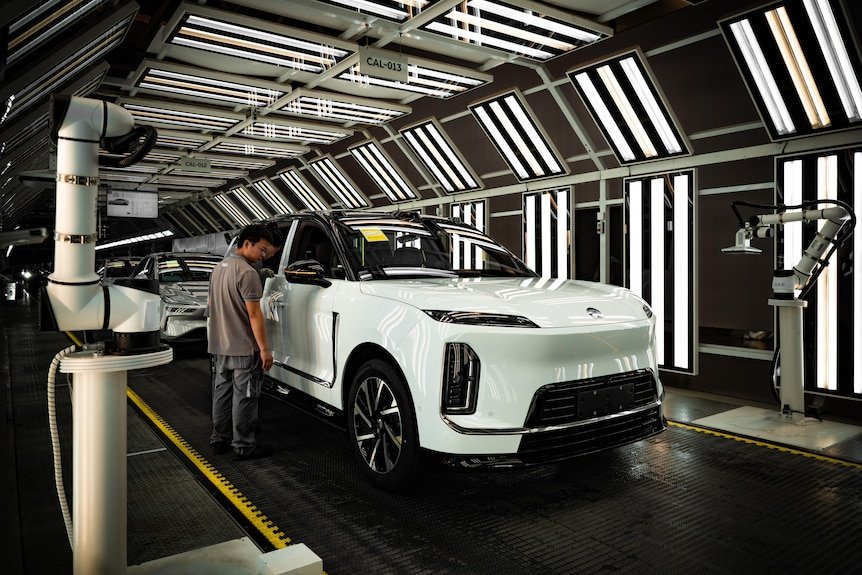
China’s Electric Vehicle Revolution: How Australia’s Car Industry is Under Threat from the World’s Most Explosive Market
- China’s electric vehicle (EV) industry is dominating the world, producing almost 75% of global EVs and boasting the largest charging network.
- Australia’s car industry is facing a major threat from China’s cheap, high-tech EVs, which are flooding overseas markets and putting local manufacturers under pressure.
- China’s EV success is not just about production, but also about innovation, with companies like Nio and BYD pushing the boundaries of battery technology and autonomous driving.
- As China’s EV industry continues to expand globally, Australia is being left behind, with only one public charger for every 45 electric vehicles, compared to China’s one charger for every 10 cars.
The streets of Beijing are abuzz with the sound of electric vehicles, their green number plates a symbol of China’s commitment to a cleaner, greener future.
But beneath the surface, a revolution is underway, one that is transforming the global car industry and leaving Australia in its wake. China’s electric vehicle industry is dominating the world, producing almost 75% of global EVs and boasting the largest charging network.
It’s a remarkable turnaround for a country that was once dependent on foreign technology and expertise.
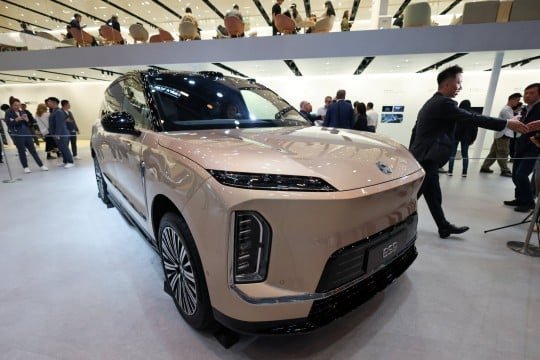
At the heart of China’s success is its government’s long-term plan to prioritize EVs, which was launched in 2001. The plan included massive investments in infrastructure, research and development, and tax incentives for buyers.
The result is an industry that is not just producing cheap, high-tech EVs, but also pushing the boundaries of innovation. Companies like Nio and BYD are leading the charge, with their advanced battery technology and autonomous driving systems.




But China’s EV success is not just about production; it’s also about exports. In 2025, China exported 2.5 million EVs to the rest of the world, double the previous year’s figure.
Nearly 1 million of those EVs were sold in the European Union, the world’s second-largest electric-car producing region. The low-cost Chinese EVs are putting pressure on local manufacturers, who are struggling to compete with the quality and price of Chinese vehicles.
Analysis: What This Means for Australia
So, what does China’s EV revolution mean for Australia? The answer is simple: our car industry is under threat.
With only one public charger for every 45 electric vehicles, Australia is lagging behind China, which has one charger for every 10 cars. Our local manufacturers are also struggling to compete with the quality and price of Chinese EVs, which are flooding the market.
The consequences are dire, with the potential loss of jobs and economic growth.
Security analysts say that China’s EV dominance also raises concerns about data security and the potential for cyber attacks. With many Chinese EVs connected to the internet, there is a risk that sensitive information could be accessed by China.
However, experts like Bill Russo argue that these concerns are overblown and that the global auto industry should focus on competing with China rather than trying to block its progress.
Expert commentary suggests that China’s EV industry is “going global in a big way”. The country is innovating at a rapid pace, with companies like Nio and BYD pushing the boundaries of battery technology and autonomous driving.
As China’s EV industry continues to expand globally, Australia needs to take action to protect its car industry and ensure that it remains competitive in the face of this new threat.
For now, China’s EV revolution shows no signs of slowing down. The country is committed to becoming the world’s number one car manufacturer, and its companies are backed by both the government and the public.
As one expert noted, “If you want to know what the pulse of the global car industry is, you’ve got to be in Beijing.”
As Australia looks to the future, it’s clear that we need to take a leaf out of China’s book and prioritize our own EV industry. With the right investment and innovation, we can compete with China and ensure that our car industry remains a major player in the global market.
But for now, China’s EV revolution is leaving us in its wake.
electric vehicle industry car manufacturing Australian Bureau of Statistics Renault Nio BYD