Grenades, Assault Rifles and $3 Million Worth of Drugs Uncovered in Raids on Sydney’s Alleged Cartel Houses
- NSW Police seize six grenades, assault rifles, and $3 million worth of illicit substances in a series of raids on suspected safe houses in southwest Sydney
- Four people arrested, including a 26-year-old man charged with 27 counts of weapons, drugs, and organised crime offences
- Assistant Police Commissioner Scott Cook warns of a growing trend of ‘contract criminals’ operating in NSW and globally, fuelling serious and organised crime networks
- Police Minister Yasmin Caitles praises the efforts of law enforcement, saying the seizures have prevented a potential catastrophe and kept communities safe
The streets of southwest Sydney were rocked on Tuesday as NSW Police, with the assistance of the elite Raptor Squad, executed a series of search warrants on suspected safe houses, uncovering a staggering haul of illicit substances and deadly weapons.
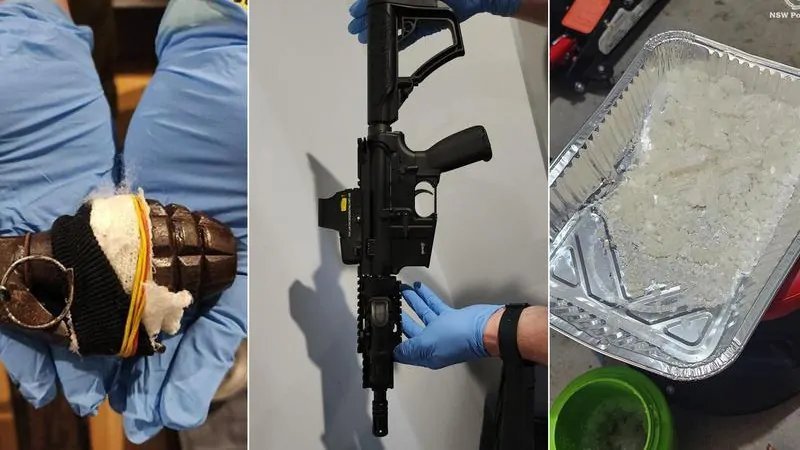
The seizures, which included six grenades, three semi-automatic assault rifles, and $3 million worth of cocaine, heroin, and other narcotics, have sent shockwaves through the community and raised concerns about the growing presence of organised crime in the region.
At the centre of the operation was a property in Glenfield, where police allegedly discovered the cache of weapons and illicit substances.
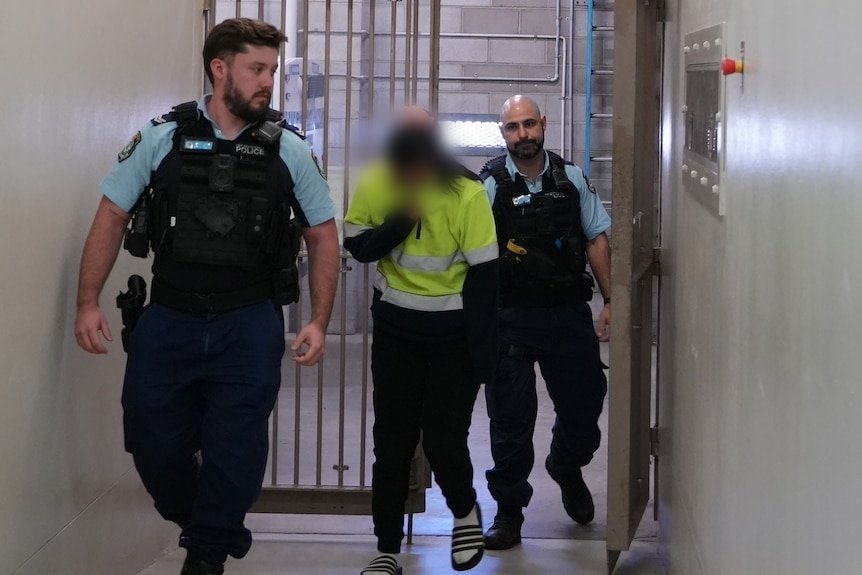
The 26-year-old male occupant, who was arrested and charged with 27 counts of weapons, drugs, and organised crime offences, was refused bail and is expected to appear before Campbelltown Local Court on Wednesday.
His alleged female counterpart, also 26, was charged with a single count of organise, conduct, or assist in a drug premises and was granted conditional bail.


The raids, which were part of Taskforce Falcon’s ongoing efforts to target organised crime networks in Sydney, also saw police seize a pill press and a clandestine lab allegedly used to manufacture steroids at a home in Casula.
A 40-year-old man was arrested and charged with weapons offences, while a 31-year-old man was charged with weapons and drug-related offences after a raid on a property in Liverpool.
Both men were refused bail and will appear before court on Wednesday.
Assistant Police Commissioner Scott Cook described the discovery of the grenades as “significantly different” to previous raids, with the explosives appearing to be of the same calibre as those used by the Australian Defence Force or the US Military.
The grenades, which were stored in a way that prevented them from detonating randomly, had the potential to cause “indiscriminate” damage and “almost demolish the building” if they had exploded.
Cook warned that the seizures were part of a growing trend of ‘contract criminals’ operating in NSW and globally, who are fuelling serious and organised crime networks.
“We’re seeing far more contract criminals who are being tasked and providing services to a larger serious and organised crime network that’s operating not just in New South Wales, but now globally,” he said.
Analysis: What This Means for Australia
The raids and seizures are a stark reminder of the ever-present threat of organised crime in Australia. The discovery of grenades and assault rifles in suburban Sydney highlights the need for continued vigilance and cooperation between law enforcement agencies.
As Assistant Police Commissioner Cook noted, the trend of ‘contract criminals’ operating in NSW and globally is a worrying development that requires a concerted effort to disrupt and dismantle.
The fact that these individuals are able to operate with relative impunity, providing services to larger crime networks, is a major concern for national security and public safety.
Law enforcement insiders warn that the growth of organised crime in Australia is closely tied to the country’s strategic location and economic prosperity.
As a major player in the Asia-Pacific region, Australia is an attractive target for transnational crime groups seeking to exploit its porous borders and lucrative markets.
The recent seizures are a testament to the ongoing efforts of law enforcement to stay one step ahead of these groups, but more needs to be done to address the root causes of organised crime and prevent its spread.
Security analysts say that the use of grenades and assault rifles by alleged cartel members is a clear indication of the escalating violence and brazenness of these groups.
The fact that they are willing to use such deadly force to protect their operations and intimidate rivals is a major concern for public safety and highlights the need for increased resources and support for law enforcement agencies.
As the war on organised crime continues, it is clear that Australia faces a complex and evolving threat. The recent seizures are a significant victory, but they also serve as a stark reminder of the challenges that lie ahead.
As Police Minister Yasmin Caitles noted, “We do not want to see these weapons in our communities and thanks to the hard work of police, they are now out of the hands of (alleged) criminals.” But the question remains: what’s next, and how will Australia respond to the growing threat of organised crime?