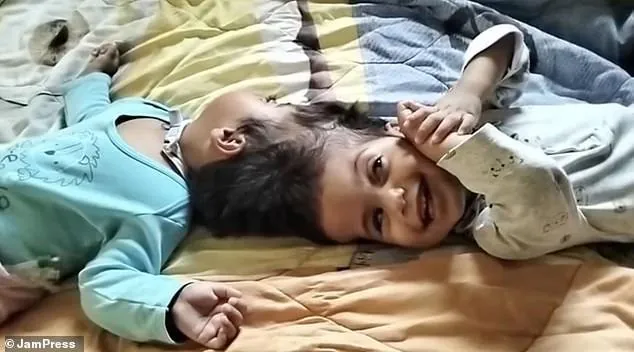
Tragedy Strikes: Conjoined Twin Sisters Die Minutes Apart During High-Risk Separation Surgery in Brazil
- Conjoined twin sisters Heloísa and Helena Batista da Silva, two years old, passed away during their fifth and final separation surgery in Brazil.
- The toddlers, born with their heads fused, shared the same brain tissue and blood vessels, making their condition extremely rare and complex.
- Despite the efforts of over 50 medical and support staff, the twins succumbed to haemodynamic instability, a condition that causes insufficient blood flow to vital organs.
- Their heartbroken father, Amarildo Batista da Silva, thanked the medical staff for their tireless efforts, saying he does not blame them for his daughters’ deaths.
The world was left in shock as conjoined twin sisters Heloísa and Helena Batista da Silva, just two years old, tragically passed away during their fifth and final separation surgery in Brazil.
Born with their heads fused, the toddlers shared the same brain tissue and blood vessels, making their condition extremely rare and complex.
The twins’ story has captivated the hearts of many, and their untimely demise serves as a poignant reminder of the risks and challenges associated with such a rare and intricate medical condition.
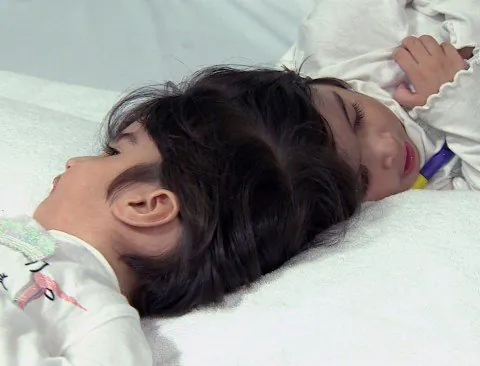
According to reports, the twins underwent four grueling surgeries prior to their final operation, with the first three procedures successfully separating about 75 percent of their shared blood vessels and brain tissue.
The fourth surgery saw the twins fitted with tissue expanders to increase the amount of skin available for when doctors closed their skulls during the final operation.


However, it was during this final procedure that complications arose, and the twins’ conditions quickly worsened.
The medical team, comprising over 50 staff members, worked tirelessly to save the twins, but unfortunately, their efforts were in vain. The twins suddenly developed haemodynamic instability, a condition that causes insufficient blood flow to vital organs and can result in multiple organ failure and death.
Helena suffered a heart attack at 11:12 pm, while Heloísa had one at 11:26 pm. Despite 25 minutes of resuscitation efforts, the twins tragically passed away, with Helena dying at 11:37 pm and Heloísa at 11:51 pm.
According to Jayme Farina Júnior, a plastic surgeon on the twins’ medical team, the girls had fragile bodies and were sick most of their lives.
“They had many bouts of pneumonia, they had a tracheostomy, they needed a gastrostomy for feeding, and they had episodes that also weakened their bodies,” Júnior explained.
“But at the moment of the final separation, their bodies could not withstand this instability, and then they progressed to cardiac arrest.”
Analysis: What This Means for Australia
While this tragic event occurred in Brazil, it serves as a poignant reminder of the complexities and risks associated with rare medical conditions. In Australia, conjoined twins are extremely rare, with only a handful of cases reported in recent years.
However, this incident highlights the importance of investing in medical research and technology to improve the chances of success in such high-risk surgeries. Moreover, it underscores the need for Australian hospitals and medical teams to be equipped with the necessary expertise and resources to handle such complex cases.
Security analysts say that the incident also raises questions about the preparedness of Australian hospitals to handle rare and complex medical conditions. “While Australia has a world-class healthcare system, incidents like this serve as a reminder that there is always room for improvement,” said one analyst.
“It’s crucial that we continue to invest in medical research and technology to ensure that our hospitals are equipped to handle even the most complex cases.”
Law enforcement insiders warn that the incident also highlights the importance of ensuring that medical teams are adequately trained and prepared to handle high-risk surgeries.
“It’s not just about having the best equipment and technology; it’s also about having the right people with the right skills and expertise,” said one insider.