
‘Shocking Use of Australia’s Most Loved Character’: ABC Threatens Legal Action Against Pauline Hanson’s One Nation Over Violent Bluey Cartoons as Fury Erupts Over Political Satire
- ABC managing director Hugh Marks told Senate estimates One Nation’s use of Bluey is, in his view, an intellectual property infringement and a “shocking” misuse of a national treasure.
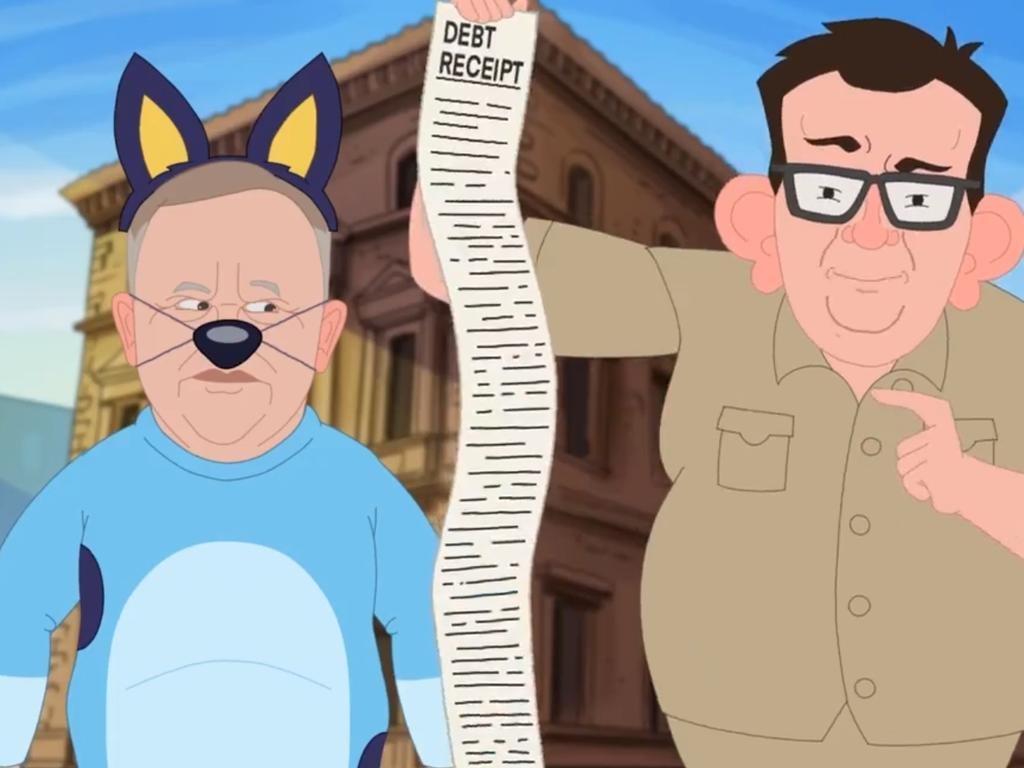
- One 2024 video shows the beloved children’s character and former Victorian premier Daniel Andrews running each other down in cars, and the backlash comes days after independent MP Helen Haines lost both legs in what police are treating as a deliberate car attack.
- A colouring book handed to children at a One Nation booth in South Australia reportedly shows Bluey being held at knifepoint.
- Pauline Hanson denies any breach and refuses to discuss the cartoons, while Communications Minister Anika Wells demands an explanation.
To millions of Australian children, Bluey is a playful Blue Heeler pup who teaches kindness, imagination and the joy of family. To One Nation’s cartoonists, she has become a prop in scenes of car crashes, street bashings and knife threats.
Now the national broadcaster wants it stopped.
The Australian Broadcasting Corporation has demanded that Pauline Hanson’s party “immediately” take down satirical animations featuring the global children’s phenomenon, and is weighing legal action in a row that has collided with a moment of heightened alarm over political violence in Australia.
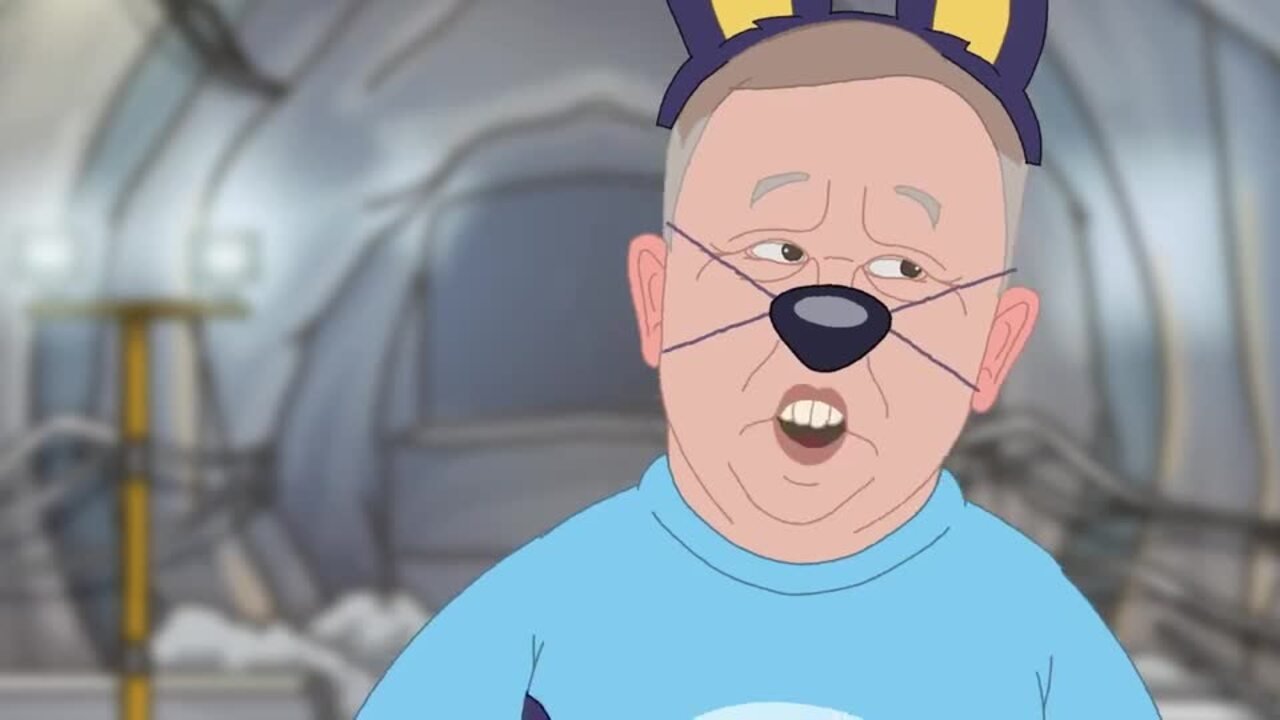
The clash erupted at Senate estimates on Tuesday, when ABC boss Hugh Marks confirmed the broadcaster was examining its options over Bluey’s appearance in One Nation’s Please Explain cartoon series.
He did not mince words.
In his view, Mr Marks said, the cartoons infringed intellectual property, and they were also a shocking way to treat the country’s most cherished animated character.
One Nation’s videos, both released in 2024, go well beyond gentle lampooning. In one, Bluey and former Victorian premier Daniel Andrews are shown mowing each other down in cars.
In another, the episode implies the cartoon dog has been bashed by youth “delinquents”, a nod to the party’s long-running campaign on youth crime.
The car scene has landed with particular force. Only last week, independent federal MP Helen Haines lost both her legs after being struck by a vehicle, an incident police are treating as deliberate.
An ABC spokesperson said the broadcaster was “very concerned” by the unauthorised use of a children’s character and national icon for political purposes, and confirmed it was considering what could be done.
Senator Hanson, however, rejected suggestions her party had breached anyone’s intellectual property.
The legal picture is more complicated than it first appears. The ABC licenses Bluey in Australia but does not own her.
The intellectual property belongs to Queensland’s Ludo Studio, the Brisbane outfit that created the series, while BBC Studios handles worldwide distribution.
That means any court action would require the ABC to act alongside the rights holder. Ludo Studio and the BBC were approached for comment.
Mr Marks told senators that had One Nation sought permission, the ABC would have been consulted by either the BBC or the producer before any licence was granted.
As no such conversation occurred, he said, he could safely assume none was ever requested.
He also dismissed any notion that Australia’s fair dealing exceptions might protect the party. The cartoons, he argued, neither parodied Bluey’s own content nor made only minor use of the character.
Crucially, Mr Marks signalled that money would not be the goal.
He said damages would be an inadequate remedy and that the ABC, working with its general counsel, would ultimately be looking at injunctive relief, a court order forcing the material offline.
The Bluey storm is merely the latest blow for a cartoon series that has repeatedly drawn condemnation. This week the creator of Please Explain refused to apologise to Tasmanian senator Jacqui Lambie after One Nation released a video ridiculing her vaginal prolapse.
Senator Hanson first defended that clip, then conceded she had not watched it, before eventually apologising.
Then came the colouring book. Distributed to children from a One Nation booth in South Australia, it reportedly featured Bluey under threat from a knife.
Asked about it, Senator Hanson told reporters she would not discuss either the cartoons or the book, describing the latter as a matter for the party’s Victorian executive, despite it being handed out in another state entirely.
Communications Minister Anika Wells has entered the fray, describing Bluey on ABC Radio National as among Australia’s biggest and most recognisable exports and saying the broadcaster was well within its rights to be worried.
Satire and scrutiny both had their place, she said, but the cartoon’s makers needed to explain why their work fell on the side of satire rather than something more.
Analysis: What This Means for Australia
This is no longer simply a dispute about copyright. It goes to the heart of how far political messaging can go in a country already rattled by real-world violence against its elected representatives.
On the security front, the timing is impossible to ignore.
Imagery of vehicles being used as weapons circulating in partisan content, days after a sitting MP was maimed in an alleged deliberate attack, will sharpen scrutiny from authorities including the Australian Federal Police over how violent political rhetoric spreads online.
For communities, the concern is children.
Bluey’s audience is overwhelmingly young, and parents who encounter the character being bashed or threatened with a blade, especially in material physically handed to kids, are unlikely to see the joke.
Economically, the stakes are enormous. Bluey is one of Australia’s most valuable cultural exports, generating huge international revenue and soft power for the local screen industry.
Any association with violent partisan content risks diluting a brand built on wholesome family values.
And legally, a successful injunction could set a significant precedent on where freedom of speech and political satire end and commercial intellectual property rights begin.
Media law observers say the ABC’s emphasis on injunctive relief suggests it is confident on the merits, noting that fair dealing for parody generally requires commentary on the original work itself rather than borrowing a famous character to make an unrelated point.
Political analysts warn the controversy may harden positions on both sides, with One Nation likely to frame any action as a taxpayer-funded broadcaster attacking free expression, while critics argue the party has crossed a line.
Security analysts say the broader concern is normalisation.
Repeated depictions of violence against public figures, even in cartoon form, can erode the boundaries of acceptable debate at a time when threats against politicians are rising.
Industry observers believe Ludo Studio and BBC Studios will be keen to protect one of the world’s most lucrative children’s properties, making a joint move increasingly likely if the videos stay online.
For now, the ball sits with One Nation. Whether it pulls the cartoons or digs in could decide if this fight ends quietly or in court.